Gurgaon, one of India’s fastest-growing cities, is set for a major infrastructure upgrade with the upcoming Metro expansion project. The Gurgaon Metro Master Plan aims to introduce 14 new elevated stations over a 15.2 km stretch. This development is expected to improve city connectivity and significantly impact real estate values and rental potential across multiple sectors.
In this blog, we will explore the upcoming Gurgaon Metro routes, sector-wise coverage, and the benefits for both property investors and end users.
What Is the Gurgaon Metro Master Plan?
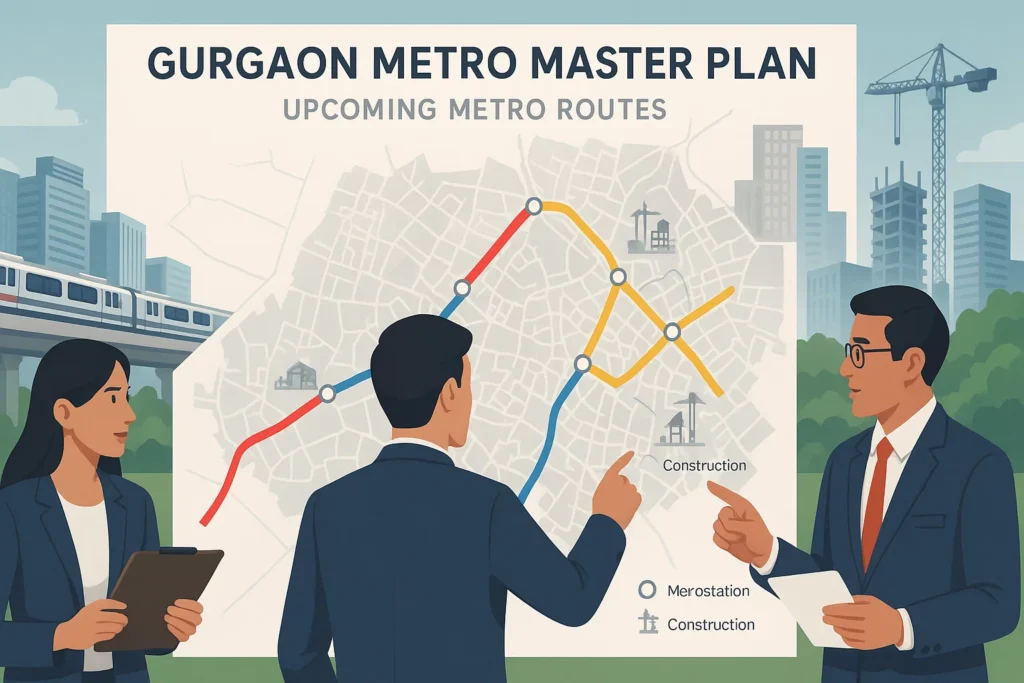
The Gurgaon Metro Master Plan is a government-approved project to build 14 elevated metro stations across the city in Phase 1. The route starts from Millennium City Centre (previously HUDA City Centre) and will connect various key residential, commercial, and industrial sectors. The goal is to offer better public transport options, reduce traffic congestion, and support Gurgaon’s rapid urban development.
List of Upcoming Gurgaon Metro Stations (Phase 1)
Here are the 14 proposed stations in the upcoming metro phase:
- Millennium City Centre (HUDA City Centre)
- Sector 45 – Greenwood City
- Sector 46 – Cyber Park
- Sector 47
- Subhash Chowk
- Sector 48
- Sector 33
- Hero Honda Chowk
- Udyog Vihar Phase 6
- Sector 10
- Sector 37
- Basai Village
- Sector 9
- Sector 101 (Dwarka Expressway Spur)
Sector-Wise Coverage and Benefits
1. Sector 45 to Sector 47
These are some of Gurgaon’s prime residential areas. The introduction of metro stations will enhance rental yield and attract working professionals. Localities like Maidantha in Sector 38, previously known for lower plot prices, will also benefit.
2. Subhash Chowk to Sector 48
This corridor will link important hubs like Rajiv Chowk and Sohna Road. With better metro access, this area will become more attractive for both office space investors and residential buyers.
3. Sector 33 and Hero Honda Chowk
Sector 33 includes institutional zones and vacant land parcels which are expected to see real estate development. Hero Honda Chowk will connect industrial zones, supporting blue- and white-collar workers with easier commute options.
4. Udyog Vihar Phase 6 and Sector 10
This area is a mix of industrial and mid-segment housing. Metro access will boost the rental prospects and ease commuting for daily wage workers and employees in Udyog Vihar.
5. Sector 37 to Basai
This region includes Sectors 37C and 37D. These are currently mid-income residential hubs. The metro will increase demand and appreciation, especially in Sector 37C.
6. Sector 9, 10, and Spur to Sector 101
The spur connecting Sector 101 on Dwarka Expressway will be a major game changer. Sector 102, already in high demand, will benefit the most from improved connectivity. This will also bring sectors 99, 104, and others closer to the main city, promoting long-term investment growth.
Real Estate Impact of Gurgaon Metro
1. Increase in Rental Yields
Once the metro becomes operational, areas near stations are expected to see higher rental demand. For example, in Sushant Lok Phase 1, even 1-RK flats have high rental value due to metro proximity.
2. Boost in Property Values
Properties near metro stations generally appreciate faster due to increased accessibility. In Gurgaon, sectors connected by the new metro line will likely see significant value growth in the next 5–7 years.
3. Better Office Space Demand
Commercial zones near stations like Central Park Resorts in Sector 48 and institutional plots in Sector 33 will attract companies seeking good connectivity for their staff.
Investment Advice for Homebuyers and Investors
If you’re planning to invest in Gurgaon real estate, focus on these key points:
- Prefer properties within 500 meters of the proposed metro stations.
- Mid-segment housing in sectors like 37C, 45, 46, and 47 offers high rental income and appreciation potential.
- Commercial plots near Sector 33 and 48 will be suitable for long-term office rentals.
- Invest with a 5–7 year horizon to enjoy full returns as infrastructure develops.
The Gurgaon Metro Master Plan is not just a transportation upgrade — it’s a game-changing development for the city’s real estate market. Whether you’re an investor or planning to buy a home for your family, this metro expansion opens up new opportunities in both residential and commercial segments.
Stay informed, choose wisely, and align your investment with infrastructure growth for maximum returns.
Frequently Asked Questions
1. What is the Gurgaon Metro Master Plan?
The Gurgaon Metro Master Plan outlines the development of new metro routes, stations, and connectivity improvements to enhance public transportation and support urban growth in Gurgaon.
2. Which new metro routes are included in the upcoming plan?
The plan includes extensions to existing lines, new corridors connecting residential areas to business hubs, and links to airports, expressways, and nearby cities to improve accessibility.
3.How will the metro expansion impact real estate in Gurgaon?
Improved metro connectivity increases property demand, boosts land value, and attracts investments in residential and commercial sectors, making areas near stations more desirable.
4.Which areas in Gurgaon are expected to benefit the most from the new metro routes?
Areas along the proposed corridors, such as Dwarka Expressway, Cyber City, Golf Course Extension, and sectors near upcoming stations, are expected to see significant growth and higher property prices.
5.Can metro accessibility affect rental and resale values?
Yes, properties near metro stations often command higher rental rates and resale values due to better connectivity, ease of commuting, and proximity to commercial and entertainment hubs.
6.How does improved transportation infrastructure boost investment in real estate?
Better connectivity attracts businesses, enhances lifestyle convenience, and supports long-term urban development, which in turn increases investor confidence and demand for properties.
7.Will the metro expansion create new residential and commercial development opportunities?
Yes, upcoming metro routes open up previously underdeveloped areas for planned townships, commercial offices, retail spaces, and mixed-use developments, offering diverse investment options.
8.Are there any environmental benefits linked to metro expansion in Gurgaon?
Metro systems reduce reliance on private vehicles, lower carbon emissions, and promote sustainable urban living, which positively impacts the environment and public health.
9. How can buyers and investors stay informed about the metro project updates?
Updates are available through government websites, transportation department announcements, real estate news portals, RERA-certified listings, and local property consultants.
10. Should I invest in real estate near proposed metro routes even before construction begins?
Investing early can offer lower prices and higher appreciation potential, but it’s important to verify project timelines, legal approvals, and infrastructure plans to ensure informed decision-making.