Investing in rural properties in India is the new long term investment plan which sounds clever. Rural plots are getting noticed with low prices, increase in desire to live closer to nature and infrastructural development which is no longer confined strictly to the urban centers. Investment in rural land, however, puts forward certain issues that may not be similar to that of urban land acquisition.
Legal verifications, land use and development regulations, availability of infrastructure and future appreciation value are only a few of the many things that a buyer must think about. By using the experience of real life, federal law and the advice of professionals, this guide can help you make a safe profitable rural land investment.
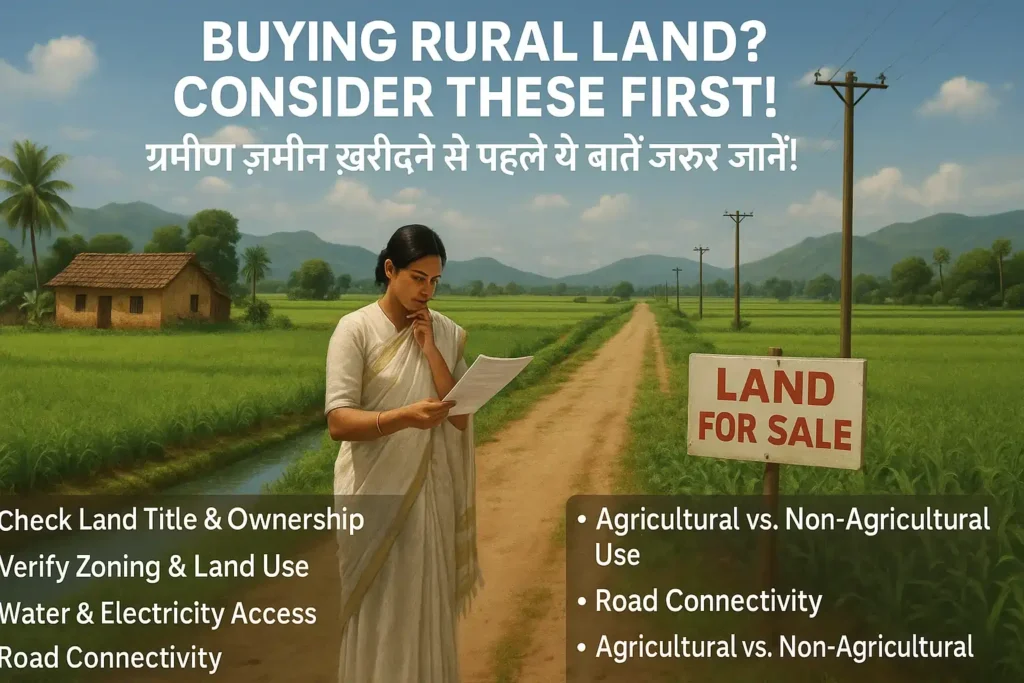
Why People Buy Rural Land Today
- Lower land prices compared to urban areas
- Potential for weekend homes, farming, or eco-tourism
- Increased infrastructure projects in rural belts
- Escape from congested cities and fast-paced lifestyles
1. Legal Title and Ownership Verification
The first step in any rural land purchase is verifying the legal ownership of the property. Buyers must ensure the seller holds a clear, marketable title.
Request the document like the sale deed, aperture 12, mutation certificate, and revenue records. One should look into having these documents checked by a competent property attorney and do the chain of ownership check at least the last 20 to 30 years.
Buying land with disputed or unclear titles can result in legal complications or financial loss.
Also Read:
- Landlords, Are You Paying Too Much?
- Commercial vs. Farmland Which Offers Better Long-Term Returns?
- Tax Advantages A Comparison Between Farmland and Commercial Property
- Income Potential Compared Leasing Out Farmland vs SCO Units
- Is Agricultural Land the New Gold? Investment Insights & Global Market Trends
2. Land Classification and Zoning Regulations
Rural land is mostly split into agricultural, non-agricultural land, forest land or Gram Sabha (village council) land. Buyers must make sure what category the land falls under and if what they are planning is lawful.
For instance, agricultural land cannot carry a residential development or a commercial development unless it is converted along with proper land use change clearances given by local planning authority.
Purchasing land without understanding its classification can result in regulatory violations or project delays.
3. Infrastructure and Connectivity
One of the most overlooked, yet critical aspects of purchasing of rural land is the access of infrastructure. Determine the availability of a good road to access the land and in particular, monsoon seasons.
The availability to electricity, water connections, and the proximity to the important services such as markets, schools, hospitals, and towns must also be taken into consideration. Poorly connected land or otherwise lacking in infrastructure can end up as unusable or difficult to resale.
4. Encumbrance Certificate (EC)
An Encumbrance Certificate is a crucial document that shows whether the land has any legal or financial liabilities, such as pending loans, mortgages, or litigation.
The EC should be obtained from the local Sub-Registrar’s Office for a period of at least the last 12 to 30 years, depending on state norms. A clean EC ensures that the land is legally transferable and free from any hidden obligations.
5. Eligibility to Buy Agricultural Land
In many Indian states, only individuals classified as farmers are legally allowed to purchase agricultural land. Some states, like Maharashtra and Karnataka, have strict rules, while others like Rajasthan and Uttar Pradesh offer more flexibility.
Buyers should consult with the local Tehsildar or District Collector to determine whether they meet the eligibility criteria or require any approvals before purchasing farmland.
Purchasing land without fulfilling legal eligibility requirements can lead to nullification of the sale.
6. Soil Quality and Water Table
If you are buying rural land for farming or plantation purposes, it is essential to test the soil for fertility, pH level, and contamination. Also assess the water table depth, water quality, and availability of irrigation facilities like borewells or canal access.
You can engage a local agricultural department or private lab to carry out soil and water tests. These factors directly affect the productivity and commercial viability of your investment.
7. Survey and Boundary Verification
Always conduct a physical land survey to match the actual plot boundaries with those recorded in the government’s land records, such as the Khasra map or BhuNaksha.
Any discrepancy between paper records and physical boundaries could lead to disputes with neighbors or reduction in usable land area. A certified land surveyor can help demarcate boundaries and ensure clarity of possession.
8. Check for Government Acquisition or Reservation
Before purchasing, verify whether the land is subject to any government acquisition plans, infrastructure development, or reservations for public use.
Visit the local Tehsil office or Town Planning Department to check if the plot falls under a notified area for future roadways, railways, industrial corridors, or environmental preservation zones.
Failing to verify this could lead to loss of ownership or limitations on land use after purchase.
9. Land Ceiling and Local Regulatory Compliance
Most Indian states have laws that limit the maximum amount of land a person or entity can own, particularly agricultural land. These are governed by the Land Ceiling Act.
Buyers must also check whether the land falls in a tribal or scheduled area, as these often have purchase restrictions for outsiders. Compliance with local laws is mandatory and often overlooked by buyers focusing only on price or location.
Consult the local revenue office to avoid legal violations.
10. Future Development Potential
Land that lies close to infrastructure projects like expressways, industrial corridors, airports, or rail connectivity is likely to appreciate faster. Look for signs of planned or ongoing development, including government notifications, private investments, or plotted project launches in nearby areas.
Studying the region’s master plan and growth corridors helps assess whether your rural land investment will yield capital appreciation in the long term.
Investing in rural land can be highly rewarding if approached with proper legal, financial, and practical due diligence. The affordability and development potential are attractive, but rural land deals can carry risks if the land is not legally clear, infrastructurally connected, or allowed for your intended use.
Always consult with experienced real estate advisors, legal professionals, and local revenue authorities before making a purchase. What seems like a good deal on paper must also be backed by verified documentation, legal eligibility, and long-term usability.
If you’re exploring rural land investment near NCR or in states like Rajasthan, Haryana, or Uttar Pradesh, consider working with verified professionals who understand the nuances of land acquisition, government policies, and future market trends.