Developing a consistent flow of investment properties has been one of the most effective strategies to have continuous cash flow and long term earning of wealth. But to a lot of investors, the continuous searching of deals, property management duties, and financial decision making can cause burnout. The great news is that you could expand your portfolio without wearing yourself down in the process as long as you have the proper systems and attitude.
This guide will walk you through a strategic approach to building an investment property pipeline while staying productive, profitable, and mentally fresh.
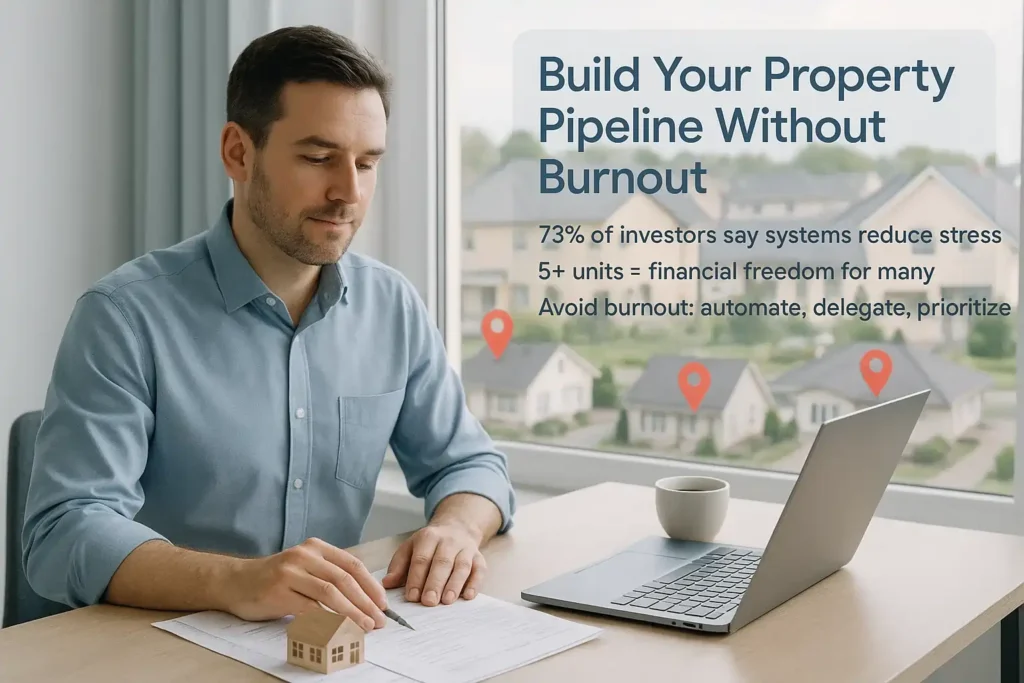
Understanding an Investment Property Pipeline
An investment property pipeline is an ongoing cycle of searching, screening, purchasing, and operating property in order to earn a profit. A robust pipeline gives you deals that are underway any time and thus minimizes idling between purchases and the achievement of financial objectives within a shorter period.
Key stages in the pipeline:
- Lead Generation – Finding potential properties.
- Analysis – Evaluating returns and risks.
- Acquisition – Negotiating and closing deals.
- Management – Operating and maintaining assets.
- Exit or Refinance – Selling or restructuring for better returns.
The challenge lies in keeping this process running efficiently without overwhelming yourself.
Why Burnout Happens in Real Estate Investing
Burnout among property investors often comes from:
- Overcommitting to too many deals at once.
- Micromanaging every aspect of property operations.
- Neglecting delegation and trying to do everything alone.
- Emotional decision-making instead of data-driven planning.
- Lack of clear systems for property acquisition and management.
If you want your investment journey to be sustainable, avoiding these pitfalls is critical.
Step-by-Step Building a Sustainable Property Pipeline
1. Set Clear, Realistic Goals
Before you start building your pipeline, define what success looks like for you.
- Are you aiming for monthly cash flow or long-term capital appreciation?
- How many properties do you realistically want to acquire each year?
- What’s your budget, and how will you finance deals?
Clear goals help you filter opportunities and avoid wasting time on unsuitable deals.
Also Read:
- How Real Estate Consultants Work with Investors
- Comparing SCO Plots and Commercial Plots in Real Estate What Investors Need to Know
- Standard Real Estate Laws & Regulations in India A Complete Guide
2. Create a Reliable Lead Generation System
Instead of hunting for properties sporadically, set up consistent sources of deal flow:
- Real estate agents who understand your criteria.
- Off-market leads from networking with wholesalers, attorneys, and contractors.
- Online platforms like property listing portals and foreclosure databases.
- Direct marketing such as postcards or cold calling targeted sellers.
Automation tools like CRM software can help track leads without overwhelming your inbox.
3. Standardize Your Deal Analysis Process
Spending hours analyzing each property manually can drain your energy. Create a deal analysis template that quickly calculates:
- Cap Rate
- Net Operating Income (NOI)
- Cash-on-Cash Return
- Projected Appreciation
When you have a standardized checklist and spreadsheet, you can make faster, data-backed decisions.
4. Build a Support Team Early
Trying to manage every moving part alone is a shortcut to burnout. Surround yourself with:
- A trusted real estate agent who knows your market.
- A mortgage broker for financing options.
- A property manager to handle tenant issues.
- A contractor or handyman for repairs.
- An accountant for tax planning.
Delegating allows you to focus on strategy instead of day-to-day hassles.
5. Use Technology to Streamline Work
Digital tools can automate much of your property investment workflow:
- CRM software to track leads.
- Property management platforms for rent collection and maintenance requests.
- Market analysis tools for quick comparisons.
- Document storage apps for contracts and reports.
By cutting manual work, you free up mental energy for decision-making.
6. Pace Your Acquisitions
Acquiring too many properties too fast can lead to financial strain and operational chaos. Instead:
- Space out purchases to allow time for stabilization.
- Build cash reserves before moving to the next deal.
- Assess how each property impacts your cash flow before committing to another.
7. Maintain Work-Life Balance
Your health and energy are just as important as your ROI.
- Schedule breaks between acquisitions to recharge.
- Set boundaries for when you check property updates.
- Keep time for family, hobbies, and exercise.
A rested investor makes better decisions and spots opportunities faster.
Long-Term Strategies to Prevent Burnout
- Automate Repetitive Tasks – From rent reminders to expense tracking, automation reduces daily workload.
- Outsource Low-Value Work – Pay others for tasks that don’t require your expertise.
- Batch Work – Handle similar tasks (like property analysis) in one sitting instead of daily interruptions.
- Continuous Education – Staying updated on market trends helps you avoid mistakes.
- Regular Portfolio Reviews – Quarterly evaluations help you see what’s working and what’s draining resources.
A thriving investment property pipeline doesn’t have to come at the cost of your mental and physical well-being. By setting clear goals, leveraging systems, and building a strong support network, you can grow your real estate portfolio at a sustainable pace.
Remember, in property investing, consistency beats speed. The aim isn’t just to build wealth — it’s to do so in a way that allows you to enjoy the life that wealth creates.