Purchasing of buying a house or selling is one of the largest financial compromises that most individuals execute. The thrill of doing a deal or inking that perfect home may compel buyers and sellers to dive or hurry paper work. However in property, the small print will make or break your investment.
An offer in a real estate is legally binding. They are binding, so the minute you sign, that is it, so reading before signing is very important. In this guide, we will decipher how to read a real estate contract like a pro, what to consider, and red flags to avoid.
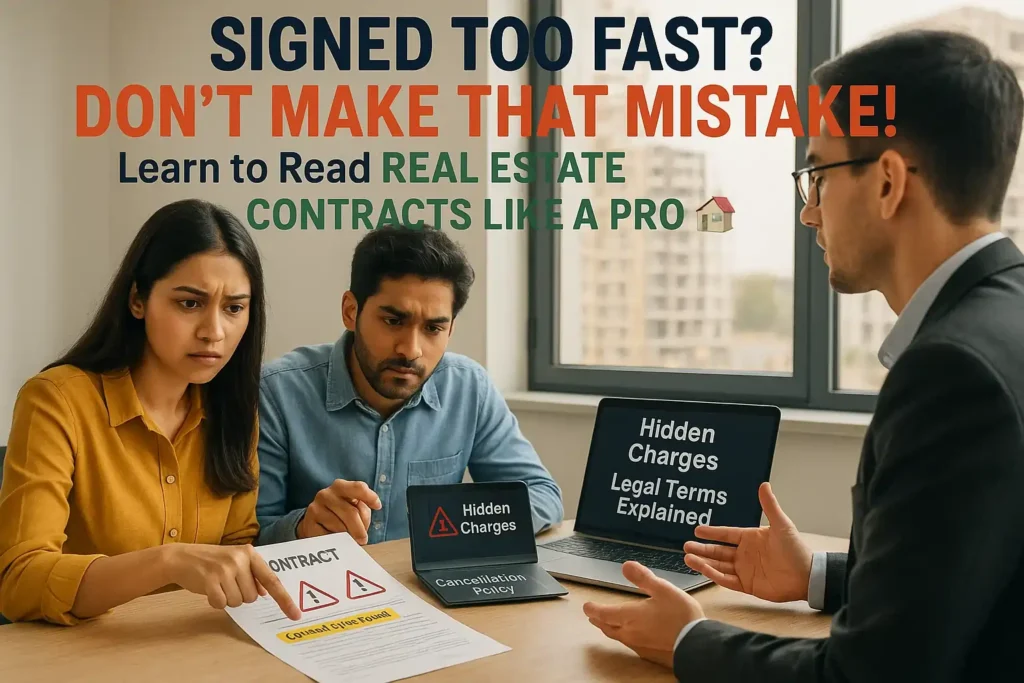
Why You Should Never Sign a Real Estate Contract Blindly
- Contracts favor the prepared. Contracts regulating the real estate are frequently written up by the legal team of the seller/developer. You can end up signing the terms and conditions that fail to cushion you unless you take your time to read them out..
- Small details have big consequences. Aimless deadlines, unspecified terms or extras may get you a loss, delayed possession or even forfeiture of booking deposit.
- You have negotiation power. The majority of the population is unaware that they can negotiate the things in a contract- Preferability of the developing activities must be clear and fair.
Key Sections Every Buyer or Seller Must Review
1. Parties to the Agreement
Information about names, addresses and identification of buyer, seller or builder must be correct. Even a discrepancy may lead to trouble in registering of the property or resolving disputes.
Pro Tip: Check that the seller’s name matches the title deed and government records.
2. Property Description
The contract should include:
- Exact property address
- Unit number, floor, or plot number
- Total area (built-up, carpet, or super area)
- Parking rights (if included)
Pro Tip: Verify that the description matches the sanctioned plan and builder-buyer agreement.
3. Sale Price and Payment Terms
This section details the total price, booking amount, installment schedule, and final payment.
- Are all taxes (GST, stamp duty, registration charges) included?
- Is there a clear payment timeline?
- Are penalties for late payments fair and balanced?
Red Flag: Contracts that give the seller heavy penalty rights for your late payment but don’t hold them accountable for delayed possession.
4. Possession and Delivery Date
Possession clauses should specify:
- Expected completion/possession date
- Grace period (if any)
- Penalty/compensation for delay by the developer
Pro Tip: Under RERA (Real Estate Regulation Act), developers must commit to a possession date and are liable for delays.
5. Title and Ownership Clause
Ensure the seller has clear and marketable title to the property. A contract should confirm that:
- The property is free of legal disputes, loans, or encumbrances.
- You will get absolute ownership after full payment and registration.
Red Flag: Vague language like “to the best of the seller’s knowledge” about ownership—insist on clarity.
6. Default and Termination Terms
Check what happens if either party defaults. For example:
- Will you lose your booking amount if you cancel?
- Can the seller cancel unilaterally?
- Is there a fair refund policy?
Pro Tip: Look for balance—both buyer and seller should have proportionate rights in case of default.
7. Maintenance and Additional Charges
Maintenance charges, parking fee, club fee and utility deposit shall be clearly stated. There are many buyers that get caught off guard with surprise bills down the road, because these were not spelled out in the contract.
Red Flag: “Charges as applicable” without clear figures—ask for exact amounts.
8. Dispute Resolution Clause
If disagreements arise, how will they be resolved? Contracts may specify:
- Arbitration
- Mediation
- Court jurisdiction
Pro Tip: Ensure the jurisdiction mentioned is convenient for you. For example, don’t accept a dispute clause that forces you to file cases in a faraway city.
Common Mistakes People Make While Reading Contracts
- Skimming through instead of reading line by line
- Not consulting a legal expert (especially for large investments)
- Ignoring annexures like floor plans, car parking allotment, or amenities list
- Not checking cancellation and refund policies
- Assuming standard clauses are always safe—they are often written in favor of the seller or builder
Also Read:
- Is Real Estate Still the Best Way to Beat Inflation in India?
- The Magic of Compound Growth in Real Estate How Time Multiplies Wealth
- How Economic Indicators Impact Real Estate Values A Practical Guide
How to Read a Real Estate Contract Like a Pro
- Take your time: Don’t let sales pressure rush you.
- Highlight key terms: Payment, possession, penalties, and cancellation rights.
- Ask questions: Clarify ambiguous language before signing.
- Compare with RERA guidelines: Especially for under-construction projects.
- Hire a property lawyer: An expert can catch what you may miss.
A real estate contract is more than just a document – it is one of your best protections from financial loss and legal woes. Reading it slowly should not just be intelligent, it’s necessary.
Remember: Don’t sign yet. Understand every clause, ask questions, negotiate if necessary, and consult a property lawyer before you commit. Protecting yourself at this stage can save you lakhs of rupees and years of stress later.