When people talk about Gurgaon, they usually talk about its gleaming skyscrapers, luxury housing projects, corporate hubs, and skyrocketing real estate prices. But beneath this shining surface lies a seasonal truth that many investors and homebuyers overlook: Gurgaon’s annual struggle with waterlogging and poor drainage.
Despite being one of India’s most expensive real estate markets, property values in Gurgaon remain largely unaffected by the recurring monsoon chaos. Let’s dig into why this gap exists and what it means for residents, investors, and policymakers.
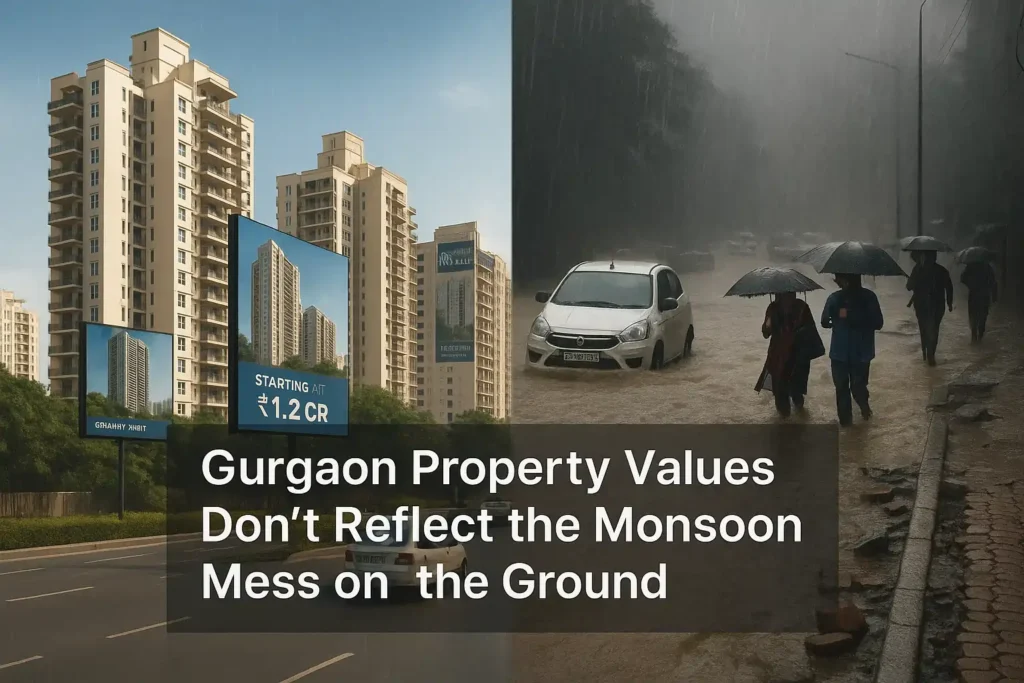
Gurgaon’s Real Estate Numbers vs. Reality on the Ground
- High Property Prices: As of mid-2025, average apartment rates in prime areas like Golf Course Road, DLF Phase 5, and MG Road hover between ₹18,000–₹30,000 per sq. ft. Dwarka Expressway and New Gurgaon are seeing rapid appreciation with property rates growing 15–20% year-on-year.
- Luxury Demand Unshaken: Projects priced above ₹2 crore are still being absorbed by buyers, particularly NRIs and high-net-worth individuals.
- Rental Yields: Gurgaon offers rental yields between 3–4%, higher than most NCR locations.
Yet every monsoon, pictures of cars floating on waterlogged roads and residents wading through knee-deep water in premium colonies flood social media. Areas like Sohna Road, Golf Course Extension, and parts of Sector 58–70 are especially prone to flooding.
Why Property Values Ignore Monsoon Woes
- Investor-Led Market
A large chunk of Gurgaon’s real estate demand comes from investors, not end-users. Investors focus on appreciation potential, infrastructure projects (like Dwarka Expressway or Global City), and commercial growth—not day-to-day civic challenges. - Brand Pull of Developers
Developers like DLF, M3M, Godrej, and Central Park have strong reputations that overshadow seasonal issues. Buyers assume premium projects will eventually manage civic problems internally. - Limited Alternatives in NCR
Gurgaon is home to more than 250 Fortune 500 companies’ offices. Professionals working here often prefer staying close to their workplace, even if civic amenities lag. This drives sustained demand. - Short Attention Span of Buyers
Waterlogging is a 1–2 month issue. The rest of the year, Gurgaon offers unmatched connectivity, employment opportunities, and lifestyle options compared to Noida or Faridabad. Buyers tend to discount the short-term pain.
The Cost of Ignoring Civic Realities
- Health Risks: Waterlogging raises mosquito breeding, dengue, and other water-borne diseases.
- Infrastructure Damage: Roads crack, and foundations of homes in low-lying areas weaken.
- Insurance Burden: Many car insurance claims in Gurgaon spike during July–August because of flood damage.
- Resale Impact: While property values overall don’t drop, resale in waterlogged-prone sectors often faces buyer resistance.
Expert Insights
Urban planners argue that Gurgaon’s storm water drainage network has not kept pace with its explosive real estate growth. According to estimates, over 40% of the city’s sectors lack integrated drainage. Rapid construction on natural water channels (nullahs) has only worsened flooding.
Will This Ever Impact Prices?
The answer lies in two factors:
- Policy Push: If Haryana RERA or local authorities start enforcing stricter civic infrastructure compliance before project approvals, buyer confidence may shift.
- Buyer Awareness: As more young professionals and families become end-users rather than investors, civic issues like drainage, water supply, and air quality could start influencing price trends.
For now, Gurgaon’s property market continues to soar—detached from the ground realities of the monsoon.
Gurgaon symbolizes the paradox of Indian urban real estate—global-standard pricing with third-world civic management. For buyers, the lesson is clear: don’t just look at glossy brochures and appreciation potential. Visit the site during monsoon, talk to residents, and factor in hidden costs of poor civic infrastructure before committing.
FAQs Frequently asked questions
1. Why are Gurgaon property prices rising despite poor monsoon infrastructure?
Answer:
Despite recurring waterlogging and drainage failures, Gurgaon’s property prices continue to climb due to strong corporate presence, limited land availability, and high-end real estate demand from NCR’s upper-middle class and NRIs. Infrastructure gaps have yet to translate into price correction.
2. How severe is the monsoon problem in Gurgaon?
Answer:
Every monsoon, areas like Golf Course Extension Road, Sohna Road, and parts of Dwarka Expressway face severe waterlogging, traffic jams, and property damage. The issue stems from poor drainage planning and rapid construction outpacing civic capacity.
3. Why don’t these issues affect Gurgaon’s real estate image?
Answer:
Gurgaon has successfully branded itself as “Millennium City” with global office spaces and luxury housing. Buyers view the monsoon mess as a temporary civic issue rather than a permanent flaw, prioritizing connectivity, amenities, and ROI potential.
4. Which areas of Gurgaon are most affected by monsoon flooding?
Answer:
Key affected zones include:
- Sector 58–67 (Golf Course Extension Road)
- Sector 37–47 (Sohna Road belt)
- Sector 109–113 (Dwarka Expressway)
- Old Gurgaon near Hero Honda Chowk
5. Is Gurgaon’s real estate still a good investment despite the monsoon mess?
Answer:
Yes—but selectively. Premium projects by reputed builders in New Gurgaon, Dwarka Expressway, and Golf Course Road continue to deliver strong ROI. Investors should focus on quality infrastructure, builder reputation, and sector-level civic upgrades to balance risk and reward.