Buying farmland can be one of the most rewarding investments—whether you’re planning to use it for agriculture, building a farmhouse, or even exploring long-term appreciation. But before signing any deal, one crucial factor often overlooked by buyers is zoning laws and land use regulations. These laws define what you can and cannot do with a piece of land, and ignoring them can lead to costly legal disputes, project delays, or even demolition notices.
This blog will guide you through the essentials of zoning and land use in India, so you can make an informed decision before investing in farmland.
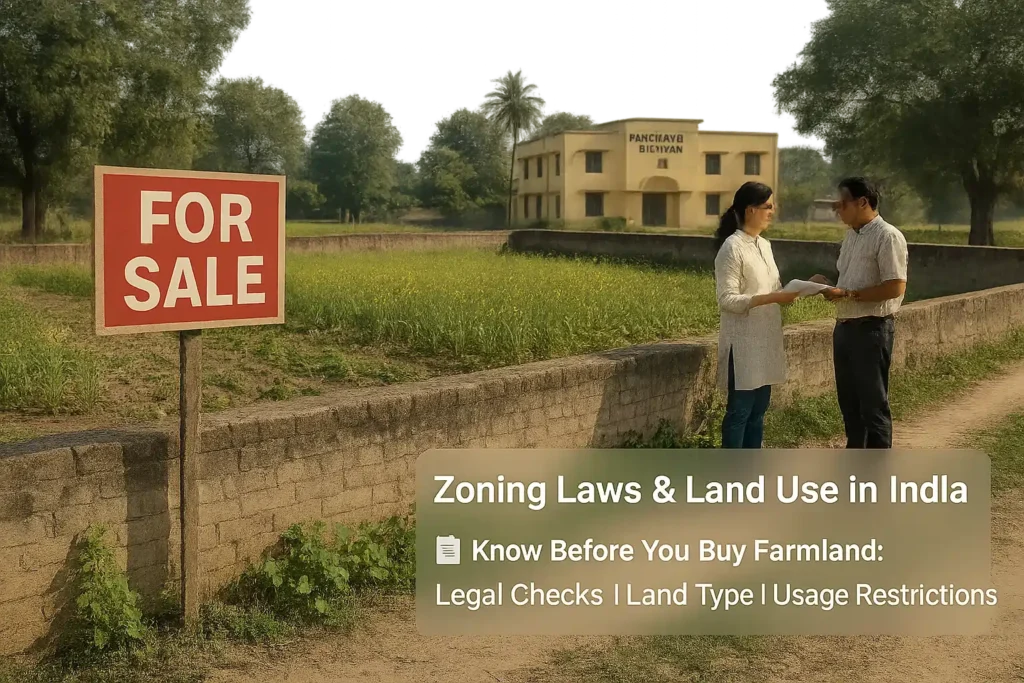
What Are Zoning Laws?
Zoning laws are government regulations that divide land into categories or “zones” such as:
- Agricultural Zone – Meant for farming, horticulture, or related activities.
- Residential Zone – For housing projects, villas, or apartments.
- Commercial Zone – For shops, malls, offices, and retail outlets.
- Industrial Zone – For factories, warehouses, and heavy industries.
- Mixed-Use Zone – Allows both residential and commercial activities.
These zones are defined by the local development authority or municipal corporation (for example, DTCP in Haryana, DDA in Delhi, or YEIDA in Noida).
Why Land Use Matters in Farmland Purchases
Land use classification is directly tied to zoning. Even if the land looks perfect for your plans, its official land use may restrict your options. For instance:
- Agricultural land usually cannot be used for residential or commercial construction without legal conversion.
- Farmhouses are often permitted only under certain rules, such as minimum plot size (often 1 acre or more) and approval from the local authority.
- If the land falls under forest, green belt, or reserved land, development may not be allowed at all.
Key Legal Aspects Buyers Must Check
Before purchasing farmland, always verify:
1. Master Plan and Zoning Map
Each city or district has a Master Plan 2031/2041, which outlines the zoning of every land parcel. Check whether the plot you’re considering falls under agricultural, residential, or restricted zones.
2. Land Title and Ownership
Ensure the title is clear, free of disputes, and legally transferable. This is verified through Jamabandi, Khasra, Khatauni, or Record of Rights (RoR) depending on the state.
3. Land Conversion (Change of Land Use – CLU)
If you want to use farmland for non-agricultural purposes, you must apply for a CLU certificate from the state government. This ensures the land use is legally changed to residential, commercial, or institutional.
4. Restrictions Under Local Laws
- In Haryana, only farmers can purchase agricultural land directly (non-farmers need prior permission).
- In Maharashtra, certain plots fall under non-transferable tenancy rights (Kul Kayda).
- In Karnataka, non-agriculturists cannot buy farmland unless they meet specific income criteria.
5. Environmental and Green Zone Laws
Land within eco-sensitive zones, flood-prone areas, or near highways may face restrictions on construction.
Common Misconceptions About Farmland
“If I buy farmland, I can build a farmhouse immediately.”
Not always—permissions, minimum size rules, and zoning approvals are required.
“Agricultural land is cheaper, so I can later convert it for real estate easily.”
Conversion isn’t automatic—it depends on state policy, location, and approval by authorities.
“If the seller is farming there, it must be agricultural land.”
Sometimes, land may appear agricultural but is officially classified under another use in the Master Plan.
Tips Before Buying Farmland
- Hire a property lawyer to verify zoning and land records.
- Consult local development authority offices for zoning maps and CLU requirements.
- Check for encumbrances like loans or litigation on the land.
- Avoid green belt and restricted lands as they rarely get approval for conversion.
- Plan your investment goal (farming, farmhouse, or appreciation) and buy land that matches that use legally.
Why This Matters for Investors
Zoning laws are not just a bureaucratic formality—they decide the value and future potential of your farmland. A plot legally permitted for farmhouse or institutional use will appreciate faster than one stuck in a restricted zone. Ignoring zoning rules may lead to demolition notices, penalties, or even land loss.
Buying farmland is a powerful way to diversify your real estate portfolio. But remember—land without legal clarity is a liability, not an asset. Always align your purchase with zoning and land use laws, consult experts, and secure approvals before finalizing a deal.
By respecting the legal framework, you not only safeguard your investment but also unlock the true potential of your farmland—whether for agriculture, a farmhouse retreat, or long-term capital appreciation.
FAQ
1. What are zoning laws in the context of farmland?
Answer:
Zoning laws are government regulations that categorize land into specific zones like agricultural, residential, commercial, industrial, or mixed-use. These laws determine what activities and types of construction are legally permitted on the land.
2. Can I build a farmhouse on any agricultural land?
Answer:
Not always. Farmhouse construction is subject to local zoning laws, including minimum plot size (usually 1 acre or more) and permission from development authorities. You must also ensure the land isn’t in a green belt or eco-sensitive zone.
3. What is CLU (Change of Land Use) and why is it important?
Answer:
CLU is a legal approval required to change the land use category from agricultural to residential, commercial, or institutional. Without CLU, any non-agricultural use of farmland is illegal and subject to penalties.
4. Is it possible to convert agricultural land into residential land?
Answer:
Yes, but only with proper approvals. You’ll need to apply for a CLU certificate from the local government. Conversion depends on state policies, infrastructure availability, and whether the area is marked for urban development.
5. Can non-farmers buy agricultural land in India?
Answer:
It depends on the state. For example:
- Haryana: Non-farmers need permission to buy agricultural land.
- Karnataka: Only those with agricultural income under ₹25 lakh/year may qualify.
- Maharashtra: Some lands are restricted under tenancy acts.
Always check the local state laws before buying.
6. How can I ensure the farmland I’m buying is legally usable for my purpose?
Answer:
Follow these steps:
- Hire a property lawyer for due diligence
- Check the zoning map and Master Plan
- Consult local authorities (e.g., DTCP, town planning department)
- Get CLU approval if planning non-agricultural use
- Avoid land under disputes, green belts, or restricted zones