Golf Course Road in Gurugram (Gurgaon) is synonymous with luxury — high-end towers, premium malls and corporate offices. But in recent years the road’s image has been dented each monsoon as streets, underpasses and even upscale societies suffer waterlogging. That raises a practical question for buyers, investors and developers: are rain and drainage failures a short-term nuisance — or a structural risk to property values on Golf Course Road? This article examines the causes, recent evidence, how the market has reacted, and practical steps buyers and policymakers can take.
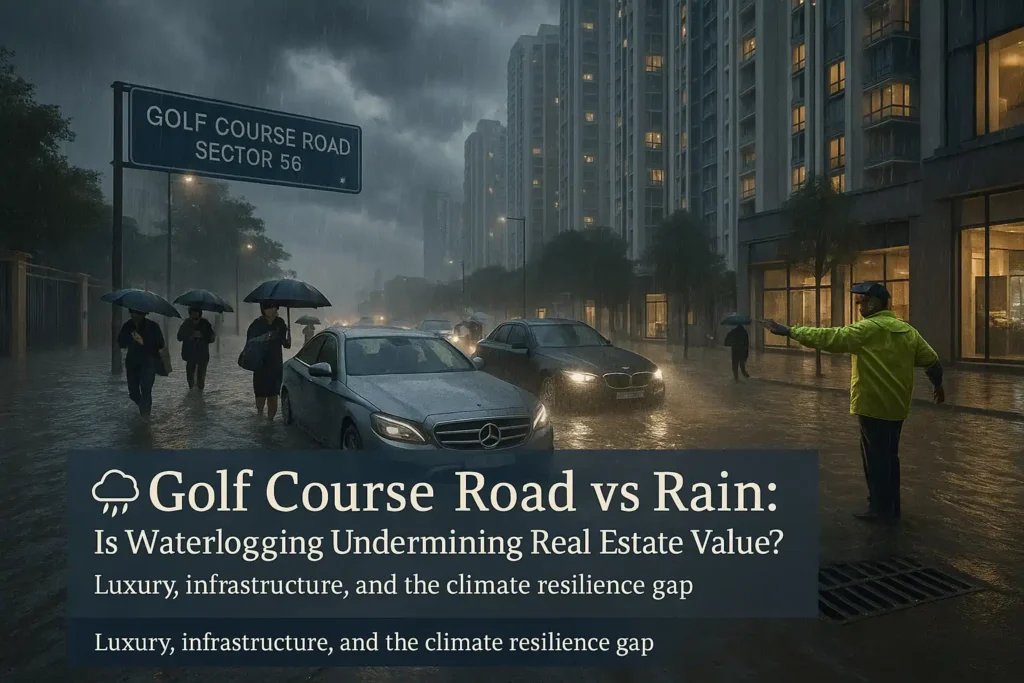
1) What’s happening on Golf Course Road? A quick reality check
Multiple monsoon seasons have exposed recurring flooding and waterlogging on Golf Course Road and adjacent sectors. Videos and local reports show underpasses and low-lying pockets filling quickly during heavy rains; resident complaints are common. Investigations point to clogged drains, encroached natural channels, incomplete master-drain projects, and development over former water paths as primary culprits.
A focused study by urban researchers analysed flooding along Golf Course Road and neighbouring sectors and recommended “blue–green” solutions (wetland restoration, retention basins, bioswales) alongside engineering fixes. The study concluded that a mix of nature-based and hard infrastructure interventions is necessary to prevent the area turning into a perennial water pocket.
2) Root causes (short, medium and long term)
- Encroachment and loss of natural drainage corridors. Rapid development filled wetlands and natural depressions that previously collected runoff. That reduces the city’s capacity to absorb and channel rainwater.
- Aging / mismatched stormwater drains. Parts of the master stormwater drainage were built without adequate outlets or upgraded capacity for recent rainfall intensity; some repair projects have been delayed.
- Siltation and poor maintenance. Drains and culverts get choked with silt, garbage and construction debris — compromising capacity. Local administrations periodically desilt drains, but the scale of maintenance needed is large.
- Changing rainfall patterns. Heavier, short-duration rainfall events overload systems designed for lower-intensity monsoons. This is a regional problem across NCR, not limited to one road.
3) Recent incidents & official response
News coverage and government posts from the last few seasons show repeated episodes of waterlogging across Gurugram, including Golf Course Road, and increased public pressure on authorities to fix drains and desilt channels. At the same time, authorities and agencies have announced desilting drives and repair work on master drains — though progress has sometimes been slow and patchy.
State-level initiatives — such as reservoir and river-revival projects intended to improve flood control and groundwater recharge — have been reported, and could have medium-term positive effects if delivered at scale. But these are not a substitute for local urban drainage upgrades along Golf Course Road itself.
4) Does waterlogging hurt property values on Golf Course Road?
Short answer: yes — but it’s nuanced.
Immediate/short-term effects
- Operational disruption & reputational damage. Flooded streets and society basements create negative headlines, impact resident comfort, and raise maintenance/repair costs (cars, electricals). That can slow buyer interest in the short term.
Medium-to-long-term effect depends on three factors:
- Severity & frequency. Occasional localized pooling is different from repeated inundation of parking basements and building lower floors. Recurrent severe incidents can reduce resale values and demand in a sub-pocket.
- Mitigation & governance. Where the developer or civic agencies deliver visible, credible fixes (raised roads, functioning drains, retention ponds), buyer confidence often recovers quickly. The luxury market has historically shown resilience if infrastructure is demonstrably improved.
- Insurance & running costs. Recurrent water damage raises insurance premiums and maintenance demand — an ongoing cost that can affect net yields and investor calculus.
Net impact: For marquee, well-maintained high-end towers with demonstrated mitigation, price declines are often limited and temporary. But peripheral pockets or projects with poor drainage history can face greater buyer resistance and longer stabilization periods. Savvy buyers price in the risk — or avoid micro-locations with a repeat record of flooding.
5) What developers, buyers and civic bodies should prioritize
For policymakers / civic agencies
- Complete the master drain repairs and ensure functional outlets to natural drains/river channels. Transparent timelines and visible progress are essential.
- Combine hard infrastructure with blue–green interventions: bioswales, detention/retention basins, restored wetlands and permeable open spaces. These reduce peak flows and improve groundwater recharge.
- Regular, scheduled desilting and anti-encroachment actions along drain alignments; better coordination between agencies is essential.
This area For developers / builders
- Design for higher-intensity rain events: raise critical electrical/flood-prone equipment above projected flood levels, improve basement waterproofing and install pump & alarm systems.
- Implement onsite stormwater capture (rainwater harvesting, detention tanks) and landscaping that promotes infiltration. This both reduces downstream burden and improves sustainability credentials.
For buyers & investors
- Due diligence checklist (quick):
- Ask for documented history of waterlogging incidents for the exact project and neighbouring plots (not just the micro-market).
- Check whether the developer/civic authority has a publicly available drainage plan and recent maintenance records.
- Inspect service areas — basement, parking and electrical rooms — during monsoon season if possible, or request recent photos/videos.
- Seek details on insurance coverages and any known special levies for flood-mitigation maintenance.
- Prefer projects where mitigation (raised road levels, retention ponds, completed drains) is verifiable.
6.Investment Strategy Insights
Core Premium Assets
Structurally sound luxury projects with credible mitigation remain attractive for long-term investors. Limited supply and strong market dynamics cushion temporary sentiment shocks.
Speculative Micro-Locations
Properties without clear drainage solutions carry higher risk. Stabilization timelines may be longer, and buyer premiums can compress. However, proactive investment in blue–green infrastructure can create value and attract ESG-minded buyers.
Frequently asked questions
Q1. Why does Golf Course Road in Gurugram face waterlogging every monsoon?
Golf Course Road faces waterlogging mainly due to encroachment on natural drains, poor maintenance of stormwater systems, silted culverts, and heavier-than-expected rainfall. Rapid urbanization has also reduced the natural capacity of the land to absorb rainwater.
Q2. Does waterlogging reduce property values on Golf Course Road?
Yes, recurrent waterlogging can hurt property values by damaging infrastructure, raising maintenance costs, and affecting buyer sentiment. However, in luxury projects where drainage solutions are in place, the long-term impact is often limited.
Q3. How do developers address drainage challenges in premium projects?
Reputed developers use measures like elevated road levels, waterproofed basements, sump pumps, rainwater harvesting, and on-site stormwater storage to protect properties against flooding.
Q4. Can waterlogging be prevented in the future on Golf Course Road?
Yes. A mix of hard infrastructure (wider drains, pumping systems) and blue–green solutions (bioswales, wetlands, permeable surfaces) can significantly reduce waterlogging. Consistent maintenance and anti-encroachment drives are equally important.
Q5. Should investors avoid buying property on Golf Course Road because of drainage issues?
Not necessarily. Golf Course Road remains one of Gurugram’s most premium real estate markets. Investors should conduct due diligence by checking drainage history, maintenance records, and flood-prevention measures before buying.
Q6. What should buyers check before purchasing property in flood-prone areas?
Buyers should verify:
- Past waterlogging history of the project.
- Condition and design of basements and parking areas.
- Presence of rainwater harvesting and drainage systems.
- Whether the civic body has upgraded master drains in the locality.
Q7. How do waterlogging issues affect rental demand?
Frequent flooding can temporarily reduce rental demand as tenants prefer hassle-free living. However, if developers and authorities take corrective steps, the market often recovers quickly, especially in prime luxury locations like Golf Course Road.