House hacking has become one of the smartest strategies for people who want to get started in real estate with little money, reduce their living expenses, and build long-term wealth. If you’ve ever dreamed of living for free—or close to it—while investing in your future, house hacking might be your best move.
In this guide, we’ll break down what house hacking is, how it works, different strategies to use, and the risks and rewards you should know before diving in.
What Is House Hacking?
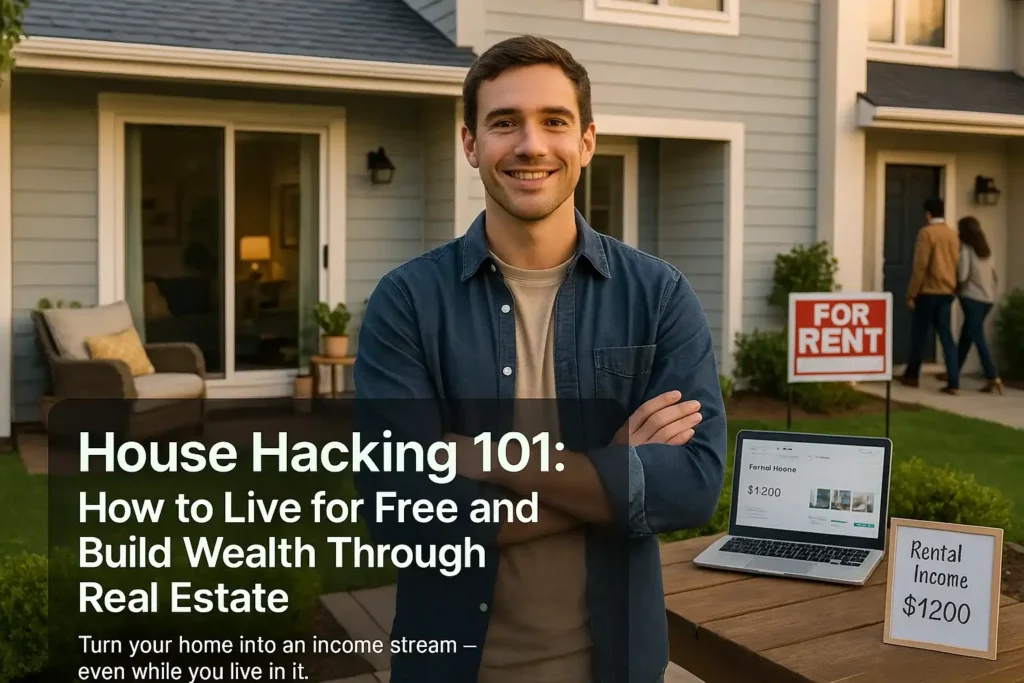
House hacking is a real estate investment strategy where you purchase a property, live in part of it, and rent out the other portion to cover your mortgage and expenses.
The most common form of house hacking is buying a multi-family property (like a duplex, triplex, or fourplex), living in one unit, and renting out the rest. But it can also be done with single-family homes by renting extra bedrooms, a basement unit, or even an accessory dwelling unit (ADU).
Essentially, your tenants pay your mortgage, and you live for free—or at least at a significantly reduced cost.
Why House Hacking Works
House hacking works because it combines two financial benefits:
- Reduced Living Costs – Instead of paying full rent or mortgage, you offset expenses with rental income.
- Wealth Building – While tenants help pay down your loan, you build equity in the property. Over time, you benefit from property appreciation, tax advantages, and rental cash flow.
It’s one of the fastest ways to get into real estate without needing multiple properties upfront.
Different House Hacking Strategies
There’s no “one-size-fits-all” approach. Depending on your lifestyle and market, you can choose from several strategies:
1. Multi-Family Properties
- Buy a duplex, triplex, or fourplex.
- Live in one unit and rent out the rest.
- FHA loans in the U.S. allow you to buy up to a 4-unit property with as little as 3.5% down if you live in one unit.
2. Rent Out Spare Rooms
- Live in a single-family home and rent extra bedrooms to roommates.
- This is often the most affordable way for beginners to start.
3. Accessory Dwelling Units (ADUs)
- Build or convert a garage, basement, or guest house into a rental unit.
- Perfect for markets with high rental demand.
4. Short-Term Rentals (Airbnb/PG Stays)
- Rent out part of your home on Airbnb or similar platforms.
- Can generate higher income but requires active management.
Steps to Start House Hacking
- Evaluate Your Finances – Check your credit, savings, and borrowing capacity.
- Choose a Market – Look for areas with strong rental demand, job growth, and affordable property prices.
- Run the Numbers – Calculate potential rent, mortgage, taxes, and maintenance costs to ensure positive cash flow.
- Secure Financing – Explore FHA, VA, or conventional loans depending on your eligibility.
- Buy and Manage – Purchase the property, live in your unit, and find reliable tenants.
- Optimize Over Time – Raise rents strategically, refinance to lower payments, or scale into more properties.
Benefits of House Hacking
- Live rent-free (or close to it)
- Build equity while reducing debt
- Learn property management firsthand
- Tax benefits (deductions on mortgage interest, depreciation, and expenses)
- Path to financial independence
Risks and Challenges
Like any investment, house hacking isn’t risk-free. Some challenges include:
- Tenant Issues – Late payments, property damage, or conflicts.
- Privacy Concerns – Living close to tenants might not be comfortable for everyone.
- Vacancy Risk – If a tenant leaves, you may need to cover more of the mortgage temporarily.
- Upfront Work – Finding the right property and managing it requires effort.
The good news? Most of these risks can be managed with good tenant screening, a strong lease agreement, and smart property selection.
Long-Term Wealth Potential
House hacking is often the first step into larger real estate investing. Many successful investors started with one house hack, then refinanced, saved cash flow, and used the equity to buy more properties.
Over time, this creates multiple income streams, long-term appreciation, and financial independence.
House hacking is one of the most accessible ways for beginners to enter the real estate market. By reducing or eliminating your housing costs, you free up money to save, invest, and grow your wealth.
If you’re serious about building financial freedom, house hacking could be your golden ticket.
FAQs About House Hacking
1. Is house hacking only for young people or first-time buyers?
No. Anyone can house hack, whether you’re a student, young professional, or even a retiree looking for extra income.
2. Can I house hack if I buy a single-family home?
Yes. You can rent out spare rooms, a basement, or an ADU. Many house hackers start this way.
3. Do I need a lot of money to start house hacking?
Not necessarily. FHA loans (U.S.) and low down payment options make it possible to start with as little as 3.5% down.
4. What happens if my tenants don’t pay rent?
You’re still responsible for the mortgage. That’s why screening tenants and having reserves is critical.
5. Is house hacking legal everywhere?
It depends. Some cities have zoning rules or restrictions on rentals (especially short-term rentals). Always check local regulations.
6. Can house hacking really make me live for free?
Yes, if your rental income covers your mortgage and expenses. Even if it doesn’t, it usually reduces housing costs significantly.