This is a question that many homebuyers don’t think about until it’s too late. While the excitement of moving into a new house or apartment often takes over, there is one legal document that determines whether your property is fit for you to live in: the Occupancy Certificate (OC).
In India, with the implementation of the Real Estate (Regulation and Development) Act (RERA), awareness about safe and transparent real estate practices has increased. Yet, many buyers are still unsure about the importance of an OC and why it is non-negotiable in any RERA-approved project.
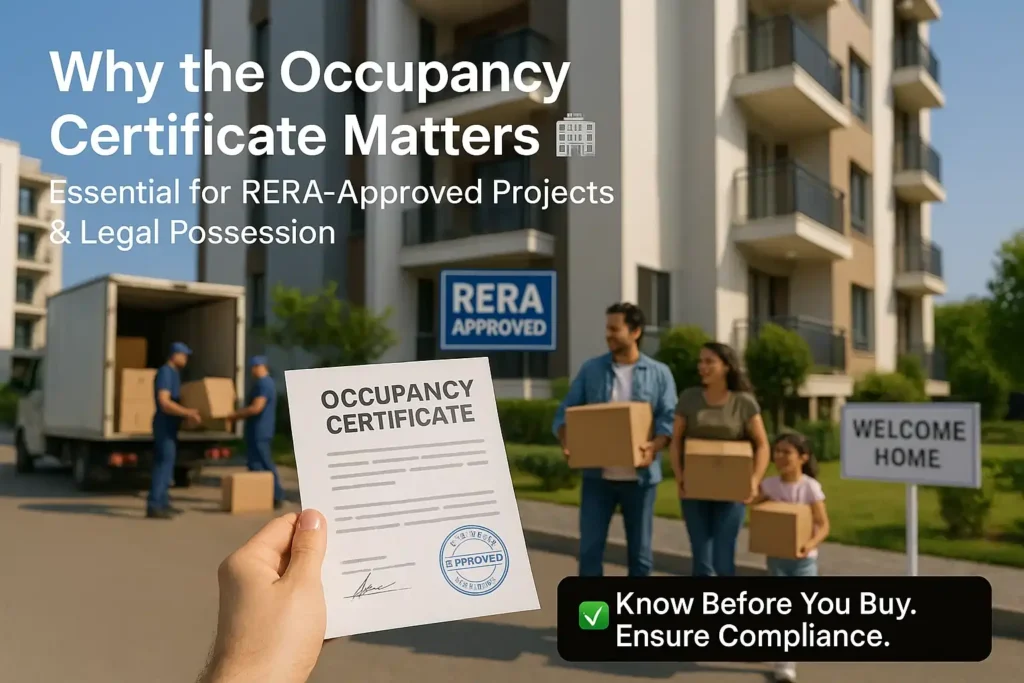
What is an Occupancy Certificate?
An Occupancy Certificate (OC) is an official document issued by the local municipal or development authority. It certifies that the building:
- Has been constructed as per the approved building plan
- Meets all local building codes and safety norms
- Is ready and safe for human occupancy
In simple terms, the OC is your legal permission to live in the property. Without it, the building is considered unauthorized for occupation, even if construction is complete and possession is offered by the builder.
Why is the Occupancy Certificate Important in RERA-Approved Projects?
Under RERA, developers are legally bound to deliver projects as per approved plans and obtain all necessary approvals before handing possession to buyers. The OC plays a central role here. Let’s understand why:
1. Your Legal Right to Occupy
Without an OC, living in a newly built property is technically illegal. RERA clearly mandates that possession can only be given once the builder secures an Occupancy Certificate from the authority.
2. Proof of Safety and Standards
An OC confirms that your home complies with essential requirements such as:
- Fire safety installations
- Adequate water supply
- Electricity connections
- Proper sewage and sanitation systems
This ensures that you are moving into a property that is safe and habitable.
3. Essential for Utility Connections
Authorities typically require an OC before granting permanent connections for electricity, water, and gas. Without it, you may have to depend on temporary or unauthorized connections, which can be unreliable and unsafe.
4. Required for Loans, Resale, and Insurance
- Banks: Most financial institutions will not approve a home loan or a loan against property without an OC.
- Resale: Buyers and investors always demand an OC for legal clarity. Lack of it can reduce your property’s value.
- Insurance: Many insurance companies refuse to cover buildings without an OC.
5. Protection Against Builder Malpractices
Some builders attempt to hand over possession using a “possession letter” or “completion certificate,” but these are not substitutes for an OC. RERA protects buyers from such practices by making OC mandatory for possession.
What Happens if You Take Possession Without an OC?
Accepting possession without an OC can create long-term legal and financial troubles:
- Legal risk: Authorities may consider your property unauthorized and issue eviction or penalty notices.
- Lack of amenities: Permanent water and electricity connections may be denied.
- Reduced value: Reselling the property becomes complicated without a valid OC.
- Loan difficulties: Banks may reject your loan or refinancing applications.
How Can Buyers Ensure They Get an OC?
Here are practical steps for homebuyers:
- Check RERA Registration – Always verify if the project is registered under RERA. RERA-registered projects are more likely to follow compliance.
- Ask for OC Before Possession – Do not accept keys or move in unless the builder shows you the Occupancy Certificate.
- Verify with Local Authority – If needed, cross-check the OC directly with the municipal authority for authenticity.
- Do Not Rely on Other Certificates – Remember, a possession letter or completion certificate is not a substitute for an OC.
Key Difference: Occupancy Certificate vs. Completion Certificate
- Completion Certificate (CC): Certifies that the building is constructed as per the approved plan.
- Occupancy Certificate (OC): Certifies that the building is safe, has required services, and is ready for people to live in.
In short: A Completion Certificate allows the builder to finish the project; an Occupancy Certificate allows you to live in it.
An Occupancy Certificate is not just another formality—it is your legal shield. In RERA-approved projects, it ensures compliance with laws, guarantees safety, and protects your financial interests.
As a homebuyer, you should always remember this golden rule:
No OC, No Move-In.
Your dream home is more than just bricks and walls—it must be safe, legal, and officially approved for you to live in.
Frequently Asked Questions
1. What is an Occupancy Certificate (OC)?
An Occupancy Certificate is a legal document issued by the local municipal authority that certifies the building is constructed as per approved plans, follows safety norms, and is fit for human habitation.
2. Is an Occupancy Certificate mandatory in RERA-approved projects?
Yes. Under RERA, developers must obtain an OC before handing over possession to homebuyers. Without it, the property is considered incomplete and unauthorized for occupation.
3. Can I register my property without an Occupancy Certificate?
Yes, in some cases, property registration may be allowed without an OC. However, this does not make the property legally habitable. Registration only gives ownership rights, while the OC gives the right to occupy.
4. What is the difference between a Completion Certificate (CC) and an Occupancy Certificate (OC)?
- Completion Certificate (CC): Confirms that the building is constructed according to the sanctioned plan.
- Occupancy Certificate (OC): Confirms that the building is safe, has essential services, and can be occupied by residents.
Both are important, but the OC is essential for living in the property.
5. How long does it take to get an Occupancy Certificate?
Once construction is completed, developers usually apply for an OC. Authorities may take anywhere between 30 and 90 days to issue it, depending on local regulations and inspections.
6. Can I get a home loan without an Occupancy Certificate?
Most banks and financial institutions require an OC before sanctioning a home loan or a loan against property. Without it, you may face loan rejection or limited financing options.
7. What problems can I face if I move in without an OC?
If you occupy a property without an OC:
- Authorities may issue penalties or eviction notices.
- You may not get permanent water, gas, or electricity connections.
- The resale value of your property may decrease.
- Banks may reject your loan applications.
8. Who is responsible for obtaining the Occupancy Certificate?
The builder or developer is responsible for applying for and obtaining the OC from the local authority. As a buyer, you must insist on receiving a copy before taking possession.
9. Is an Occupancy Certificate required for resale properties?
Yes. If you plan to buy or sell a resale property, the OC acts as proof that the property is legally fit for occupation. Lack of it can create legal and financial hurdles during resale.
10. Can RERA help if my builder has not provided an OC?
Yes. If a developer refuses to provide an OC, you can file a complaint with the RERA authority in your state. RERA ensures that builders follow compliance and protects buyers’ rights.