Deciding on a fixed or floating rate of interest can significantly impact your money outflow and organising your finances. The differences, benefits, drawbacks, and suggestions for helping you decide the correct option for your mortgage or personal loan are given in this guide.
The decision of the correct type of interest rate is among the most significant decisions when obtaining a loan. Borrowers are often perplexed as to whether they should opt for a fixed or a floating interest rate. Each of these has certain advantages and risks. It is very important to know the difference between fixed and floating interest rates when acquiring a home loan or personal loan if you want to make a financially wise decision. and also learn about repo rate.
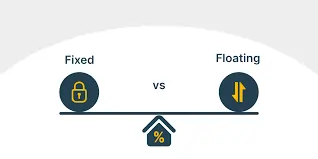
What Is a Fixed Interest Rate?

A fixed interest rate is exactly what it sounds like—it stays the same throughout your loan tenure. Your monthly repayments (EMIs) remain constant, irrespective of changes in market rates.
Key Benefits of Fixed Interest Rate Loans:
- Predictable Payments: Monthly EMIs remain stable, making it easier to plan your budget.
- Protection Against Rising Rates: Even if market interest rates rise, your loan rate is locked.
- Ideal for Long-Term Planning: Perfect for borrowers with long-term loans who value stability.
Example: If you take a home loan with a fixed interest rate of 8% for 15 years, your EMI will not change, even if general interest rates fluctuate.
What Is a Floating Interest Rate?
A floating interest rate, also known as a variable or adjustable rate, changes periodically based on market conditions. It is linked to a benchmark, such as the central bank’s repo rate, and may increase or decrease over time.
Key Benefits of Floating Interest Rate Loans:
- Lower Initial Rate: Usually starts lower than fixed rates.
- Potential Savings: If market rates fall, your monthly payments decrease.
- Flexible for Short-Term Loans: Works well if you plan to pay off the loan quickly.
Example: A home loan with a floating interest rate of 7% may initially offer lower EMIs. If the rate drops to 6.5%, your EMI reduces, saving you money.
Fixed vs Floating Interest Rate: Key Differences
Understanding the fixed and floating interest rate difference helps you make an informed decision.
| Aspect | Fixed Interest Rate | Floating Interest Rate |
|---|---|---|
| Rate Consistency | Remains the same throughout the loan | Changes based on market trends |
| EMI Predictability | EMIs stay the same | EMIs vary with interest rates |
| Market Impact | Not affected by market fluctuations | Directly influenced by rate changes |
| Starting Rate | Slightly higher than floating rate | Usually lower initially |
| Risk Exposure | Minimal risk from rate changes | Exposure to interest rate fluctuations |
| Long-Term Savings | May miss savings if rates fall | Could save if rates decline |
| Prepayment Flexibility | May include charges | Usually more flexible |
Advantages of Fixed and Floating Interest Rate Loans
Fixed Interest Rate Loans
- Steady Payments: No surprises in your monthly budget.
- Peace of Mind: Safe from sudden rate hikes.
- Best for Long-Term Planning: Ideal for loans with 10–20 year tenure.
Floating Interest Rate Loans
- Lower Initial EMIs: Good for short-term affordability.
- Opportunity to Save: Benefit when market rates fall.
- Market-Linked Flexibility: Suitable for borrowers comfortable with some risk.
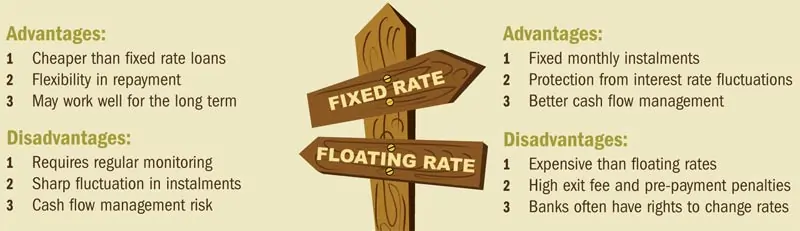
Disadvantages of Fixed and Floating Interest Rate Loans
Fixed Interest Rate Loans
- Higher Starting Rate: Slightly higher than floating rates initially.
- No Benefit from Rate Drops: Savings are missed if market rates fall.
- Prepayment Charges: Some lenders charge fees for early repayment.
Floating Interest Rate Loans
- Unpredictable EMIs: Monthly payments can rise unexpectedly.
- Budgeting Challenges: Harder to plan finances due to rate fluctuations.
- Payment Stress: May not suit borrowers with low risk tolerance.
How to Decide Between Fixed and Floating Interest Rates
Your decision to opt for a fixed or floating interest rate should be based on various factors, such as:
- Loan Duration: A fixed rate is more appropriate for long-term loans, whereas a floating rate can be advantageous for short-term loans.
- Market Trends: If the interest rates are predicted to increase, then it is safer to go for a fixed rate. On the other hand, if the rates are expected to decrease, you can save money by opting for a floating rate.
- Budget Flexibility: A fixed rate is suitable for a borrower who requires certainty, while a floating rate is more suitable for a borrower who is comfortable with fluctuating changes.
- Risk Tolerance: A fixed rate is considered to be of low risk, while a floating rate entails some risk but has the potential to offer savings.
- Lender Options: There may be some lenders who allow you to switch from a fixed to a floating rate and vice versa—find out whether this is possible.
Fixed vs Floating Interest Rate Example
Let’s compare a home loan of ₹50 lakh for 20 years:
- Fixed Rate (8%): EMI ≈ ₹41,366, stays constant for 20 years.
- Floating Rate (7% initially): EMI ≈ ₹38,824, may rise or fall with market conditions.
Here, the floating interest rate vs fixed interest rate shows the trade-off: initial savings versus long-term predictability.
Fixed or Floating: Which Is Better Interest Rate?
There’s no universal answer to “Fixed or floating – which is the better interest rate?” The best option depends on your financial goals:
- Choose Fixed Rate if you want stability, peace of mind, and predictable payments.
- Choose a floating rate if you are okay with risk, want potential savings, and can handle EMI fluctuations.
visit our site
Conclusion
Choosing between a fixed vs floating interest rate is a critical financial decision. Both fixed and floating interest rate options have their own advantages and disadvantages.
- Fixed rates offer stability, long-term planning, and protection against rising rates.
- Floating rates offer lower initial EMIs, flexibility, and potential savings if market rates decline.
If you know the difference between fixed and floating interest rates, analyse your budget, loan term, and risk tolerance, you will be able to choose the interest rate type that matches your financial needs the most.
Keep in mind that the proper decision is the one that goes hand in hand with your way of life, your ability to repay, and your level of financial risk with which you are comfortable. Whichever you decide – fixed or floating – the decisions made wisely now will enable you to handle your loan efficiently in the future.
FAQs Frequently Asked Questions
1. What is the difference between a floating interest rate and a fixed interest rate?
This FAQ explains how floating rates change with the market while fixed rates remain constant, helping borrowers understand the pros and cons of each type.
2. How does fixed interest rate vs floating interest rate affect my monthly EMI?
This question focuses on how your monthly payments differ depending on whether you choose a fixed or floating interest rate.
3. What is the difference between fixed and floating interest rates for home loans?
Here, you can explain the impact on long-term home loan payments, predictability, and financial planning.
4. Can you give a fixed and floating interest rate example?
Provide a simple calculation showing EMIs for both fixed and floating interest rates using the same loan amount and tenure.
5. Which is better: fixed or floating ? which is better interest rate for me?
This FAQ guides readers on how to choose the right option based on their financial goals, risk tolerance, and loan duration.