Introduction
Rajasthan, the largest state in India by area, is known for its vast stretches of agricultural land and vibrant rural economy. With agriculture being the primary livelihood for a significant portion of the population, understanding the agriculture land taxation policy in Rajasthan is crucial for farmers, landowners, and investors. Whether you are cultivating crops or investing in rural farmland, compliance with state land tax norms can save you from penalties and legal hassles.
This blog offers an in-depth look at Rajasthan’s agriculture land taxation system, covering key elements like tax slabs, exemptions, conversion charges, and important updates.
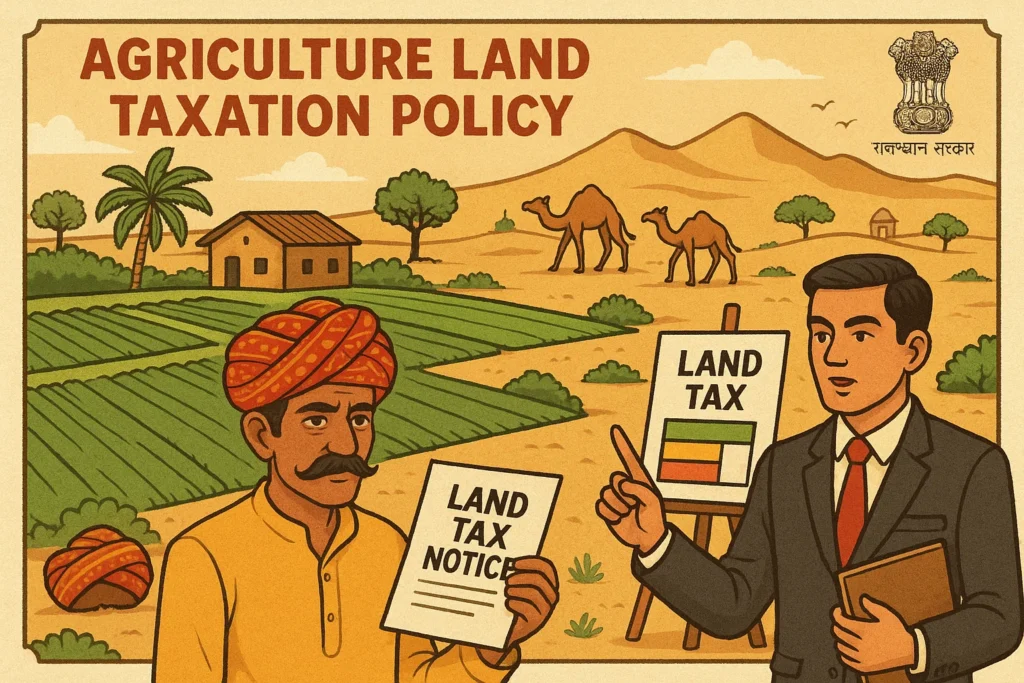
What is Agricultural Land Taxation?
Agricultural land taxation refers to the levy imposed by the government on land used for farming or agricultural purposes.In Rajasthan, the Revenue Department and other local authorities issue notifications and enforce state-specific rules under the Rajasthan Land Revenue Act to guide taxation policy.
Key Components of Agricultural Land Taxation in Rajasthan
1. Land Revenue Tax
The Rajasthan government collects the land revenue, or “Bhoomi Rajस्व,” as a nominal tax from owners of agricultural land. The government assesses it based on the:
- Area of land (in hectares or bighas)
- Type of land (irrigated or non-irrigated)
- Location (village, tehsil, or district zone)
In many areas, the amount is as low as Rs. 5 to Rs. 50 per bigha per year, depending on usage and productivity. Landowners must pay this tax annually at the local tehsil office or online via the Apna Khata Rajasthan portal.
2. Conversion Charges for Non-Agricultural Use
If agricultural land is converted into non-agricultural use like residential, industrial, or commercial purposes, it attracts conversion charges and higher taxation. The Urban Improvement Trust (UIT) or Rajasthan State Industrial Development and Investment Corporation (RIICO) may levy additional fees.
Conversion tax slabs:
- Residential: Rs. 50 to Rs. 250 per sq. meter
- Industrial: Rs. 100 to Rs. 400 per sq. meter
- Commercial: Rs. 200 to Rs. 1000 per sq. meter
Note: Rates vary by location (urban, peri-urban, or rural).
Tax Exemptions and Benefits
1. Farmer Tax Exemptions
Rajasthan’s tax policy provides significant relief for small and marginal farmers. Agricultural land held by individuals solely for cultivation purposes is largely exempt from income tax and has nominal land revenue charges.
2. No Capital Gains Tax on Inherited Agricultural Land
If the land is inherited and used for farming, then, under Section 10(1) of the Income Tax Act, capital gains tax may be waived; moreover, this benefit applies provided the land falls within designated rural zones.
3. Stamp Duty Concessions
The state offers lower stamp duty on agricultural land transactions compared to urban land deals. Women buyers receive 2% additional rebate on stamp duty under the Rajasthan Stamps Act.
Digital Records and Online Tax Payment
To improve transparency and ease of access, the Rajasthan government has digitized land records and revenue collection via:
- Apna Khata Rajasthan (apnakhata.raj.nic.in)
- E-Mitra Portal
- Rajkisan Portal
These platforms allow landowners to:
- View Jamabandi (land records)
- Pay land revenue online
- Apply for land conversion
- Check mutation status
Agricultural Income Tax Is It Applicable?
As per Indian tax laws, agricultural income is exempt from central income tax under Section 10(1). However, states can impose taxes at their discretion. For instance, Rajasthan currently does not levy income tax on agricultural income; nevertheless, landowners must ensure that their income genuinely qualifies as agricultural income to avoid any legal issues.
If you sell agricultural land within 2 years of purchase, you will likely have to pay short-term capital gains tax under Section 45 of the Income Tax Act. Moreover, buyers should be aware that proper documentation and valuation are essential to accurately calculate the tax. Therefore, consulting a tax professional before the sale is highly recommended.
Penalties for Non-Compliance
Failure to comply with land tax norms can lead to:
- Fines
- Cancellation of land conversion approvals
- Legal disputes in revenue courts
- Delay in transfer of ownership
To avoid such issues, always:
- Update mutation records after purchase
- Pay annual land tax on time
- Verify usage before converting land
Recent Updates in Rajasthan’s Land Taxation
1. 2023-2024 Budget Announcement
The Rajasthan state government announced digitization of 100% land records and simplification of agriculture to residential land conversion process. New conversion norms now allow:
- Faster online approvals
- Unified conversion rates in Gram Panchayat areas
- E-stamping facility through E-Mitra
2. Introduction of Land Bank Policy
To attract investment, the Rajasthan government introduced a Land Bank Policy, enabling private investors to lease agricultural land for renewable energy, warehousing, and agro-processing with tax benefits.
Investment Perspective: Why It Matters
Rajasthan is witnessing a growing interest from urban investors in agricultural and farm land investments, mainly because of its favorable climate, increasing infrastructure development, and promising long-term returns. Additionally, government incentives and improved connectivity are further attracting investors to this sector.
- Low entry costs
- Availability of large land parcels
- Proximity to Delhi-NCR, Jaipur, and Gujarat
- Rising trend of weekend farmhouses and organic farming
Moreover, understanding land taxation helps investors plan their exit strategies effectively, while also enabling them to accurately calculate capital gains and identify potential tax-saving opportunities during resale or land pooling.
Important Documents for Land Taxation
To ensure smooth compliance with agricultural land taxation, keep these documents handy:
- Jamabandi/Record of Rights
- Khasra Map
- Mutation Deed
- Conversion Sanction Letter (if applicable)
- Revenue Payment Receipt
- Agricultural Income Certificate (if claiming tax exemption)
Agricultural land taxation in Rajasthan is a crucial aspect of rural development and real estate planning. Whether you’re a farmer, landowner, or investor, staying updated with land revenue policies, exemptions, and digital services is essential. Moreover, it helps you remain compliant with government regulations while also maximizing your land’s value and long-term potential.returns.
As the state embraces digitization and policy reforms, taxation is becoming more structured and transparent. Therefore, it is always advisable to consult local revenue officers or qualified tax consultants before buying, converting, or selling agricultural land in Rajasthan. By doing so, you can avoid potential legal disputes and financial complications in the future.
Frequently Asked Questions
- What is agricultural land taxation in Rajasthan?
Agricultural land taxation refers to the levy imposed by the government on land used for farming or agriculture, based on its area, location, and productivity. - Who is required to pay agricultural land tax in Rajasthan?
Landowners or farmers holding agricultural land in Rajasthan are required to pay land tax to the respective revenue or municipal authorities. - How is agricultural land tax calculated in Rajasthan?
The tax is generally calculated based on the type of crop, land classification, area of the land, and prevailing government rates. - Are there exemptions from agricultural land tax in Rajasthan?
Yes, certain categories like small farmers, government-recognized charitable organizations, or specific types of land use may receive exemptions or concessions. - What is the penalty for not paying agricultural land tax?
Non-payment can lead to fines, interest on unpaid amounts, and, in extreme cases, legal action or land recovery by the government. - How often must agricultural land tax be paid?
The tax is usually payable annually, but specific deadlines and schedules may vary depending on local municipal or revenue authorities. - Can agricultural land be reclassified for different tax purposes?
Yes, land can indeed be reclassified based on its usage. For instance, it can be converted from agricultural to non-agricultural purposes. However, such a change usually requires several approvals and may also attract different tax rates depending on the new classification. - Does agricultural land tax affect property sales or transfers?
Yes, all pending taxes must be cleared before the sale or transfer of agricultural land in order to ensure legal compliance and also to avoid future disputes. - How can farmers or landowners pay agricultural land tax in Rajasthan?
You can typically make payments at local revenue offices, municipal offices, or through online portals provided by the Rajasthan government.