Registering the sale deed is necessary when the property is purchased in India, and so is Dakhil Kharij. In states such as Haryana, Uttar Pradesh, Bihar, Jharkhand, and West Bengal, the registration of this process guarantees that ownership becomes legally realized. Get to know about Dakhil Kharij and the benefits of the same to secure your investment and prevent future conflicts.
What Is Dakhil Kharij?
Dakhil Kharij: The mishmash of two Hindi words:
Dakhil = entry
Kharij = removal
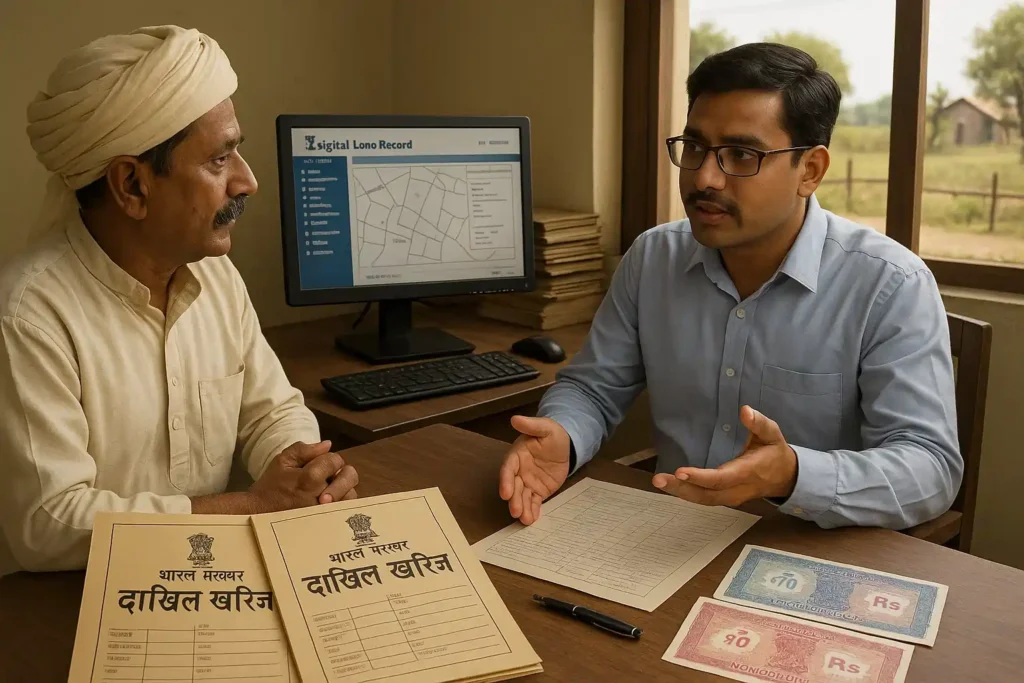
As a property term, it refers to the mutation of land records. The process amends government revenue books following a property change through sale, gift, inheritance, or partition. Once it is done, you will be the name of the owner of the land in the official records, which is crucial in terms of taxes, loans, or resale.
Dakhil Kharij Haryana is an assurance that all the local revenue records are indicative of your ownership, and it is a very significant step for property buyers in the state.
Importance of Dakhil Kharij
It is important to complete Dakhil Kharij. Here’s why:
Confirmation of Legal Ownership.
The records may still record the previous owner after the sale deed had been registered. Dakhil Kharij attests on government revenue papers that he is the legal owner.
Transfer of tax Responsibility.
The name is the only name that pays property tax in the land records. The mutation leaves this burden on you.
Prevent Disputes
The modified documents act as the main evidence in any legal battle or in any case of property rights.
Loan Eligibility
Before granting property-based loans, banks usually demand recent Dakhil Kharij.
Compensation and Schemes by the Government.
The benefits of government schemes or land acquisition compensation can only be availed to registered owners in the revenue books.
Leran More Call Our Expert +918447171092
When Is Dakhil Kharij Required?
You should apply to the Dakhil Kharij in instances like:
Following the sale/ purchase of land.
Upon the passing after the demise of a family member.
When receiving land as a gift
When the heirs were dividing the house.
After being ordered to change ownership in court.
Step-by-Step Dakhil Kharij Procedure.
Step 1: Gather Necessary Paperwork.
Prepare:
Registered Sale Deed
Latest Khatauni / Jamabandi
Property tax receipts
Identity & address proofs
Application form (Mutation) (Tehsil office or online)
Will or Succession Certificate (in case inherited)
Step 2: Apply for Mutation
apply to Dakhil Kharij:
Offline: Tehsil office
Online: State portals of land records.
State Portal
Uttar Pradesh upbhulekh.gov.in.
Bihar biharbhumi.bihar.gov.in
Jharkhand Jharbhoomi. nic. in
West Bengal banglarbhumi.gov.in
Dakhil Kharij online has enabled quicker application and easy tracked status.
Step 3: Checking and Inspection.
Revenue officers will:
Verify submitted documents
Carry out a physical check (when necessary)
Issue an advertisement of objections.
Step 4: Objection Period
Wait 15-30 days in regard to objections of the people. Act fast to eliminate delays.
Step 5: Mutation Approval
In case of no objections, the Tehsildar endorses the Dakhil Kharij and changes your name in the land records.
Step 6: Observe Revised Land Records.
Make sure that you download or gather your updated Khatauni or Jamabandi to affirm legal ownership.
Timeline and Fees
Aspect Details
Processing Time: 15 30 working days.
Fees ₹100–₹500 (varies by state)
Mode Online or Offline
Common Mistakes to Avoid
Failure to apply to Dakhil Kharij upon purchase.
Misselling or incomplete documents.
The ownership is just assumed by virtue of the sale deed.
Lack of regard for notice or objections by the people.
Conclusion
Dakhil Kharij is a necessary legal procedure that is required by all property purchasers, investors, and heirs. This process in Haryana and other states in North India will guarantee your name is registered as the rightful owner, guard against the creation of claims, that you will be allowed to pay taxes, and that your loan application will be stronger.
Monitor your Dakhil Kharij status and, wherever feasible, use the Dakhil Kharij online to get it done at a faster and safer rate. Knowing what Dakhil Kharij is and taking the right steps has made you legally clear and serene when it comes to owning property.
FAQs
1. What is Dakhil Kharij, and why should it be?
Dakhil Kharij is the mutation that updates the records of the government on revenue following a transfer of the property. It will guarantee that your name takes the place of the name of a seller in official land registers. It can also be that without it, the valuable might still be registered as the previous owner even after registration of the sale deeds.
2. What is my Dakhil Kharij?
Dakhil Kharij can be verified on the land records portal of the state. All you have to do is to type in your district, tehsil, khasra number or the account number and the current ownership record is displayed.
3. Does Dakhil Kharij exist online?
Actually, numerous states accept Dakhil Kharij online applications and status checks. As an example, you can apply and monitor mutation on such portals as UP Bhulekh, Bihar Bhumi, and Banglar Bhumi.
4. Why is the significance of Dakhil Kharij so big to property buyers?
Dakhil Kharij is important because it establishes ownership in law, shifts the tax responsibility and facilitates loan facilities. It also avoids conflicts as the records of the government show the real owner.
5. What will be the outcome of not taking Dakhil Kharij?
Unless you pay attention to Dakhil Kharij, the government records might still indicate the seller as the owner of the land. This is able to block loans, legal and eligibility to compensation or government schemes.