It might appear that buying land can be easily taken as an investment, however there is more to this acquisition than the place and the price. The savoir of land purchase, which can hardly be overestimated indeed, is the knowledge of the zoning laws that regulate the piece of land. The reasons why zoning regulations must be acknowledged are significant legal problems, building prohibitions, and loss of finances. You should never enter into any land transaction without being fully knowledgeable of the zoning factors that encompass the piece of land you are looking into.
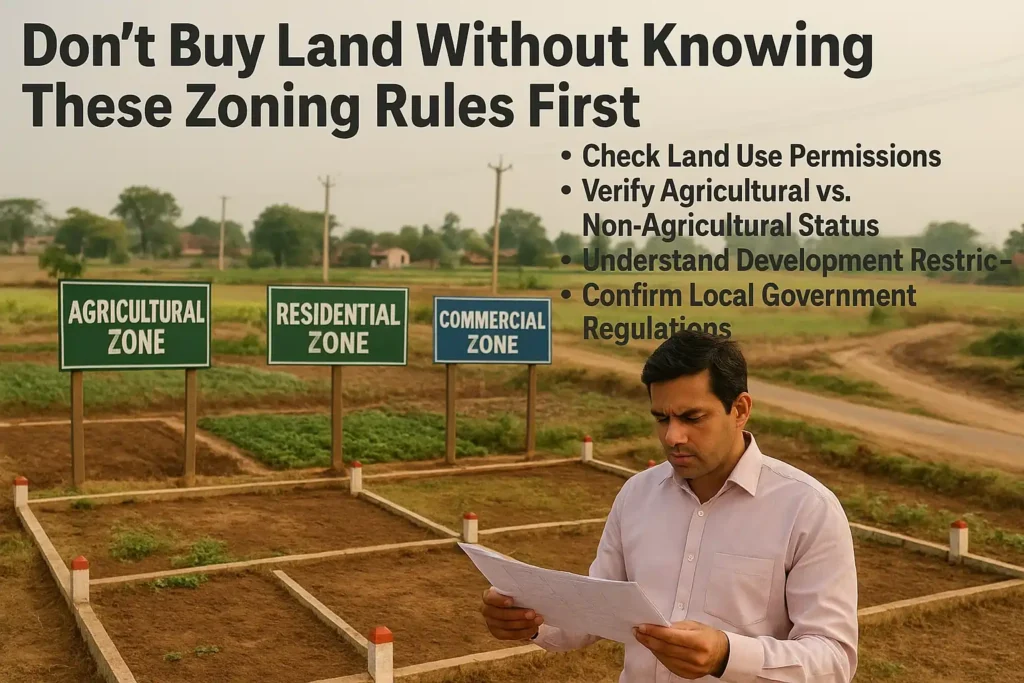
What Are Zoning Rules?
Zoning regulations are the rules that are put in place by the local or municipal governments to regulate the purpose of land use. Such laws categorise areas into zones e.g. residential zone, commercial zone, industrial zone, agricultural zone, or mixed use zone. The zoning laws regulate not only the kind of structures that should be built, the height of buildings, requirements of set back, but also the use to which one may put a particular piece of land.
Understanding zoning is not optional—it’s a legal necessity. These rules ensure planned development and protect the interests of communities, governments, and investors alike.
Why Zoning Laws Matter in Land Purchase
Zoning laws impact your rights as a landowner. Buying land without understanding its zoning status can result in:
- Inability to construct your desired project
- Legal disputes with authorities or neighbors
- Property devaluation
- Costly delays due to rezoning or compliance
- Fines and demolition orders
For example, if you buy agricultural land intending to build a hotel, you could be in violation of zoning laws and be forced to halt your project.
Common Zoning Types You Should Know
Before you invest, check which zoning classification applies to the land:
- Residential Zoning (R)
Only homes can be built—single-family, multi-family, or apartments depending on subcategories. - Commercial Zoning (C)
Allows for shops, offices, malls, restaurants, and other business activities. - Industrial Zoning (I)
Suitable for manufacturing, warehouses, and heavy industries. These usually come with noise and pollution considerations. - Agricultural Zoning (A)
Restricts land use to farming, animal husbandry, and other agri-based activities. - Mixed-Use Zoning
Combines residential, commercial, and sometimes industrial uses. Common in urban developments and townships. - Special Purpose Zones
Includes zones like green belts, institutional, heritage, or environmentally sensitive areas.
Key Zoning Terms to Understand
Here are important zoning terms every land buyer should know:
- Setback: The minimum distance a building must be from the boundary line.
- Floor Area Ratio (FAR): Ratio of a building’s total floor area to the size of the land.
- Non-conforming Use: Existing usage of land/building that doesn’t align with current zoning but was legal when initiated.
- Rezoning: Legal process of changing a land’s zoning classification.
- Land Use Certificate (LUC): Proof of permitted use; often required for transactions and loan approvals.
Also Read:
- Standard Real Estate Laws & Regulations in India A Complete Guide
- Can You Legally Sell a Property in Cash? Understanding Indian Law and Tax Rules
- Things to Consider Before Buying Rural Land
- Proven Tips to Stage Your Home and Sell It Fast
How to Check Zoning Before Buying Land
To avoid zoning-related complications, take these steps:
- Visit Local Development Authority
Contact the municipal office, urban planning department, or district collectorate to verify the land’s zoning classification. - Request Zoning Map and Land Use Certificate
Official zoning maps provide clarity about permissible uses. Always request the latest version. - Review Master Plans
Cities and towns have development master plans outlining future zoning changes. Review these to assess long-term potential or risks. - Get Legal Due Diligence Done
Consult a real estate lawyer to confirm that zoning laws allow your intended use and there are no pending violations. - Check for Environmental or Heritage Restrictions
Some lands are in eco-sensitive zones, coastal regulation zones (CRZ), or near heritage structures. These come with additional limitations.
What If the Zoning Doesn’t Match Your Intended Use?
You have a few options:
- Apply for Rezoning: This is a formal process and may require public hearings, fees, and approvals. Success isn’t guaranteed.
- Look for Variances: A zoning variance may allow deviation from existing rules in special cases.
- Consider Land That Matches Your Purpose: Sometimes it’s more practical to find a parcel already zoned for your use rather than taking on the risk and time of rezoning.
Mistakes to Avoid
- Assuming all rural land is free for construction
Agricultural or forest lands often have tight usage rules. - Overlooking nearby zoning
The zoning of adjacent parcels affects your property’s value and usability. A residential plot next to an industrial zone may have limited appeal. - Ignoring setback and FAR limits
Even within the right zone, these technical limits can restrict the scale of your project.
Zoning Rules in India: A Quick Snapshot
Zoning rules in India vary state to state and even city to city. Major urban planning bodies include:
- DTCP – Department of Town and Country Planning (Haryana, Tamil Nadu, etc.)
- DDA – Delhi Development Authority
- MCD / Local Municipal Corporations – Zoning approvals and building plans
- RERA – Though not directly involved in zoning, compliance with RERA may be linked to zoning adherence
Always verify the applicable zoning rules based on the state and district you are buying land in.
Purchasing land when you are not familiar with zoning laws is akin to walking into a trap, with a blindfold over your eyes. Individuals who start out as first-time buyers, an investor or even a developer should not leave out doing a due diligence on zoning laws in order to gain success. These regulations determine what you may and may not use to be built, how this is to be done, and whether your ideas regarding the land might ever have a chance of coming true.
Get results by taking the time to confirm the zoning, speak to authorities and make sure you are investing in something that is right and within the legal and strategic boundaries. It is not buying but the proper buying of the land to be used in proper ways.
Looking to buy land with expert guidance?
Work with qualified real estate consultants and legal advisors to ensure you’re compliant with local zoning laws before making any commitment. Call us (7428812398)