Due to the increasing cost of living and changing preferences at the work place, most Indian homeowners are reconsidering their style of living and accepting downsizing as a way of life by downgrading to a small place or a cheaper city. But the big question is: whether to sell in a Tier-1 city such as Mumbai, Delhi or Bangalore or is it more prudent to shift to a Tier II city such as Jaipur, Indore or Lucknow?
We explore the pros and cons of downsizing in Tier-1 vs Tier-2 Indian cities, helping you make an informed decision based on lifestyle, investment value, and long-term goals.
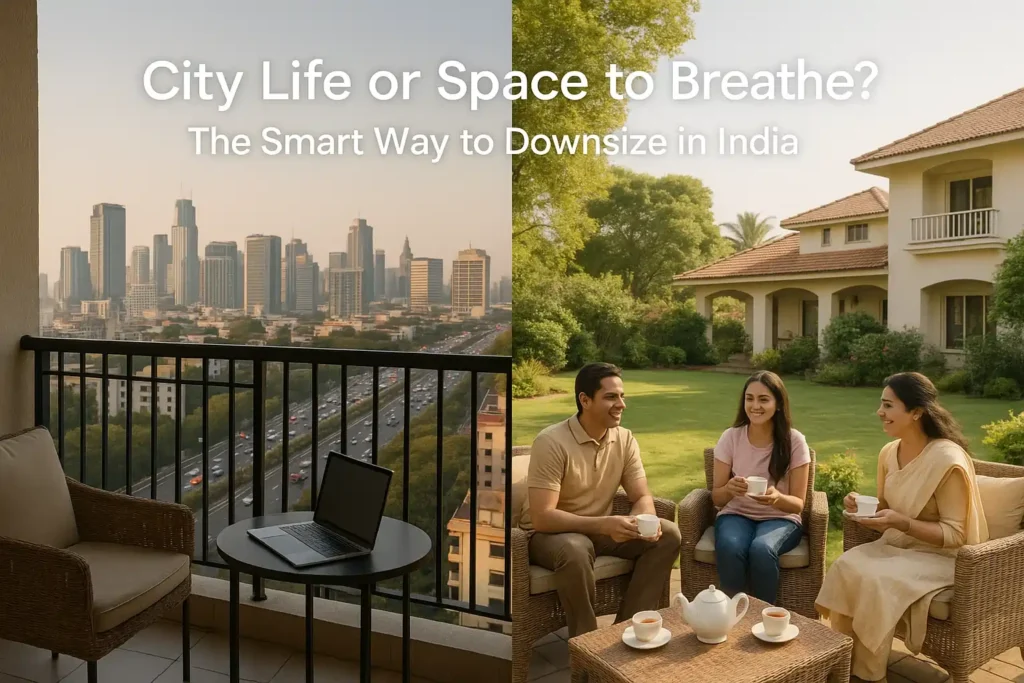
What Does Downsizing Mean in the Indian Real Estate Context?
Downsizing is no longer just about moving into a smaller home. In India, it often means:
- Moving to a more affordable city
- Reducing monthly outgoings (EMI, maintenance, utility bills)
- Shifting to retirement-friendly or remote work-compatible cities
- Liquidating real estate in high-demand zones to unlock capital
For many, downsizing is a financial strategy; for others, it’s about quality of life.
Understanding Tier-1 and Tier-2 Indian Cities
Tier-1 Cities (Metro Cities)
These are India’s largest, most developed cities with global connectivity, dense infrastructure, and high living costs.
Examples: Delhi NCR, Mumbai, Bangalore, Chennai, Hyderabad, Kolkata
Tier-2 Cities
These are emerging urban centers with improving infrastructure, growing job markets, and lower real estate costs.
Examples: Jaipur, Indore, Lucknow, Coimbatore, Chandigarh, Bhubaneswar
Cost of Living: Tier-1 vs Tier-2 Cities
Tier-1 Cities
- High property rates (₹10,000–₹35,000 per sq.ft)
- Higher rental yields but expensive entry point
- Costly utilities, groceries, and private services
- More traffic, pollution, and space constraints
Tier-2 Cities
- Lower property prices (₹3,000–₹8,000 per sq.ft)
- Better per sq.ft value in residential areas
- Affordable living with increasing quality services
- Less congestion and a relaxed pace of life
Conclusion: If your primary goal is cost-efficiency, Tier-2 cities offer better ROI in terms of space, value, and lifestyle upgrades.
Job Opportunities and Connectivity
Tier-1 Cities
- Better job density in corporate sectors
- Home to top MNCs, startups, and tech parks
- Better domestic and international connectivity
Tier-2 Cities
- Growing startup ecosystems and regional offices
- Many companies adopting remote or hybrid models
- Well-connected by national highways and regional airports
Pro Tip: If you have a remote job, moving to a Tier-2 city can drastically cut costs without compromising income.
Real Estate Investment Perspective
Tier-1 Downsizing
- Downsizing within the same city (e.g., from South Delhi to Dwarka)
- Unlocks capital but not substantial cost reduction
- Suitable for those unwilling to relocate completely
Tier-2 Relocation
- Huge savings on purchase/rental costs
- Potential for higher appreciation as Tier-2 cities expand
- Ideal for retirees, remote workers, and early investors
Expert Insight: Cities like Lucknow, Jaipur, and Coimbatore are witnessing steady real estate appreciation and are considered safe bets for value-for-money downsizing.
Lifestyle and Quality of Life
Tier-1 Cities
- Better healthcare, schools, and global lifestyle exposure
- However, traffic, noise, and stress levels are high
Tier-2 Cities
- Cleaner environment, slower pace, lower stress
- Emerging healthcare and education hubs
If you’re looking for a peaceful post-retirement life or a family-friendly environment, Tier-2 cities may be a smarter choice.
Who Should Downsize in Tier-1 Cities?
- Professionals still tied to a metro-based job
- Families needing access to premium schools or hospitals
- Investors wanting to retain high-liquidity assets
Strategy Tip: Consider downsizing from prime to peripheral locations within the city to reduce costs but retain metro benefits.
Who Should Move to Tier-2 Cities?
- Retirees seeking lower costs and better quality of life
- Remote workers or freelancers with location independence
- Young investors looking for affordable entry into real estate
Case Example: A Mumbai-based family sold their 2BHK in Andheri for ₹2.2 Cr and bought a spacious villa in Jaipur for ₹80 Lakhs. The remaining funds were invested in mutual funds, generating monthly passive income.
Downsizing Trends in 2025 India
According to recent real estate trends in India (2025):
- Over 35% of urban homebuyers are exploring Tier-2 cities for relocation
- NRIs and retirees are driving demand in places like Dehradun, Mysore, and Udaipur
- Cities like Raipur, Surat, and Vishakhapatnam are seeing double-digit YoY growth in housing demand
Smart Downsizing Tips
- Evaluate your lifestyle needs – Don’t just focus on cost, consider healthcare, social life, and weather.
- Check resale value and liquidity – Especially in Tier-2 cities with developing markets.
- Visit before you buy – Spend a week in your shortlisted city to get a real feel.
- Work with local property consultants – Use verified agents and RERA-registered firms.
- Plan tax implications – Downsizing may trigger capital gains; speak to a financial advisor.
Which Is Smarter?
There is no one-size-fits-all answer. But here’s a quick summary:
| Factor | Tier-1 Cities | Tier-2 Cities |
|---|---|---|
| Property Cost | High | Affordable |
| ROI Potential | Stable | Growing |
| Lifestyle Quality | High but stressful | Balanced and improving |
| Ideal for | Corporate professionals | Remote workers, retirees, investors |
| Smart move if… | You want to stay metro-connected | You seek cost savings + space |
If affordability, space, and lifestyle matter most—Tier-2 cities are smarter.
If job access and established infrastructure are non-negotiable—downsizing within Tier-1 makes sense.
Regardless of whether you are an investor, retired or even a working individual, a strategic lifestyle and economical decision should be on downsizing. The developing urban environment in India provides interesting prospects both in Tier-1 and Tier-2 cities.
Make the move that aligns with your goals—not just your square footage.
Looking for Trusted Property Advice?
At The Whitelisted Estate, we assist you in making wiser real estate choices- whether or not it is down-sizing, going to a different location, or investment activity. Our consultants are RERA approved and this offers both free and paid consultancy setup to meet any buyer.
Get in touch today for a personalized downsizing plan that fits your budget and lifestyle.
FAQ,s frequently asked quetions
1. What does downsizing mean in the context of Indian real estate?
Downsizing refers to selling a larger property and moving into a smaller, more manageable home—often for lifestyle flexibility, easier maintenance, or to unlock investment potential.
2. Why are many homeowners in Tier-1 cities considering downsizing?
People in Tier-1 cities often downsize to reduce maintenance efforts, live closer to essential amenities, or shift to communities offering modern lifestyle features and better livability.
3. What makes Tier-2 cities appealing for those planning to downsize?
Tier-2 cities offer less congestion, growing infrastructure, and a balanced lifestyle—making them ideal for retirees, remote professionals, and those seeking better community living.
4. How does lifestyle differ when downsizing in Tier-1 versus Tier-2 cities?
In Tier-1 cities, downsizing usually prioritizes convenience and access to established amenities, while in Tier-2 cities, it often focuses on space, community living, and a slower-paced lifestyle.
5. What factors should you consider before downsizing in any Indian city?
Key factors include connectivity, healthcare access, community quality, future growth potential, and alignment with your lifestyle and long-term plans.