Introduction
Gurgaon, once a sleepy suburb of Delhi, has rapidly evolved into one of India’s most dynamic real estate hubs. This transformation isn’t just due to its corporate presence or luxury living spaces—it’s driven by major infrastructure developments. Two critical forces leading this change are expressways and metro network expansion. These developments are redefining urban mobility and have become game-changers for property buyers, investors, and developers.
In this blog, we explore how these infrastructure projects are unlocking new growth corridors in Gurgaon and creating immense opportunities in the residential and commercial real estate markets.
The Infrastructure Push: A Snapshot
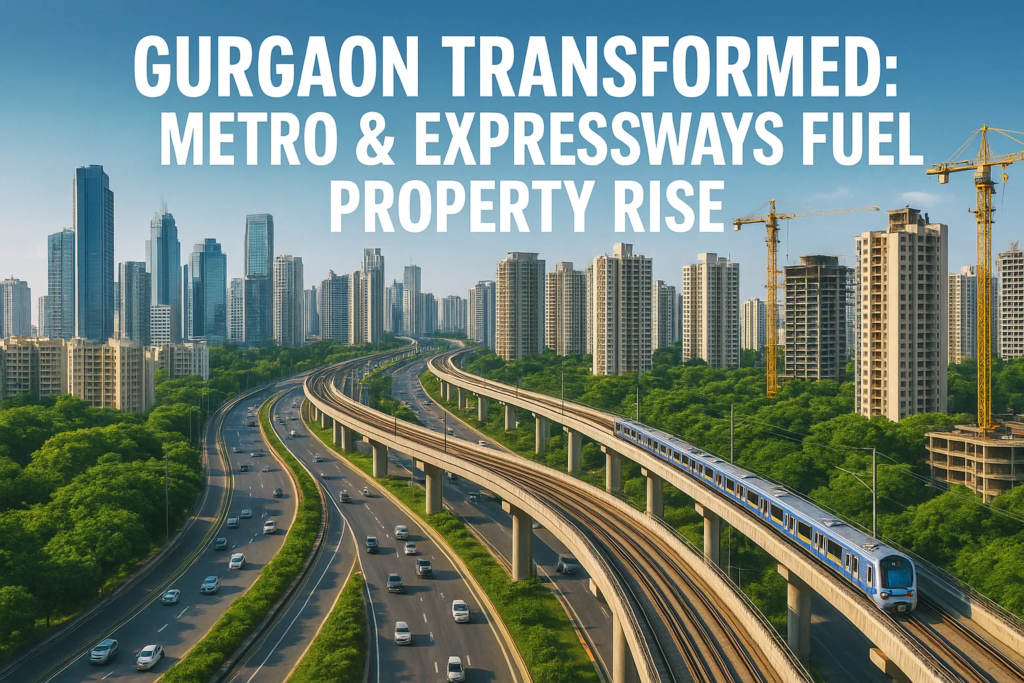
Before diving deep, here’s a look at the major expressways and metro projects fueling Gurgaon’s transformation:
Key Expressways:
- Dwarka Expressway (Northern Peripheral Road)
- Southern Peripheral Road (SPR)
- Central Peripheral Road (CPR)
- Delhi–Mumbai Expressway
- NH-48 Expansion
Key Metro Expansions:
- Delhi Metro Yellow Line Extension to Cyber City
- Gurgaon Metro (GMDA’s Metro Lite Project)
- Rapid Metro Expansion Plans
- Future connectivity to IGI Airport and Dwarka Sector 21
How Expressways are Shaping Gurgaon Real Estate
1. Improved Connectivity to Delhi and Beyond
The completion of the Dwarka Expressway, expected to fully open in 2025, offers a seamless connection between Dwarka and NH-48, bypassing traffic bottlenecks on the Delhi-Gurgaon highway. It provides faster access to IGI Airport and central Delhi, making Sectors 102–113 highly desirable.
2. Boost to Emerging Micro-Markets
Areas like New Gurgaon, Sohna, and Golf Course Extension Road are witnessing a surge in real estate activity. These regions offer affordability compared to central Gurgaon and are now highly connected via the SPR, CPR, and Dwarka Expressway.
Fast-Growing Real Estate Pockets:
| Expressway | Impacted Localities |
|---|---|
| Dwarka Expressway | Sectors 99–113, Bajghera, Palam Vihar |
| SPR | Sectors 68–74, 76–80 |
| Delhi-Mumbai Expressway | Sohna, Naugaon, Alwar corridor |
3. Price Appreciation
New infrastructure reduces travel time and enhances accessibility—this directly translates into increased land and apartment prices. For instance, property prices along the Dwarka Expressway have appreciated by over 25–30% in the last two years.
Metro Expansion The Lifeline of Urban Gurgaon
1. Ease of Commute for Professionals
Gurgaon is home to major MNCs, IT parks, and BPOs. Metro expansion means employees can ditch long traffic jams for fast, clean travel. The proposed Cyber City to Udyog Vihar metro line is expected to decongest major arterial roads.
2. Push for Transit-Oriented Development (TOD)
The metro lines have triggered a wave of TOD projects, where residential and commercial projects are being developed within walking distance of metro stations. These hubs attract both end-users and investors due to the high rental yields and constant footfall.
3. Higher ROI for Investors
Metro-connected properties tend to fetch higher resale values and better rental occupancy. For example, areas like Sector 54–56 near Rapid Metro stations have seen consistent rental growth, making them investor favourites.
Impact on Residential Real Estate
a. Affordable Housing in New Corridors
With connectivity improving, developers are launching affordable housing projects in sectors like 89–95 (New Gurgaon) and Sohna, previously seen as too remote.
b. Luxury Developments in Prime Zones
Developers like DLF, M3M, and Smartworld are betting big on high-end projects along the SPR and Dwarka Expressway, aimed at HNIs and NRIs looking for lifestyle living.
Impact on Commercial and Retail Spaces
a. Grade-A Office Spaces
New connectivity has made areas like Golf Course Extension Road and SPR lucrative for commercial development, with increased demand for Grade-A office space.
b. Retail Boom
With higher footfall near metro stations and expressway junctions, shopping centres and high-street retail formats are booming in sectors like 47, 70A, and 113.
Future Outlook A Real Estate Revolution in the Making
1. Sustainability and Smart Urban Planning
Gurgaon is set to become a model of smart urban development, integrating metro hubs, arterial roads, and residential clusters with eco-conscious planning.
2. Increased Interest from NRIs and Institutional Investors
With world-class infrastructure and better returns, Gurgaon is attracting significant NRI investments and institutional funding, especially in projects near expressways and metro routes.
3. Land Value Surge in Peripheral Areas
Villages and undeveloped sectors along the Delhi-Mumbai Expressway and CPR are seeing land values jump, sparking farmhouse projects, plotted developments, and logistics parks.
Final Thoughts
The synergy of expressway development and metro expansion is transforming Gurgaon from a corporate suburb into a global real estate destination. These projects are not just easing traffic—they’re redefining lifestyles, unlocking investment opportunities, and reshaping the urban landscape.
For homebuyers, this means better choices and future-ready infrastructure. For investors, it spells high growth corridors and strong ROI. And for Gurgaon, it signals the dawn of a new era in real estate development.
FAQ,s Frequently asked questions
1.How are new expressways influencing property prices in Gurgaon?
Faster connectivity and reduced travel time make areas along expressways more desirable, often increasing property values.
2.Which Gurgaon sectors are benefiting most from metro expansion?
Sectors near metro stations and corridors, such as Dwarka Expressway, Golf Course Extension, and Sohna Road, are witnessing higher demand.
3.Does metro expansion affect both residential and commercial real estate?
Yes, improved connectivity boosts residential convenience and attracts commercial investments, including offices and retail spaces.
4.Are properties near upcoming expressways a good long-term investment?
Typically, yes. Properties near new infrastructure often see appreciation as the area develops and becomes more accessible.
5.How quickly do real estate markets respond to new metro lines and expressways?
Market response can be gradual; some areas see immediate interest, while others may take a few years as infrastructure becomes operational.