When buying farmland in India, one of the most important decisions a buyer faces is choosing between freehold and leasehold land. Both options have unique advantages, risks, and implications for ownership, investment, and long-term security. Understanding these differences is crucial before making a purchase, especially if you are planning to use the land for farming, building a farmhouse, or holding it as a long-term investment.
In this article, we break down the concepts of freehold and leasehold farmland, explain their pros and cons, and help you decide which option might be better for you.
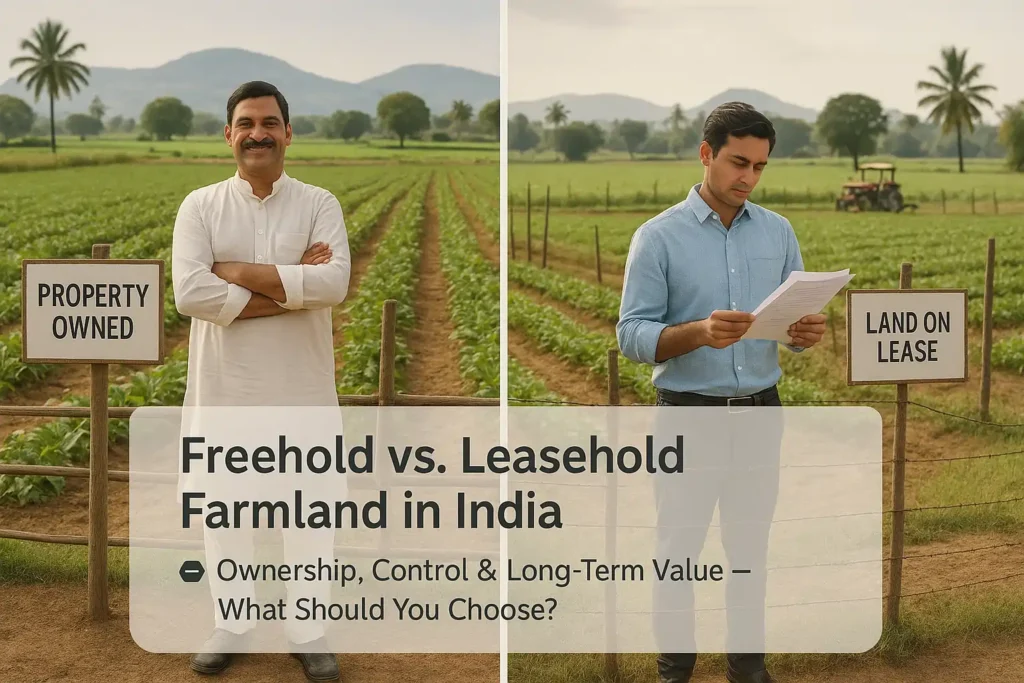
What is Freehold Farmland?
Freehold farmland refers to land where the buyer has absolute ownership rights. Once registered, the owner has full control over the property, including the right to sell, lease, mortgage, or transfer it.
Key Features of Freehold Land:
- Absolute Ownership: You own the land permanently with no time limit.
- Heritable Property: Ownership can be passed on to heirs without restrictions.
- Fewer Restrictions: The owner can use the land for farming or farmhouse purposes, subject to local zoning and land use laws.
- Higher Market Value: Freehold properties generally command higher resale value.
What is Leasehold Farmland?
Leasehold farmland refers to land that is leased from the government or private owners for a fixed period, usually ranging from 30 to 99 years. After the lease period ends, the ownership reverts to the original owner (often the government or a trust), unless the lease is renewed.
Key Features of Leasehold Land:
- Limited Ownership Period: Buyers only have rights for the lease duration.
- Transfer Restrictions: Sale or transfer often requires prior approval from the lessor (government/authority).
- Renewal Uncertainty: After lease expiry, renewal terms may be costly or uncertain.
- Lower Cost: Leasehold land is generally cheaper upfront compared to freehold.
Freehold vs. Leasehold Key Differences
| Aspect | Freehold Farmland | Leasehold Farmland |
|---|---|---|
| Ownership | Permanent and absolute | Time-bound (30–99 years) |
| Transfer Rights | Easy sale, mortgage, or gift | Often requires approval |
| Investment Value | Higher appreciation | Moderate appreciation |
| Legal Security | More secure | Subject to renewal terms |
| Cost | Expensive upfront | Cheaper initially |
| Heir Rights | Easily transferable | Restricted after lease expiry |
Advantages of Freehold Farmland
- Long-Term Security: No fear of lease expiry or renewal complications.
- Better Financing Options: Banks prefer freehold property for loans.
- Investment Growth: Higher appreciation due to permanent ownership.
- Ease of Sale: Can be sold or transferred without restrictions.
Advantages of Leasehold Farmland
- Lower Entry Cost: More affordable, especially for first-time buyers.
- Short-Term Use: Suitable for those who want land for a limited period.
- Government Projects: Many government agricultural plots are leasehold, making them accessible for farmers.
Risks and Challenges
Freehold Land Risks:
- Higher upfront costs may limit affordability.
- Land disputes or unclear titles in rural areas.
- Restrictions under agricultural land laws (for non-farmers in certain states).
Leasehold Land Risks:
- Renewal uncertainty after lease expiry.
- Dependence on authority approvals for resale or mortgage.
- Lower appreciation compared to freehold properties.
Which is the Better Option?
The choice between freehold vs. leasehold farmland depends on your goals:
- If you are looking for long-term investment, inheritance value, and financial security, freehold farmland is the better choice.
- If you want affordable land for short-term farming or projects, leasehold farmland can be practical.
- Investors should also consider state laws, as agricultural land ownership is regulated differently across India.
Expert Tip
Before purchasing any farmland, always:
- Verify land title and ownership documents.
- Check local zoning laws and agricultural restrictions.
- Ensure land conversion permissions if you plan to build a farmhouse.
- Consult a real estate legal advisor for due diligence.
Both freehold and leasehold farmland come with their own benefits and limitations. Freehold offers security, freedom, and long-term value, while leasehold provides affordability and accessibility. The right choice depends on your investment horizon, financial capacity, and land use objectives.
Making an informed decision with proper legal checks will ensure your farmland investment is safe, profitable, and future-ready.