The worldwide shift to sustainable mobility is transforming industries across the world and the real estate industry is not an exception. After India announced its goal to achieve 30 percent electric vehicle (EV) penetration by 2030, the need to develop EV-friendly infrastructure is making a ripple effect in residential and commercial property markets.
In this article, we are going to discuss how charging infrastructure, policy incentives and changing consumer preferences are affecting property demand, and why developers and investors must move with speed.
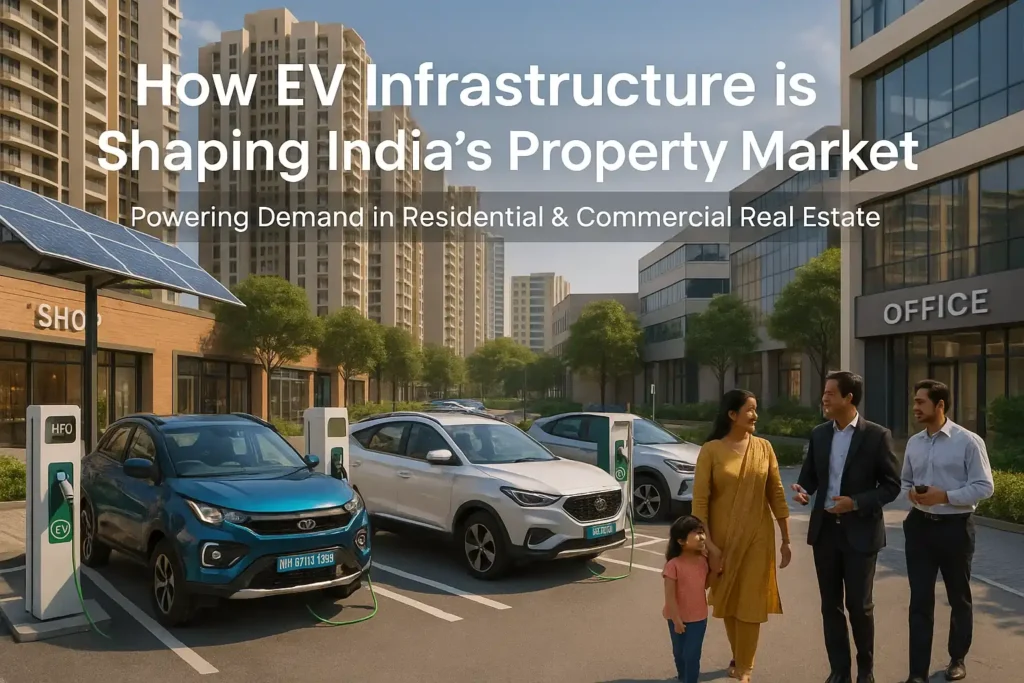
Why EV Infrastructure Matters in Real Estate
Proximity to the metro stations and airports has been a determinant of the value of property since decades. At present, EV charging services are becoming an equally valued facility.
- Consumer Convenience: Homebuyers prefer apartments, villas, or gated communities with EV charging points to avoid dependency on public stations.
- Corporate ESG Goals: Businesses are adopting EV fleets and prefer commercial office spaces that support charging facilities.
- Government Push: Policies such as FAME II, state subsidies, and RERA disclosures encourage developers to integrate EV-ready designs.
In short, EV infrastructure is moving from a luxury to a necessity, much like power backup or high-speed internet did a decade ago.
Impact on Residential Property Demand
1. Homebuyer Preferences are Shifting
According to a 2024 survey by Knight Frank, 63% of Indian homebuyers said EV charging is an added value in the property selection. EV compatibilities are already selling at high prices in cities such as Gurgaon, Noida, Bengaluru, and Pune.
2. Gated Communities and Builder Floors
Developers are introducing special charging points, basement, parking, and commons. First movers are marketing their projects as future-proof, which appeals to greener consumers and millennials who become more prone to purchase EVs.
3. Resale and Rental Premiums
Properties whose charging is an in-house solution will have higher resale values and premium rentals rates in comparison with properties that lack it. It is especially the case in metropolitan cities in which EV adoptions are increasing at a fast rate.
Impact on Commercial Property Demand
1. EV-Ready Offices are a New Standard
For IT parks SEZs, and co-working spaces, having EV charging stations is no longer optional. Corporate tenants prefer buildings that align with sustainability goals, and developers are leveraging this trend to attract long-term leases.
2. Retail & Hospitality Spaces Benefit
Shopping malls, multiplexes and hotels that have charging stations are increasing foot traffic. Customers would love to have places where they can charge their cars as they make purchases or have dinner, which generates two values to businesses and property owners.
3. Industrial & Warehousing Demand
As e-commerce and logistics companies switch to EV fleets, warehouses near highways with charging hubs are becoming more valuable. Properties in logistics corridors that offer EV infrastructure can command higher lease rates.
Government Policies Driving the Shift
The Indian government is aggressively promoting EV adoption through:
- FAME II Scheme – ₹10,000 crore allocated for EV adoption support.
- State EV Policies – Maharashtra, Delhi, and Haryana offer subsidies for EV charging stations.
- Mandatory Provisions – The Ministry of Housing and Urban Affairs has suggested that at least 20% of parking spaces in new projects should be EV-ready.
These initiatives directly impact developers, making EV infrastructure a regulatory requirement, not just a selling point.
Investment Implications
To developers: EV charging infrastructure is not an option anymore, it is a differentiator in the market. Those without it can be of less competitiveness in 5-10 years.
For homebuyers: Investing in properties with EV readiness ensures future-proofing and better resale value.
For commercial investors: Buildings with EV-compatible facilities will attract quality tenants, higher rentals, and longer lease terms.
Challenges Ahead
While the outlook is positive, there are challenges:
- High Setup Costs: Installing charging stations requires upfront capital and power grid upgrades.
- Standardization Issues: Multiple charging standards may confuse developers and buyers.
- Maintenance: Regular upkeep and billing systems for charging usage are additional responsibilities.
However, with technological innovation and government subsidies, these hurdles are gradually being addressed.
The Road Ahead
It is a fact that EV infrastructure affects real estate demand. Similarly to the way broadband connectivity transformed housing decisions during the 2000s, the availability of EV-charging is bound to characterize the coming decade of property development.
- Residential Demand → EV-ready homes will see faster sales and price appreciation.
- Commercial Demand → Offices, malls, and warehouses with charging hubs will gain a competitive edge.
EV infrastructure will in the long term be a normal benchmark of real estate value that will affect the purchasing decisions, rental returns, and investment policies.
Conclusion
The fast proliferation of Electric Vehicle (EV) systems is transforming the residential and commercial real estate markets in India. Housing with EV charging points is becoming a vision of the future, as both environmentally friendly customers and tenants are interested in such investment. In residential areas, EV-friendly facilities are establishing themselves as a major point of difference that improves property value, convenience, and sustainability qualifications. Commercial real estate EV infrastructure promotes green building certification, attracts high-profile tenants, and corporate ESG objectives.
The demand to buy such properties will continue to increase as the government policies keep encouraging electric mobility and developers keep adding features of EV-compatibility to their projects. In the end, EV infrastructure is not only a technological level improvement but a boost to urban change, changing consumer preferences, and affecting the future value of property in the changing Indian real estate environment.
FAQ,S Frequently asked questions
1. How does EV infrastructure impact property demand?
EV infrastructure boosts property demand by making residential and commercial spaces more attractive to environmentally conscious buyers and tenants. Properties with EV charging points are perceived as modern, convenient, and future-ready.
2. Why is EV infrastructure important in real estate development?
It adds long-term value, supports sustainability goals, and aligns with government initiatives promoting green mobility. Developers integrating EV charging facilities stand out in a competitive real estate market.
3. How is the commercial property market adapting to EV adoption?
Commercial complexes and office parks are adding multiple EV charging bays to attract corporate tenants, enhance ESG scores, and provide employee-friendly amenities.
4. Are EV charging points mandatory in new buildings?
In many cities, yes. For instance, Delhi and Maharashtra have introduced building codes requiring a specific percentage of parking spaces to be EV-ready.
5. How are EV-ready properties influencing tenant preferences?
Tenants increasingly prefer EV-compatible properties for convenience, sustainability, and cost savings on transportation, making such spaces more competitive.
6. What is the future outlook for EV infrastructure in property markets?
As EV adoption accelerates, EV infrastructure will become a standard feature in both residential and commercial developments—driving long-term demand, sustainability, and urban innovation.