As India continues its rapid urbanization, the demand for affordable housing is at an all-time high. Public housing projects play a critical role in providing shelter to economically weaker sections (EWS) and lower-income groups (LIG). However, rising concerns over climate change, resource scarcity, and energy costs have brought sustainability into sharp focus. Implementing green building standards in public housing projects is no longer an option but a necessity for long-term affordability, environmental balance, and community well-being.
This article explores why and how green building standards can be integrated into public housing, the challenges involved, and the benefits they bring to both residents and the environment.
What Are Green Building Standards?
Green building standards are guidelines and certifications designed to minimize the environmental impact of construction and ensure long-term sustainability. In India, some widely recognized frameworks include:
- GRIHA (Green Rating for Integrated Habitat Assessment) – India’s national green rating system.
- IGBC (Indian Green Building Council) Ratings – Voluntary certification for sustainable construction.
- LEED India (Leadership in Energy and Environmental Design) – Globally recognized green building certification.
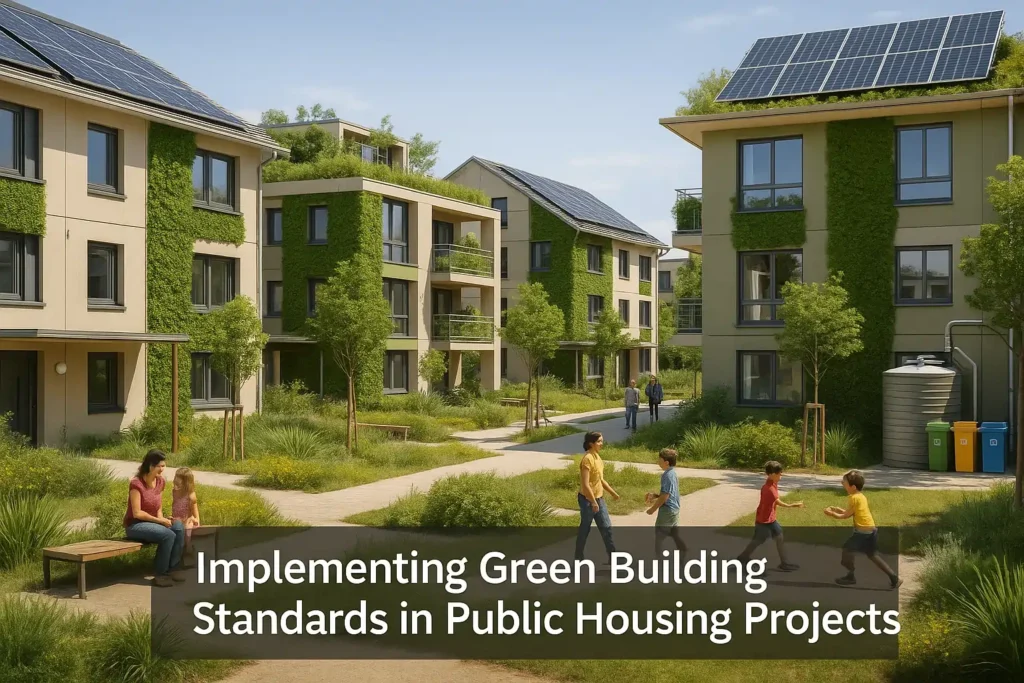
These standards encourage energy efficiency, water conservation, waste management, use of eco-friendly materials, and better indoor air quality.
Why Public Housing Needs Green Standards
- Affordable Living Costs
- Energy-efficient designs reduce electricity bills through natural ventilation, daylight optimization, and renewable energy integration.
- Water-saving systems, such as rainwater harvesting and dual plumbing, cut down utility expenses.
- Healthier Living Environments
- Non-toxic construction materials, better ventilation, and green landscaping promote healthier lifestyles for residents.
- Environmental Responsibility
- Public housing contributes significantly to India’s urban footprint. Incorporating green practices reduces carbon emissions and conserves natural resources.
- Government Policy Alignment
- Initiatives like the Pradhan Mantri Awas Yojana (PMAY) can integrate green housing standards to align with India’s Net Zero 2070 goals.
Key Strategies for Implementing Green Building Standards
- Design Optimization
- Use passive design techniques like proper building orientation, natural lighting, and cross ventilation to cut down energy needs.
- Energy Efficiency
- Solar panels for common areas and rooftop water heating.
- LED lighting and energy-efficient appliances under subsidy schemes.
- Water Management
- Rainwater harvesting for non-potable uses.
- Low-flow fixtures and dual-flush systems to conserve water.
- Material Selection
- Locally sourced, recycled, and low-emission construction materials.
- Fly ash bricks and prefabricated components for sustainable construction.
- Waste Management
- Segregated waste disposal systems in housing complexes.
- On-site composting for organic waste.
- Green Landscaping
- Plantation drives, green roofs, and shaded community spaces.
- Use of native, drought-resistant plants to reduce irrigation needs.
Challenges in Green Public Housing
- Higher Initial Costs: Green materials and technologies may increase upfront expenses, but these are offset by long-term savings.
- Awareness and Training: Builders, contractors, and residents need proper training to adopt and maintain green systems.
- Policy Gaps: While guidelines exist, mandatory enforcement in public housing projects is still limited.
- Scalability: Implementing standards on a large scale across diverse geographies poses logistical challenges.
Case Studies and Examples
- Delhi Development Authority (DDA) has begun adopting solar and rainwater harvesting systems in some of its housing complexes.
- Tamil Nadu Housing Board experimented with fly ash bricks and solar integration in low-cost housing projects.
- International Example: Singapore’s Housing & Development Board (HDB) integrates solar power, waste management, and green landscapes across all public housing.
These examples show that sustainable housing is possible without compromising affordability.
Benefits for Stakeholders
- Residents: Lower monthly expenses, healthier indoor spaces, and improved quality of life.
- Government: Progress toward sustainability goals, reduced urban heat islands, and stronger international standing.
- Developers: Enhanced reputation, access to green subsidies, and long-term maintenance cost reduction.
The Road Ahead
India’s urban housing challenge is also an opportunity. By embedding green building standards in public housing, we can address not just the immediate demand for affordable homes but also ensure these homes remain sustainable for decades. With the government’s focus on smart cities and net-zero goals, public housing can lead the way in sustainable urban development.
Green building standards are not just for luxury projects—they must be at the heart of public housing initiatives. Implementing them will create healthier, cost-efficient, and environmentally responsible communities. While challenges exist, the long-term benefits far outweigh the initial hurdles.
By combining policy push, developer responsibility, and resident participation, public housing can transform into a model of sustainable urban living.