Being a landlord can be a profitable undertaking and a heavy legal undertaking. When landlords enter the rental property business, they usually believe that all they need to do is to rent out property and collect rent, whereas the process is more complicated than that. One legal error may cause both loss of money and lawsuits, not to mention the possibility of criminal charges.
In this article, we’ll highlight the most common legal traps landlords fall into—and how you can avoid them to protect your investment and reputation.
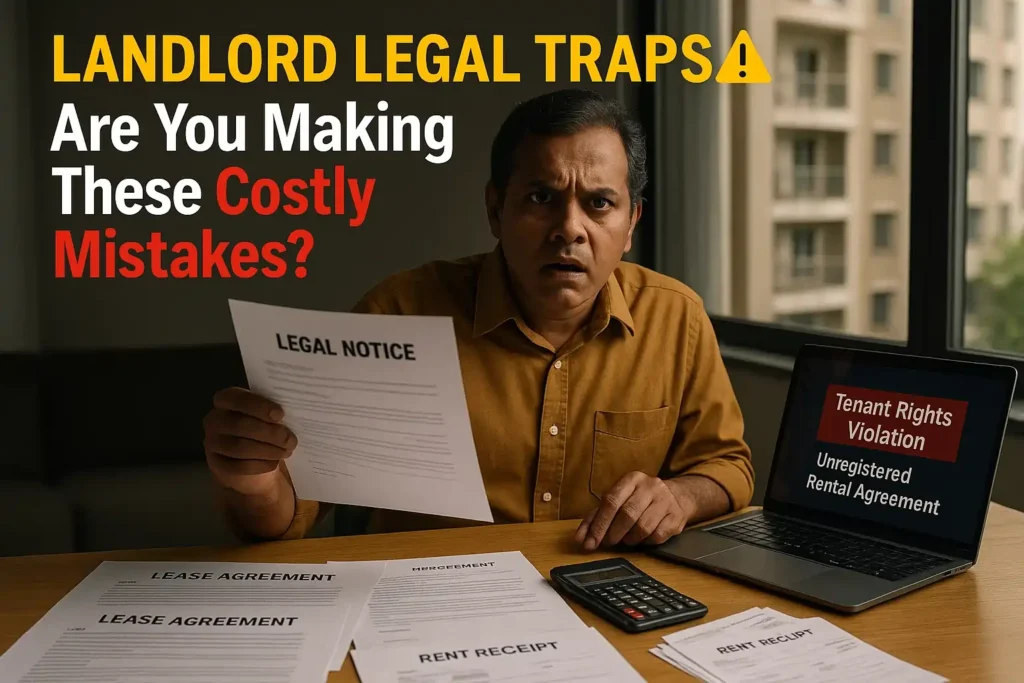
1. Not Having a Properly Drafted Rental Agreement
One of the biggest mistakes landlords make is using generic or verbal rental agreements.
- Why it’s a trap: A poorly drafted lease can leave out essential clauses, making it difficult to enforce rent payments, eviction, or tenant responsibilities.
- Example: If your agreement doesn’t clearly state maintenance obligations, tenants may refuse to pay for damages, leaving you with the bill.
- Tip: Always use a legally compliant lease agreement that’s customized for your state or city laws. Consulting a property lawyer once can save you lakhs later.
2. Ignoring Rent Control and State Laws
Rental laws differ across India, with certain states imposing rent control or specific notice periods.
- Why it’s a trap: Many landlords assume they can increase rent freely or evict tenants at will. Doing so without legal grounds can lead to RERA or consumer court cases.
- Example: In Delhi, you may need a valid legal reason and court order to evict a tenant, even after the lease term ends.
- Tip: Familiarize yourself with your state’s Rent Control Act and tenancy rules before making any decisions.
3. Mishandling Security Deposits
Security deposits often become the center of disputes between landlords and tenants.
- Why it’s a trap: Withholding the deposit without proper justification can result in tenants taking legal action.
- Example: If you deduct for “wear and tear” (which is normal), courts may rule in favor of the tenant.
- Tip: Always provide a written explanation of deductions, backed by photographs or repair invoices.
4. Failing to Register the Lease Agreement
In many states, rental agreements over 11 months must be registered.
- Why it’s a trap: An unregistered lease may not hold up in court, weakening your legal position during disputes.
- Example: If a tenant overstays and your lease isn’t registered, eviction proceedings become more difficult.
- Tip: Register your lease agreement and ensure both parties sign with witnesses.
5. Overlooking Tenant Verification
Skipping tenant background checks may seem like a time-saver, but it can be risky.
- Why it’s a trap: Renting to someone with a criminal background or fraudulent identity can put your property and safety at risk.
- Example: Police verification of tenants is mandatory in many cities like Gurgaon, Noida, and Mumbai. Non-compliance can lead to fines.
- Tip: Always verify tenant identity, employment, and police clearance before handing over the keys.
6. Illegal Eviction Practices
Many landlords try to “force” tenants out by cutting electricity, water, or locking the premises.
- Why it’s a trap: These actions are illegal and can lead to harassment cases against you.
- Example: Courts have penalized landlords for self-help eviction methods, awarding compensation to tenants.
- Tip: Always follow due legal process—serve notice, file for eviction through the proper channels, and obtain a court order if required.
7. Not Reporting Rental Income to the Tax Department
Some landlords think small rental incomes don’t need to be reported, but this is a mistake.
- Why it’s a trap: Non-disclosure of rent can attract penalties, interest, and even IT notices.
- Example: If you earn more than ₹2.5 lakh annually from rent, it must be declared in your Income Tax Return under “Income from House Property.”
- Tip: Declare rental income, claim deductions (like municipal taxes and 30% standard deduction), and stay compliant.
8. Ignoring Maintenance and Safety Obligations
Landlords often assume tenants will handle minor repairs or safety compliance.
- Why it’s a trap: Neglecting repairs can make you liable for accidents or property damage.
- Example: If a tenant suffers an injury due to faulty wiring, you could face negligence claims.
- Tip: Conduct regular maintenance checks and ensure compliance with fire, electrical, and structural safety standards.
9. Not Updating Agreements for Corporate or Commercial Tenants
If you’re renting to a company or startup, a residential lease won’t be enough.
- Why it’s a trap: Using the wrong lease type can lead to tax disputes or zoning violations.
- Example: Running a business from a residential property may breach local municipal rules.
- Tip: Clearly state the purpose of tenancy and use a commercial lease where applicable.
10. Relying on Informal Settlements Instead of Legal Recourse
Many landlords prefer “settling things amicably” without paperwork.
- Why it’s a trap: Verbal settlements have no legal weight, and tenants may exploit the situation.
- Example: A tenant promises to vacate “next month” but stays for years. Without proper documentation, eviction becomes lengthy.
- Tip: Always issue written notices, maintain receipts, and record tenant communications.
Protect Yourself Before It’s Too Late
Ending up as a landlord in India is not only about being the owner of the property but a matter of compliance, documentation and keeping watch. The justice system tends to support tenants and avoid their exploitation, and thus, landlords have to be careful in their actions and irresponsible.
Smart landlords avoid these traps by:
- Using legally vetted agreements
- Registering leases
- Declaring rental income properly
- Following due process in disputes
Also Read:
- Maximize Profits, Minimize Taxes 5 Legal Loopholes Every Real Estate Investor
- The IRS Won’t Tell You This 5 Legal Loopholes
- Keep More of What You Earn Smart, Legal Tax Strategies
- How to Verify Property Legally Before Buying in Gurgaon
Final Thoughts
Being a landlord may be rewarding as well as it has complex legal applications. Most property owners are making expensive errors often without knowing it, including not specifying the terms of the lease to mismanagement of the security amount or complaints of tenants. These pitfalls can be avoided by keeping on top of things, keeping accurate records, and consulting a professional lawyer.
Being able to comply is not only about not being punished, but also about safeguarding your investment and building a trustful relationships with your tenants. Sophisticated landlords consider legal awareness to be one of the essential aspects of their real estate strategy.
FAQ,s Frequently asked questions
1. What are the most common legal mistakes landlords make?
The most common legal mistakes include not having a written lease, ignoring tenant rights, mishandling security deposits, and failing to comply with local housing laws. These can lead to expensive lawsuits or property losses.
2. Can a landlord be sued for discrimination?
Yes. If a landlord violates the Fair Housing Act by discriminating against tenants based on race, religion, gender, or disability, they can face severe penalties and legal action.
3. Is it legal for landlords to enter a rental property without notice?
No. Landlords must give reasonable notice—usually 24 to 48 hours—before entering, except in emergencies. Unauthorized entry can be considered a violation of tenant privacy rights.
4. Are verbal rental agreements legally binding?
While some verbal agreements are valid, they’re risky. Without written proof, disputes over rent, repairs, or lease terms can easily arise and are hard to resolve legally.
5. What legal documents should every landlord have?
Essential documents include a detailed lease agreement, rent receipts, inspection reports, and eviction notices. Proper documentation protects landlords in legal disputes.
6. How can landlords avoid legal traps?
Stay updated on landlord-tenant laws, use legally vetted lease templates, keep records, and consult a property attorney for compliance and risk management.