India’s daring infrastructural developments are transforming the country’s connectivity scenario, with the longest expressway in India Delhi-Mumbai Expressway being the most prominent one. Through this mega expressway, the two metropolises of Delhi and Mumbai will be linked directly. The expressway is believed to be a record holder in India, with its length of about 1386 km. By the time the expressway is up an drunning, it will be possible to cut the travel time between the two cities by almost half; thus, the whole trade, logistics, tourism, and urban mobility
Sectors will be transformed. As such, the Delhi-Mumbai Expressway with its state-of-the-art design, greenfield infrastructure, and sophisticated facilities is not only an engineering feat but also a significant landmark in India’s path to being a global leader in the infrastructure sector.
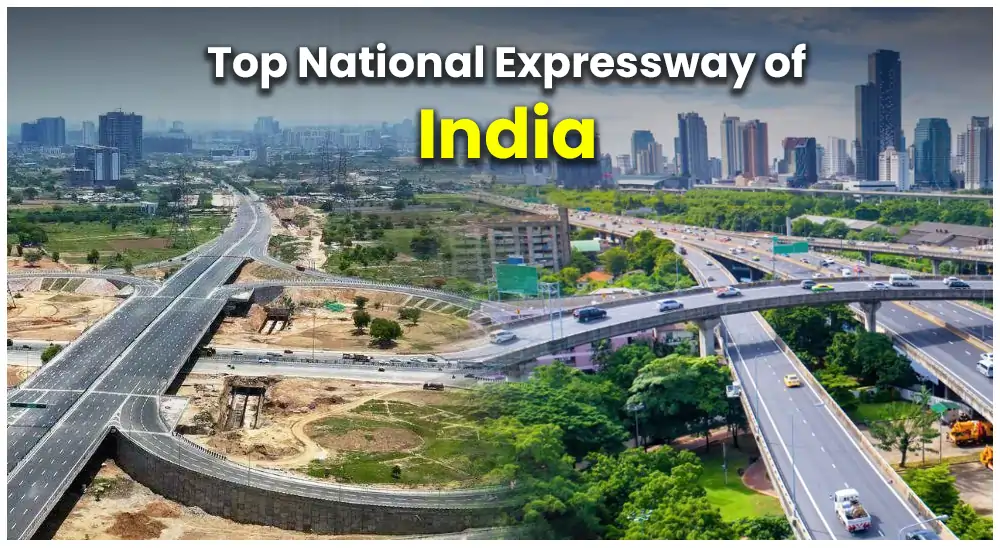
Table: Longest Expressways in India (2025)
| Expressway | Length (km) | States Covered |
|---|---|---|
| Delhi-Mumbai Expressway | 1,386 | Delhi, Haryana, Rajasthan, Madhya Pradesh, Gujarat, Maharashtra |
| Amritsar–Jamnagar Expressway | 1,257 | Punjab, Haryana, Rajasthan, Gujarat |
| Surat–Chennai Expressway | 1,271 | Gujarat, Maharashtra, Karnataka, Telangana, Andhra Pradesh, Tamil Nadu |
| Mumbai–Nagpur Expressway | 701 | Maharashtra |
| Delhi–Jaipur Expressway | 242 | Delhi, Haryana, Rajasthan |
What is the Delhi-Mumbai Expressway?
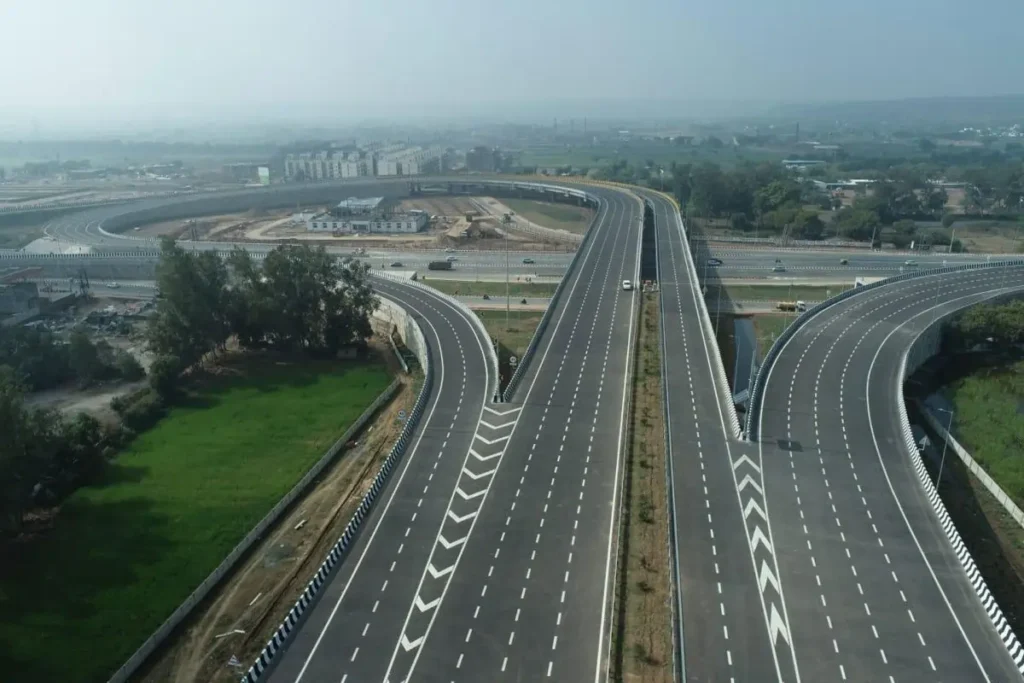
The Delhi-Mumbai Expressway is a brand-new, modern, and fast greenfield expressway without any level crossings, on which heavy vehicular movement and the future of traffic growth are taken into consideration. The highway runs through six states, i.e., Delhi, Haryana, Rajasthan, Madhya Pradesh, Gujarat, and Maharashtra, and connects the cities, the industrial areas, and the economic centres, which lie along the route.
Key Features of the Delhi-Mumbai Expressway:
- Length: 1,386 km
- Lanes: 8 lanes (expandable to 12)
- Speed Limit: 120 km/h for light vehicles, 80–100 km/h for heavy vehicles
- Travel Time Reduction: 24 hours to 12 hours between Delhi and Mumbai
- Infrastructure: Rest areas, trauma centres, fuel stations, EV charging, helipads
- Environmental Measures: Wildlife crossings, solar-powered lighting, 2 million trees planted
The expressway is also designated as National Expressway-4 (NE-4), under the management of NHAI and the Ministry of Road Transport and Highways (MoRTH).
Table: Categories of Indian Expressways
| Category | Purpose | Example | Key Features |
|---|---|---|---|
| National Expressways (NE) | Connect major cities | Delhi-Mumbai Expressway (NE-4) | High-speed, long-distance, tolled |
| Economic Corridors (EC) | Industrial development | Amritsar–Jamnagar Expressway (EC-3) | Connect industrial hubs, trade focus |
| State Expressways (SE) | Regional connectivity | Mumbai–Nagpur Expressway | Connect cities within state, regional development |
| Urban Expressways | Reduce city congestion | DND Flyway, Delhi | Toll-Free, urban mobility |
| Bypass Expressways | Divert through-traffic | Chennai Bypass | Avoid city traffic, faster travel |
History of Expressways in India
Understanding the Delhi-Mumbai Expressway requires a glance at India’s expressway evolution.
Pre-Independence Road Infrastructure
- The Grand Trunk Road (3,655 km), built during the Mauryan era, is one of the earliest high-class roads in India.
- Roads facilitated trade and military movement but lacked modern engineering and access control.
Early Modern Expressways
- Mumbai–Pune Expressway (2002)
- India’s first 6-lane expressway
- Length: 94.5 km
- Set the benchmark for high-speed, tolled expressways
- DND Flyway (2001)
- First 8-lane urban expressway connecting Delhi and Noida
- Operational urban access-controlled expressway
- Ahmedabad–Vadodara Expressway (2004)
- Designated National Expressway 1 (NE-1)
- Length: 93 km
- Integrated modern tolling and service facilities
Bharatmala Pariyojana
- Launched to develop high-speed national corridors and industrial connectivity.
- The Delhi-Mumbai Expressway is a flagship project under this programme.
- Includes over 6,000 km of expressways operational by 2025, with 11,000 km under construction.
Design and Infrastructure Features
The Delhi-Mumbai Expressway sets new standards in Indian expressway design.
Access Control
- Fully access-controlled with grade-separated interchanges
- Entry/exit only at designated points
- Reduces accidents and improves travel speed
Carriageways
- Dual carriageways separated by medians
- Standard lane width: 3.5 m with paved shoulders
- Designed for future expansion from 8 lanes to 12 lanes
Interchanges
- Cloverleaf and trumpet interchanges for high-capacity junctions
- Single Point Diamond Interchanges (SPDI) for smaller connections
Speed Management
- Design speed up to 150 km/h
- Legal speed limit: 120 km/h for light vehicles, 80–100 km/h for heavy vehicles
- Acceleration and deceleration lanes for safety at interchanges
Infrastructure Amenities
The expressway prioritises traveller comfort and safety.
Tolls & FASTag System:
- RFID-based automatic toll collection
- Reduces congestion at toll plazas
- Revenue supports expressway maintenance
Wayside Amenities (WSA):
- Rest areas every 40–50 km
- Fuel stations and EV charging points
- Restaurants, dhabas, and convenience stores
- Trauma centres and medical facilities
- Helipads and drone landing areas at larger hubs
Environmental Measures:
- Wildlife crossings in tiger reserves
- Solar-powered street lighting
- Extensive afforestation programmes
Economic and Social Impact
The largest expressway of India is set to transform economic and social dynamics.
Logistics and Trade
- Reduced travel time lowers transportation costs.
- Improved connectivity boosts freight efficiency
- Industrial hubs along the route benefit from faster goods movement.
Real Estate Growth
- Cities along the expressway see higher property demand
- Investment opportunities in hospitality, retail, and logistics sectors
Tourism & Employment
- Tourist destinations become more accessible.
- Creation of jobs in construction, service facilities, and infrastructure maintenance
Key Benefits of Delhi-Mumbai Expressway
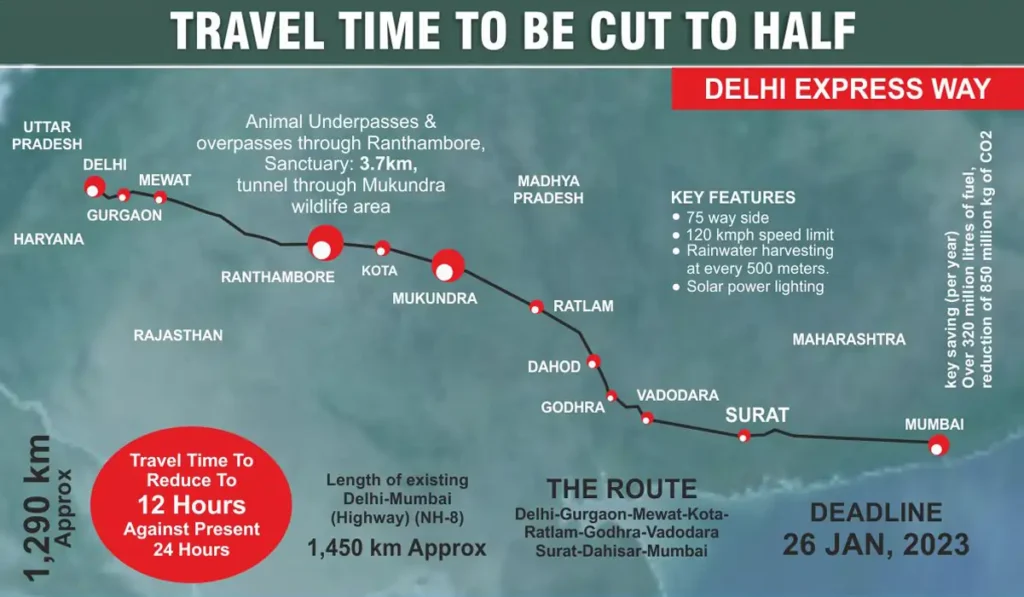
- Time-Saving: Reduces Delhi-Mumbai travel from 24 hours to 12 hours
- Safety: Access-controlled, modern interchanges, emergency lanes
- Economic Growth: Facilitates logistics, industrial development, and trade
- Tourism: Improves access to tourist destinations along the corridor
- Future Ready: Expandable to 12 lanes to meet growing traffic demands
Conclusion
The Delhi-Mumbai Expressway is not just a road; it is a significant landmark in India’s infrastructural journey. As the longest expressway in India in 2025, it is a symbol of the latest engineering, green practices, and economic development. It is a project of the state, served by an expressway, which is going to have an impact in India.
The time of the journey will be cut by half, trade will be more efficient and tourism will increase. By its innovative layout, high-tech facilities, and far-sighted expansion plan, the Delhi-Mumbai Expressway is setting a standard for India’s future expressways. The Delhi-Mumbai Expressway is a dream come true for the business community, travellers, and logistics operators, opening up a new era of connectivity, efficiency, and opportunities.
FAQ,s Frequently Asked Questions
1. Which is the longest expressway in India?
The Delhi-Mumbai Expressway is currently the longest expressway in India in 2025, spanning approximately 1,386 km. Once fully operational, it will connect six states—Delhi, Haryana, Rajasthan, Madhya Pradesh, Gujarat, and Maharashtra—reducing travel time between Delhi and Mumbai from 24 hours to just 12 hours.
2. How many expressways are there in India?
As of 2025, India has over 6,000 km of operational expressways, with 11,127 km under construction. These include national expressways, state expressways, and bypass expressways, making it one of the fastest-growing road networks in the world.
3. What is the 1st longest expressway in India?
The Delhi-Mumbai Expressway is recognised as the 1st longest expressway in India and is a major part of the Bharatmala Pariyojana. It features an 8-lane design with a future expansion plan up to 12 lanes, incorporating advanced amenities and wildlife corridors.
4. List of longest expressways in India
Some of the longest expressways in India include:
- Delhi-Mumbai Expressway – 1,386 km
- Amritsar–Jamnagar Expressway – 1,257 km
- Surat–Chennai Expressway – 1,271 km
- Mumbai–Nagpur Expressway – 701 km
This list of longest expressway in India highlights India’s commitment to modern infrastructure and high-speed connectivity.
5. What is the largest expressway of India?
The Delhi-Mumbai Expressway is also considered the largest expressway of India, not only in terms of length but also in scale and design standards. It includes advanced tolling systems, rest areas, trauma centres, and high-speed lanes to enhance travel efficiency.