Purchasing a land is deemed as one of the most basic real estate properties that any investor or homebuyer might be involved in. Not every land is alike though. Raw land and developed land are two of the most popular classifications. The difference between the two is important in making sound decisions to invest in it or use it as a personal property.
This guide will walk you through the key differences, uses, pros and cons, and what to consider before choosing between raw and developed land.
What Is Raw Land?
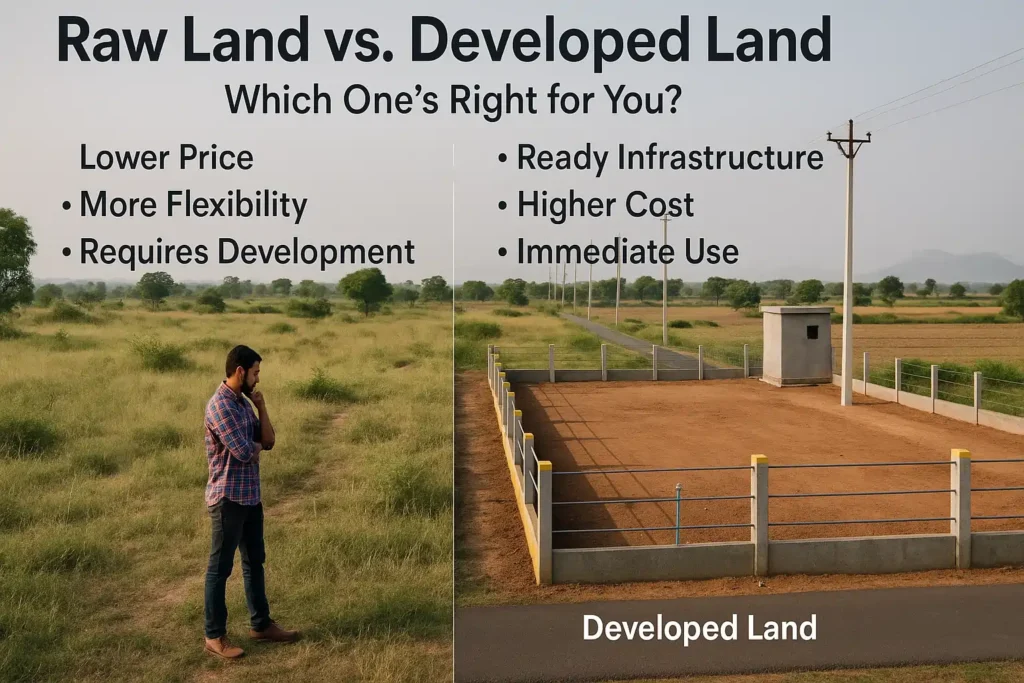
Raw land is un-developed land and has not been changed through human intervention. It does not ordinarily have primitive infrastructure like roads and water supply, electricity, sewage or building. It is frequently in rural or less populated locations.
Common Uses of Raw Land:
- Agriculture or farming
- Forestry
- Recreation (like campsites or hunting grounds)
- Land banking (holding land for long-term appreciation)
- Future residential or commercial development
What Is Developed Land?
Developed land has been improved with infrastructure and amenities that make it suitable for construction or immediate use. This includes:
- Roads and accessways
- Electricity and water connections
- Drainage and sewage systems
- Zoning approvals and municipal services
Developed land is typically found in urban or suburban areas and is ready for residential, commercial, or industrial construction.
Also Read:
- Important Things to Know Before Investing in Land or Farmhouse Plots in Gurgaon
- Loan for Land Purchase – Check Eligibility & Interest Rates
- What Makes Tier 2 & Tier 3 Cities Good Places to Invest in Agricultural Land?
- Understanding Chakbandi Land Consolidation in Rural India
Key Differences Between Raw and Developed Land
| Feature | Raw Land | Developed Land |
|---|---|---|
| Infrastructure | Absent | Present (roads, water, electricity) |
| Cost | Lower purchase price | Higher purchase price |
| Zoning and Permissions | May need to be acquired or modified | Usually approved for construction |
| Ease of Use | Requires significant development | Ready for immediate use |
| Investment Horizon | Long-term | Short to medium-term |
| Risk | Higher (due to lack of services) | Lower (ready infrastructure) |
| Maintenance Costs | Low (no existing structures) | Medium to high (existing infrastructure) |
| Financing Options | Limited | Widely available |
Pros and Cons of Raw Land
Pros:
- Lower initial cost
- Flexible use options
- Good for long-term investment and appreciation
- Minimal competition in rural areas
Cons:
- Requires major infrastructure investment
- High risk due to zoning or environmental regulations
- Harder to finance through banks
- No immediate income potential
Pros and Cons of Developed Land
Pros:
- Ready to build or use
- Easier to finance and insure
- Attracts tenants or buyers quickly
- Generates quicker returns
Cons:
- Expensive to purchase
- Higher taxes and maintenance costs
- Limited flexibility due to zoning
- Competitive market
Factors to Consider Before Choosing
1. Purpose of Investment
Are you purchasing as a home, a farm, or a commercial development or are you purchasing simply to appreciate it? Raw land is amenable to long-term investors and those who are agricultural users; developed land is amenable to builders and homebuyers.
2. Budget and Financing
Raw land is lower in cost, but it would demand further investments towards development. The existing built-up land is more expensive to acquire but finances are readily available to acquire it on mortgage or commercial loans.
3. Location and Accessibility
Since raw land is not located in prime neighborhoods, they may sometimes be unadvisable to sell, or use. Developed land, on the other hand, is normally in places that are well connected.
4. Legal Due Diligence
For raw land, check:
- Land use classification
- Zoning regulations
- Access rights
- Environmental restrictions
- Title clearance
For developed land, verify:
- Approvals from municipal authorities
- Layout and land use plans
- Utility connections and service availability
- Compliance with local building codes
5. Return on Investment (ROI)
Raw land typically appreciates over the long term, especially if located near urban expansion zones. Developed land offers faster ROI if used for rental, resale, or commercial purposes.
Which Is Better for You?
The choice between raw and developed land depends on your goals, time horizon, and financial position.
- Choose raw land if you are a patient investor looking for long-term gains, or want to use the land for farming or nature-based ventures.
- Choose developed land if you want to build immediately, generate income, or minimize development hassles.
Buying land—whether raw or developed—is a strategic decision that requires clear vision and due diligence. Each type of land carries its own set of opportunities and challenges. By understanding the core differences, you can make a choice aligned with your financial goals, timeline, and risk tolerance.
Always do your homework first before investing, especially by talking to a reputable real estate consultant, running any legal searches and taking the cost of any development or local authority compliance costs into account.