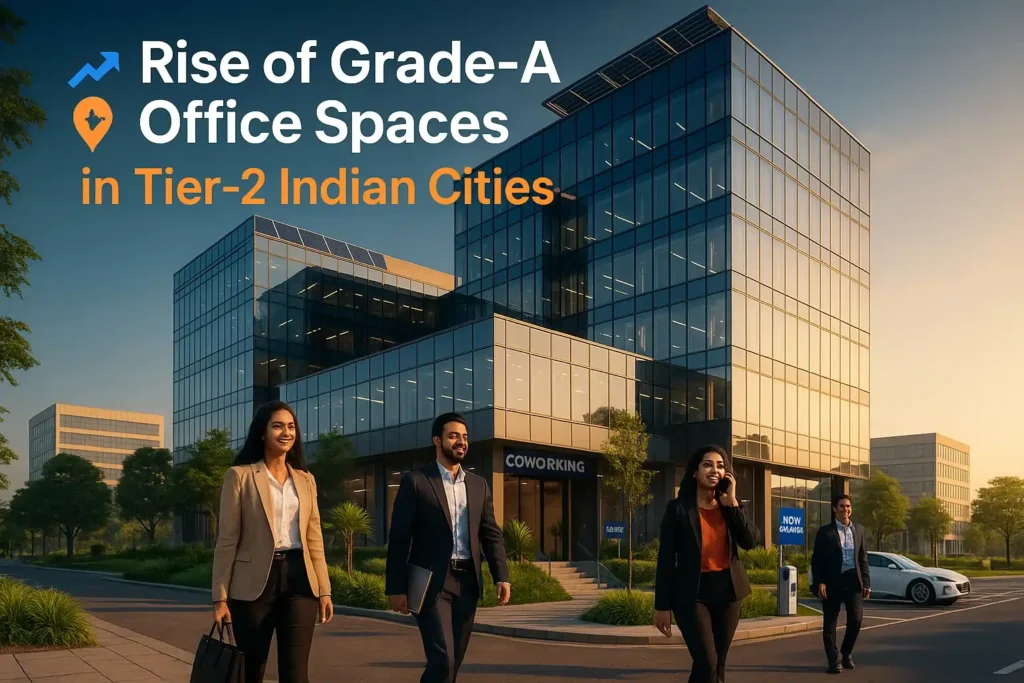
The Indian real estate landscape is evolving rapidly, and one of the most notable trends is the surge in Grade-A office spaces in Tier-2 cities. Traditionally, Grade-A offices—premium commercial properties with high-quality infrastructure, modern amenities, and sustainable design—were concentrated in Tier-1 hubs like Bengaluru, Gurgaon, Mumbai, and Hyderabad. However, in recent years, Tier-2 cities such as Indore, Jaipur, Kochi, Lucknow, Coimbatore, Chandigarh, and Bhubaneswar have emerged as thriving destinations for corporate expansion.
This shift marks a new phase in India’s commercial real estate journey, shaped by changing work dynamics, government initiatives, and increased investor interest.
What Defines a Grade-A Office Space?
Before exploring the Tier-2 city boom, it’s important to understand what makes an office space “Grade-A.” Typically, these properties include:
- Prime Location: Centrally situated with excellent connectivity.
- Modern Infrastructure: Large floor plates, advanced HVAC systems, high-speed elevators, and energy-efficient design.
- Technology Integration: Smart building features, high-speed internet, and digital security systems.
- Compliance & Safety: Adherence to fire safety norms, seismic resistance, and sustainability certifications (LEED/IGBC).
- Amenities: Parking facilities, cafeterias, recreational zones, and flexible co-working spaces.
Grade-A spaces are often favored by MNCs, IT/ITeS companies, financial institutions, and startups due to their ability to support large teams and provide global-standard work environments.
Why Tier-2 Cities Are Emerging as Grade-A Office Hubs
1. Cost Advantage
Compared to Tier-1 metros where real estate costs are skyrocketing, Tier-2 cities offer 30–40% lower rentals. This appeals to companies seeking expansion without straining operational budgets.
2. Talent Pool Availability
With top educational institutions spread across India, Tier-2 cities are home to skilled graduates who prefer staying closer to their hometowns. Grade-A offices make it easier for companies to tap into this local talent pool.
3. Improved Infrastructure & Connectivity
Government investments in highways, metro networks, regional airports, and digital infrastructure under initiatives like Smart Cities Mission and PM Gati Shakti are boosting Tier-2 city connectivity, making them viable for large-scale commercial operations.
4. Rise of Hybrid & Remote Work Models
Post-pandemic work trends have encouraged organizations to decentralize operations. Establishing Grade-A spaces in smaller cities reduces dependency on crowded metros while ensuring high-quality work environments.
5. Government & Policy Support
State governments are actively offering incentives, tax breaks, and land allotments to attract IT parks, startups, and global firms. For instance, Telangana’s push for IT hubs in Warangal and Andhra Pradesh’s focus on Visakhapatnam have set examples of proactive state-level initiatives.
Key Tier-2 Cities Driving the Trend
- Indore: Known for its cleanliness and central location, Indore is attracting IT and manufacturing firms with modern office parks.
- Kochi: A rising IT and shipping hub with SEZ developments supporting corporate demand.
- Lucknow: The growing startup ecosystem and infrastructural upgrades under Smart City initiatives are pushing demand.
- Jaipur: Proximity to Delhi NCR and thriving tourism economy make it a preferred destination for corporates.
- Coimbatore: A hub for textiles, IT, and startups, now witnessing demand for premium office setups.
- Chandigarh & Mohali: High quality of life and strong government support have encouraged IT companies to set up base here.
Impact on Investors and Developers
The rise of Grade-A office spaces in Tier-2 cities isn’t just beneficial for corporates—it’s a golden opportunity for investors and developers.
- Developers are shifting focus to Tier-2 markets, launching IT parks and commercial complexes with Grade-A standards.
- Institutional Investors & REITs are exploring these cities for long-term investments given rising rental demand.
- Local Businesses benefit from increased corporate presence, boosting retail, hospitality, and residential real estate.
Challenges Ahead
Despite the opportunities, there are some challenges to address:
- Market Absorption Risk: Oversupply of Grade-A spaces may impact occupancy rates.
- Sustainability of Demand: Long-term corporate commitment depends on continuous infrastructure upgrades.
- Talent Retention: While talent exists, companies need to ensure retention through competitive pay and facilities.
The Road Ahead
The growth of Grade-A office spaces in Tier-2 cities aligns with India’s vision of balanced urban development. With ongoing infrastructure upgrades, digital penetration, and proactive policy frameworks, these cities are poised to become the next growth engines of India’s commercial real estate sector.
For businesses, expanding into Tier-2 cities offers cost efficiency, access to skilled talent, and scalability. For investors, it presents an early-mover advantage in emerging high-demand markets.
The rise of Grade-A office spaces in Tier-2 Indian cities is not just a real estate trend—it is a reflection of India’s broader economic transformation. As metros become saturated, Tier-2 hubs are stepping up to meet corporate needs with modern, sustainable, and world-class commercial infrastructure.
For developers, investors, and businesses alike, this is the right time to explore opportunities in these emerging commercial hotspots.