The concept of smart cities has gained momentum across the globe, and India is no exception. With rapid urbanization, increasing population, and growing infrastructure needs, the Government of India launched the Smart Cities Mission in 2015 to transform select urban areas into sustainable, technology-driven, and citizen-friendly cities.
Real estate plays a central role in this transformation. From housing and commercial projects to integrated townships and green buildings, the government’s policies and interventions are directly shaping how real estate evolves in smart cities. In this article, we’ll explore how the government is driving real estate innovation through policy reforms, infrastructure development, and technological integration.
Understanding Smart Cities
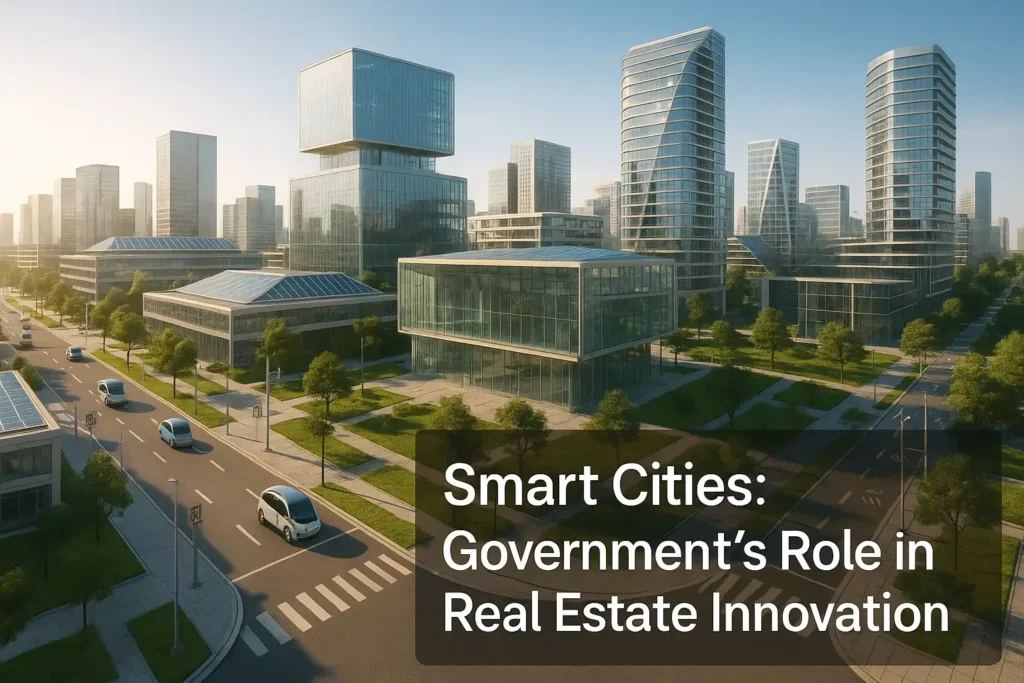
A smart city is not just about skyscrapers and digital apps—it’s about creating an ecosystem where technology, governance, and urban planning come together to improve the quality of life. Key elements include:
- Digital Infrastructure: Wi-Fi zones, e-governance platforms, and smart meters.
- Efficient Mobility: Metro systems, intelligent traffic management, and EV-friendly infrastructure.
- Sustainable Housing: Green-certified buildings, affordable housing schemes, and energy-efficient designs.
- Public Services: Smart waste management, water recycling, and renewable energy adoption.
Real estate is the backbone of this ecosystem, providing the physical spaces where these innovations come alive.
Government’s Role in Driving Real Estate Innovation
1. Policy Framework and Reforms
The government has introduced several reforms to encourage transparency and accountability in the real estate sector:
- RERA (Real Estate Regulation Act, 2016): Protects homebuyers and boosts trust in property transactions.
- Benami Property Act: Helps curb illegal property ownership.
- Single-Window Clearance Systems: Reduces red tape for faster project approvals.
These reforms make it easier for developers to adopt innovative models like mixed-use projects, co-living, and co-working spaces.
2. Infrastructure Development
Real estate thrives where infrastructure grows. The government is investing heavily in:
- Metro Rail Projects: Expanding connectivity in Delhi NCR, Mumbai, Bengaluru, and Hyderabad.
- Expressways & Corridors: Delhi-Mumbai Expressway, Dwarka Expressway, and Bengaluru-Chennai Corridor.
- Smart Utilities: Underground cabling, digital electricity grids, and solar-powered street lighting.
Such investments unlock land value and drive demand for both residential and commercial properties.
3. Affordable Housing Initiatives
The Pradhan Mantri Awas Yojana (PMAY) has given a strong push to affordable housing in smart cities. With interest subsidies and tax benefits, more middle-class families can buy homes. Developers are also incentivized to create budget-friendly projects integrated with smart facilities, ensuring inclusivity in urban growth.
4. Promoting Green and Sustainable Real Estate
The government has made sustainability a priority in smart cities. Measures include:
- Mandatory Green Building Codes (such as GRIHA and IGBC certifications).
- Incentives for solar rooftops, rainwater harvesting, and waste recycling systems.
- Focus on energy-efficient public housing to reduce carbon footprints.
This push has encouraged developers to embrace eco-friendly designs and position themselves as leaders in the green real estate segment.
5. Technology Integration and Digital Governance
Digital platforms are now central to urban development:
- GIS-based Master Planning helps in smart land use.
- Online Property Registrations reduce paperwork and fraud.
- PropTech Innovations like AI-driven valuation, virtual site visits, and blockchain-based land records are gaining traction with government backing.
By integrating technology, the government ensures transparency, efficiency, and investor confidence in the real estate market.
Impact on Investors and Homebuyers
For investors, government-driven innovation in smart cities means:
- Higher ROI due to improved infrastructure and connectivity.
- Reduced Risk thanks to regulatory reforms like RERA.
- Diverse Opportunities in co-working hubs, retail spaces, and sustainable housing.
For homebuyers, it translates into:
- Affordable yet modern housing options.
- Access to better lifestyle amenities like smart healthcare and education.
- Increased trust in developers and projects.
Challenges Ahead
While the progress is notable, challenges remain:
- High costs of smart infrastructure deployment.
- Delays in policy implementation at the state level.
- Need for greater private sector participation.
Addressing these will be crucial for scaling up real estate innovation across all Indian cities.
The government’s role in shaping smart cities is undeniable—from creating transparent policies to building futuristic infrastructure and promoting green living. For real estate developers, this presents a golden opportunity to innovate, while investors and homebuyers benefit from safer, more sustainable, and technology-driven urban living.
As India moves forward with its Smart Cities Mission, the collaboration between government, developers, and technology players will define the future of real estate innovation.
Smart cities are shaping the future of real estate. Stay ahead with insights on policy reforms, infrastructure growth, and sustainable housing opportunities. Get in touch with us for tailored guidance Go Best Real Estate Consultancy Service In Gurgaon
Frequently Asked Questions
1. What is the role of the government in smart city real estate development?
The government plays a crucial role by creating policy frameworks like RERA, investing in infrastructure projects, promoting affordable housing schemes, and encouraging green and sustainable real estate. These initiatives provide a transparent, investor-friendly, and future-ready environment for the real estate sector.
2. How do smart cities impact real estate prices in India?
Smart cities typically lead to higher demand and appreciation of property values due to better infrastructure, digital services, and improved connectivity. Investors benefit from long-term growth, while homebuyers enjoy enhanced lifestyle amenities.
3. What government schemes support affordable housing in smart cities?
The Pradhan Mantri Awas Yojana (PMAY) is the biggest initiative, offering interest subsidies and tax benefits. State governments also provide incentives like reduced stamp duty and faster clearances for affordable housing projects.
4. How is sustainability promoted in smart city real estate projects?
The government mandates green building codes, encourages solar power adoption, rainwater harvesting, and energy-efficient designs, and supports eco-friendly construction through certifications like GRIHA and IGBC.
5. Are smart cities a good investment option for real estate buyers?
Yes. Smart cities offer higher ROI potential, reduced regulatory risks (due to RERA and digital governance), and a growing demand for both residential and commercial properties. For investors seeking long-term growth, they present one of the most promising opportunities.
6. What challenges does the government face in implementing smart city real estate projects?
Challenges include high infrastructure costs, delays in execution, and the need for stronger private sector participation. However, ongoing reforms and technology adoption are helping overcome these barriers.