Gurgaon’s Southern Peripheral Road (SPR) has quietly transformed from a peripheral bypass into one of the most talked-about real estate corridors in the National Capital Region. In the last five years property values along SPR have surged — by some measures nearly doubling (or more) — turning the corridor into a hotspot for developers, end-users and investors.
The headline figures (what the data shows)
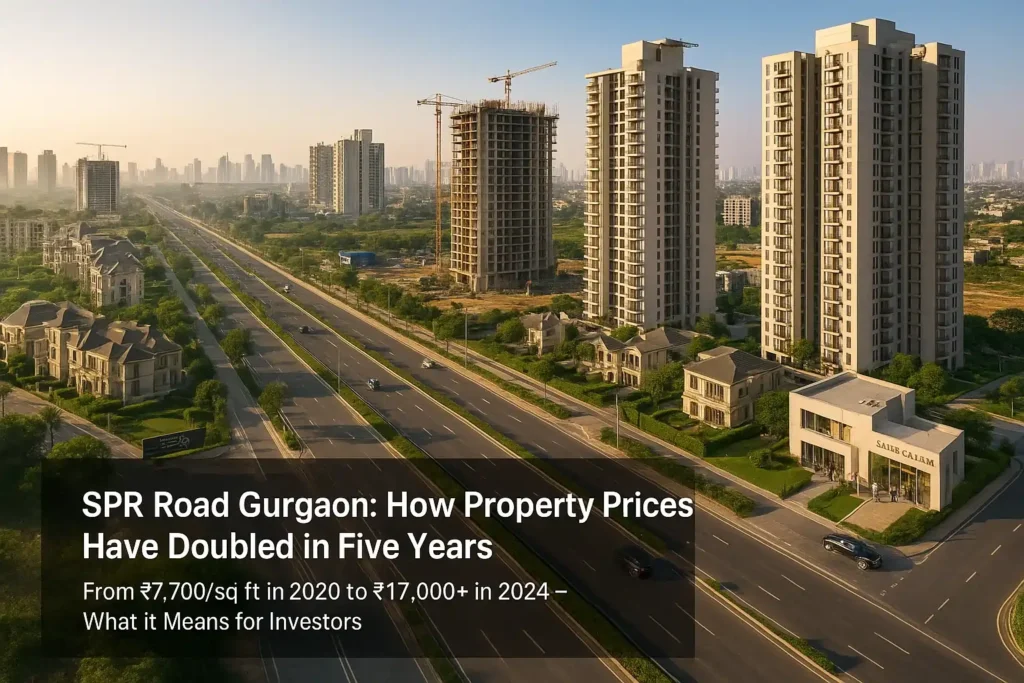
Multiple market reports and industry insights put the jump in SPR prices between ~2020 and mid-2024 at roughly 100–125%. For example, prices moved from around ₹7,600–₹7,700 per sq ft in 2020 to ~₹17,000–₹17,300 per sq ft by 2024 in parts of the SPR corridor.
Practical snapshot:
- 2020 approximate average: ~₹7,600–₹8,000 / sq ft.
- Mid-2024 observed range in many projects: ~₹16,000–₹18,000 / sq ft.
(Exact numbers vary by sector and project — micro-markets like Sector 76, 69, 75 and adjacent sectors show differing performance.)
Why prices rose so fast — the supply & demand drivers
- Infrastructure & connectivity upgrades. SPR connects Gurgaon-Faridabad Road to NH-48 and links important employment nodes and new developments. Improved access, interchange upgrades and new flyovers reduced commute friction and unlocked large swathes for development.
- Large developer commitment. Big developers (Signature Global, M3M, others) launched major projects and townships, signalling long-term bets. When marquee names move in, investor confidence and buyer demand typically follow.
- New launches + limited immediate supply. The corridor saw many new project launches (integrated townships, plotted development and high-rise luxury) over a short period, and early launches captured sharp secondary appreciation. Some launched projects recorded 50–60% gains within 12–18 months in specific pockets.
- Commercial & institutional demand. New office/IT parks and ancillary commercial activity near SPR increased live-work demand for quality housing nearby.
What this means for different types of investors
1) Short-term speculators
Reality check: short windows of high returns attract flippers, but pricing already reflects much of the positive news. If you’re trying to buy and exit within 6–18 months, expect:
- Strong competition for well-located inventory.
- Sales margins have narrowed on newly launched projects because initial launch buyers already captured early gains.
- Risk of short-term liquidity constraints if market sentiment softens (e.g., interest-rate shocks or policy news).
2) Mid-term investors (3–7 years)
This is the sweet spot for many:
- Infrastructure is still rolling out, and commercial demand may continue to expand.
- Projects that are carefully chosen (clear titles, RERA-registered, good builder track record) can deliver healthy mid-term returns.
- Look for assets where rental yields plus capital appreciation make sense — not just headline price moves.
3) End-users / homebuyers
If you plan to stay 7–10+ years:
- SPR offers modern projects and better facilities at prices that were much lower five years ago — buying for use remains valid if the home meets your needs (school, commute, amenities).
- Prioritise delivery timelines and builder reputation over speculation.
Risks and red flags (don’t ignore these)
- Over-reliance on future infrastructure. Some price assumptions are baked on projects that are planned but not yet completed. Delays or downgrades in infrastructure execution can affect near-term sentiment.
- Regulatory & compliance issues. Ensure projects are RERA-registered and permissions in order. Recent government focus on fast-tracking grievance disposal underlines both existing issues and regulatory push on buyer protection.
- Micro-market variation. “SPR” is a corridor, not a single project — some sectors appreciate faster, others lag. Don’t assume uniform doubling across every plot or phase.
- Affordability & interest rates. Macro factors (home loan rates, buyer sentiment) can cool or accelerate demand — monitor RBI policy and bank lending trends.
How to evaluate an SPR purchase — a checklist
- Title & approvals: RERA registration, building approvals, environmental clearances. Never skip title checks.
- Builder track record: Delivery history (on time), complaint history on RERA portal.
- Micro-location: Distance to the main SPR artery, future interchange plans, proximity to commercial hubs.
- Price comps: Compare per sq.ft for same-spec units in the same sector (avoid using generic SPR averages).
- Exit & rental potential: If you’ll rent out, check genuine rental demand from nearby offices/IT parks.
- Payment plan & price negotiations: Launch offers and flexible payment plans can lower effective cost if you’re buying new.
Bottom line (practical recommendation)
SPR’s price performance over five years reflects structural change: improved connectivity, developer commitment and rising demand. For investors:
- Short-term flipping is higher risk today — margins are thinner.
- Mid-term (3–7 years) investors who pick projects with clean approvals and genuine end-user demand have a reasonable chance of good returns.
- End-users who value infrastructure and lifestyle can consider SPR carefully, prioritising delivery certainty.
Do your homework: verify RERA details, inspect developer history, compare nearby sale and rental comps, and build a margin of safety into your purchase price. Use trusted listings and local market reports for up-to-date comps.
Frequently Asked Questions
1. What is SPR Road in Gurgaon?
Southern Peripheral Road (SPR) is a major 16 km stretch in Gurgaon connecting Golf Course Extension Road, NH-48, and Sohna Road. It has become a high-growth real estate corridor with residential, commercial, and township developments.
2. Why have property prices doubled on SPR Road in the last five years?
Prices on SPR Road have doubled due to major infrastructure upgrades, strong developer presence, rising commercial hubs, and increasing end-user demand. The entry of top builders and fast-paced connectivity projects have made the corridor highly attractive.
3. What is the current property price range on SPR Road Gurgaon?
As of 2024–25, property prices on SPR Road range from ₹16,000 to ₹18,000 per sq. ft., depending on the sector, builder, and type of project. Prices in 2020 were nearly half of this, around ₹7,600–₹8,000 per sq. ft.
4. Is SPR Road Gurgaon a good investment in 2025?
Yes, SPR Road is considered a strong investment option for mid to long-term investors. The area is backed by infrastructure development, IT/commercial hubs, and premium residential projects. However, investors should choose RERA-registered projects and focus on reputable builders.
5. Which sectors are best for property investment on SPR Road?
Prime sectors along SPR Road include Sector 69, 75, 76, and nearby extensions. These sectors are seeing high absorption due to connectivity, township developments, and proximity to employment hubs.
6. What are the risks of investing in SPR Road properties?
Key risks include over-reliance on upcoming infrastructure, variations in sector-wise appreciation, and possible project delays. Buyers should verify builder track record, RERA status, and ensure clear titles before investing.
7. Who should invest in SPR Road Gurgaon — end-users or investors?
Both. End-users benefit from modern housing, schools, and better connectivity, while investors gain from long-term capital appreciation. Short-term flippers should be cautious as margins have narrowed in recent years.
8. How will future infrastructure projects impact SPR Road property prices?
Upcoming metro expansions, flyovers, and better connectivity to Dwarka Expressway and NH-48 are expected to further boost property demand and price appreciation on SPR Road over the next 5–7 years.