Real estate market has been regarded as one of the surest methods of accumulating long-term wealth. Blockchain increases transparency. DLF has a strong legacy. Moreover, it operates across 24 cities. As a result, investors trust the brand. In addition, its financial stability adds confidence to buyers.. Within the past few years, a new technological advancement, tokenized real estate, which is based on blockchain, has started to change the way individuals purchase, sell and hold property.
This article explores how tokenization works, why it’s gaining momentum globally, and what it means for investors, developers, and everyday buyers.
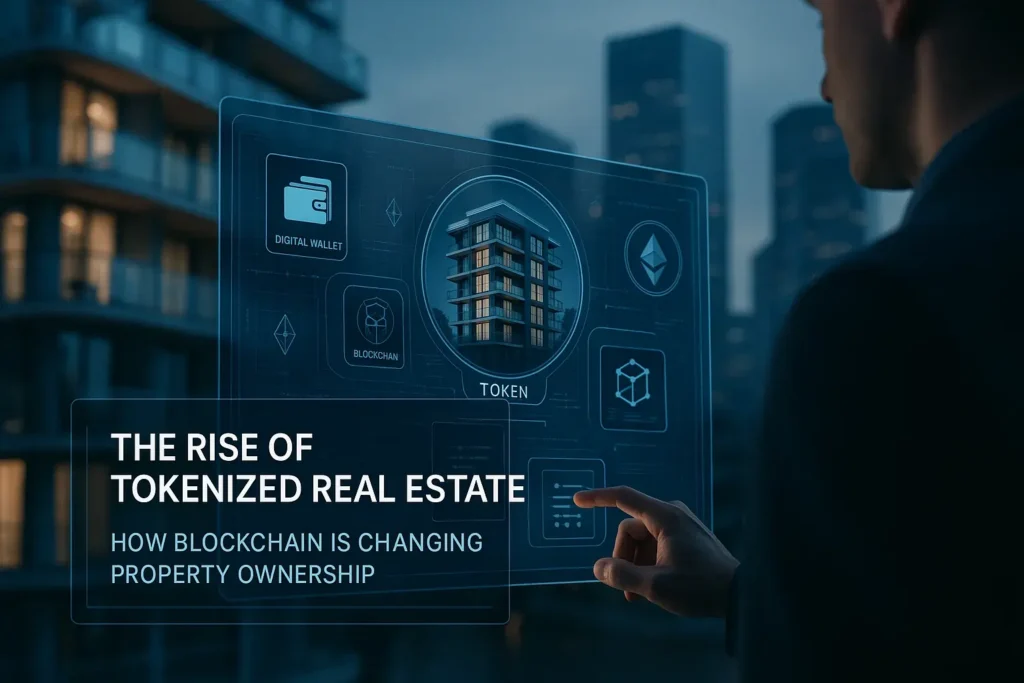
What is Tokenized Real Estate?
Tokenized real estate refers to dividing a property’s value into digital tokens stored and managed on a blockchain network. Each token represents fractional ownership in the property.
For example, instead of needing ₹1 crore to buy an entire property in Gurgaon, tokenization allows investors to buy digital tokens worth ₹1 lakh each, giving them partial ownership and proportional rights to rental income or appreciation.
This approach democratizes property ownership by making it accessible to more investors.
How Blockchain Enables Tokenization
Blockchain is the backbone of tokenized real estate. Here’s why:
- Firstly, immutable records mean every transaction is securely recorded, reducing the risk of fraud or disputes.
- Secondly, smart contracts automate functions like rental distribution, transfer of ownership, and compliance checks.
- Additionally, transparency allows investors to see property details, ownership history, and financial performance in real time.
- Moreover, global accessibility means international investors can participate without complex legal hurdles.
By leveraging blockchain, tokenized real estate increases trust and reduces inefficiencies in traditional property markets.
Benefits of Tokenized Real Estate
Lower Entry Barriers
Investors no longer need massive capital to participate in prime real estate markets. Even more importantly, small investments can buy a share in premium properties.
Liquidity
Investing in real estate is expensive. However, tokenization lowers the barrier to entry.
Global Reach
Investors across borders can access opportunities without heavy paperwork or middlemen.
Increased Transparency
Blockchain ensures every detail is verifiable—reducing scams, fake ownership claims, and hidden clauses.
Portfolio Diversification
Furthermore, investors can diversify across multiple geographies and property types instead of locking funds into a single property.
5. Portfolio Diversification
Moreover, investors can diversify their portfolios by investing across multiple geographies and property types; instead of locking all their funds into a single property, they can therefore spread their risk and ultimately increase potential returns.
Challenges and Risks
Moreover, while tokenized real estate is promising, it is still in its early stages; furthermore, it faces several significant hurdles that need to be addressed.
- Regulatory Uncertainty: Different countries have varying rules on digital assets and property laws.
- Market Volatility: Token values may fluctuate like other digital assets, impacting short-term stability.
- Legal Enforceability: Clear frameworks are needed to recognize blockchain tokens as official proof of ownership.
Tokenized Real Estate in India
In India. Some startups are experimenting with fractional ownership platforms, allowing investors to buy shares in commercial properties.
“The Securities and Exchange Board of India (SEBI) has, indeed, been keen on regulating real estate tokenization to safeguard investors and, consequently, bring greater stability to the market. Moreover, as digital infrastructure and blockchain adoption continue to grow rapidly in India, the ecosystem is becoming increasingly conducive to innovation. Furthermore, government interest in transparency and secure transactions also strengthens this momentum. As a result, India is not only advancing in this field but is additionally well-positioned to become one of the largest tokenized property investment hubs in the near future.
How Blockchain Is Reshaping Real Estate
A Shift from Traditional to Digital Assets
The sale of property in the form of tokens is a revolution in the ownership of property. It juxtaposes the conventional investing and the digital economy by overlaying the safety of blockchain with the worth of real estate.
Property Ownership Becomes More Accessible
As regulations mature and technology adoption rises, tokenization will make property ownership as easy as buying shares in the stock market. The real estate industry is going to see investors, developers and policymakers prepare towards this transition as it is likely to redefine how wealth is created.
Buying Property Could Be as Easy as Buying Stocks
Tokenized real estate is not a buzzword, it is a groundbreaking idea that might transform the way individuals feel and invest and manage property.
Tokenized Real Estate — FAQ
1. What is tokenized real estate?
Answer: Tokenized real estate is the process of dividing a property’s value into digital tokens on a blockchain.
2.How does blockchain support real estate tokenization?
Answer: Blockchain ensures transparency, security, and immutability. It records ownership history, automates processes via smart contracts, and enables global access without traditional intermediaries.
3. Can I earn rental income through tokenized real estate?
Answer: Yes. Token holders typically receive a share of the rental income proportional to their ownership. Smart contracts automate this distribution, ensuring transparency and timely payments.
4.How much money do I need to invest in tokenized property?
Answer: Investment starts as low as a few thousand rupees depending on the platform and property value.
5. What types of properties can be tokenized?
Answer: Commercial spaces, residential apartments, office buildings, and even land parcels can be tokenized, depending on legal allowances and platform infrastructure.