Buying rural property—whether farmland, a farmhouse, or open plots—can be a great investment. Rural land is often more affordable, provides long-term appreciation, and can even generate income through agriculture, leasing, or eco-tourism. However, the process is not as simple as handing over money and receiving the land. The key to a safe and legal purchase lies in paperwork and documentation.
When buying rural land, several documents are crucial. Apart from the title deed, you must verify records like RoR, encumbrance certificate, mutation records, and other papers. Understanding what paperwork do you need when purchasing property ensures a smooth and secure purchase.aperwork when purchasing property in India, while ensuring your transaction remains transparent, compliant, and secure.
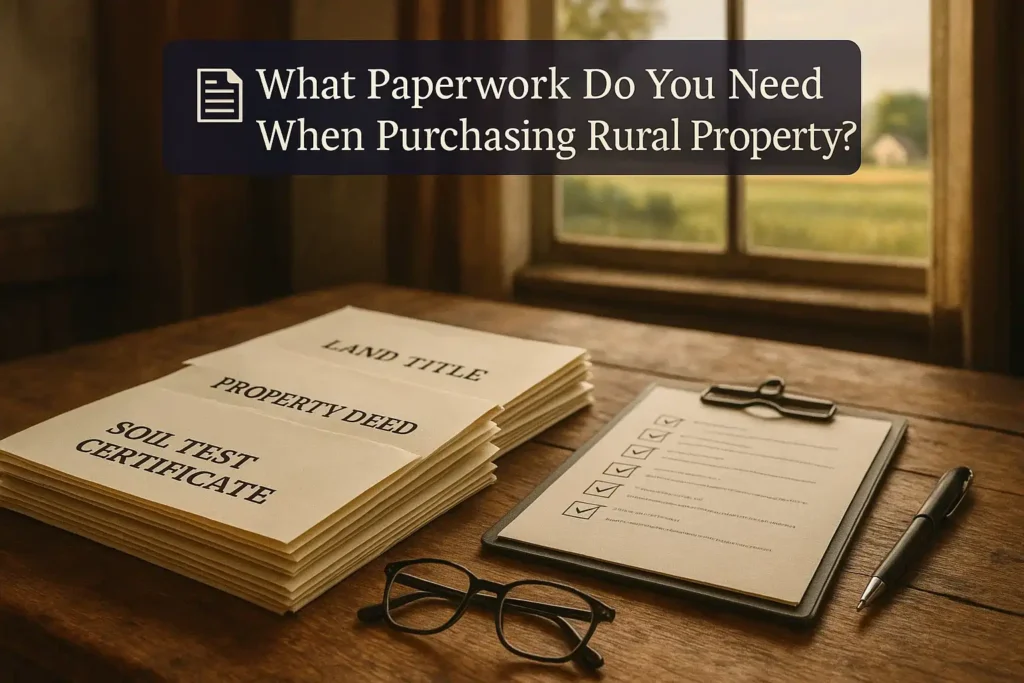
Why Documentation Matters in Rural Property Purchases
Unlike urban areas, rural land ownership can be complicated due to inheritance rights, joint ownership, outdated records, or land ceiling laws. Paperwork ensures:
- Clear ownership (proof the seller is the rightful owner)
- Freedom from disputes (no legal claims pending)
- Compliance with law (land can legally be sold and purchased)
- Financial safety (protects you from fraud or double sales)
Essential Paperwork for Buying Rural Property
Here is a step-by-step breakdown of papers you must verify and collect before finalizing a rural property :
1. Title Deed (Sale Deed / Mother Deed)
- Confirms who legally owns the property.
- A clear title deed ensures the seller has the right to sell.
- Always check for a continuous chain of ownership.
2. Record of Rights (RoR / Jamabandi / Khasra-Khatauni)
- Contains details about ownership, cultivation, and tenancy.
- Shows if the land is agricultural, residential, or restricted use.
- Names should match the seller’s details.
3. Encumbrance Certificate (EC)
- Proof that the land is free of loans, mortgages, or pending disputes.
- Can be obtained from the sub-registrar’s office.
4. Mutation Records (Intkaal)
- Confirms that the property has been legally transferred to the seller’s name.
- Important for updating revenue records after purchase.
5. Land Use Certificate / Zoning Clearance
- Verify whether the land is agricultural, residential, or industrial.
- If planning to convert agricultural land for non-farm use, ensure proper land conversion approval.
6. Agricultural Land Ceiling Certificate
- Some states impose limits on the size of agricultural land an individual can own.
- Check compliance before purchasing.
7. No Objection Certificate (NOC)
- May be required from local authorities, panchayat, or development authority.
- Especially important if land lies near forest, highways, or restricted zones.
8. Tax Receipts & Bills
- Verify that land revenue tax, water tax, or other local levies are paid.
- Unpaid dues can transfer to the new buyer.
9. Identity Proof & Power of Attorney
- Confirm the seller’s identity with Aadhaar, PAN, or voter ID.
- If the sale is through a Power of Attorney (PoA), ensure it is legally valid and registered.
10. Registered Sale Agreement
- Once verification is complete, draft and sign a sale agreement mentioning payment terms, possession, and penalties for breach.
- The final sale deed must be registered at the sub-registrar’s office.
Additional Checks Before Purchase
- Survey Map & Boundary Verification – To avoid encroachment disputes.
- Legal Heir Certificate – If land was inherited.
- State-specific Permissions – Some states restrict outsiders from buying agricultural land.
Purchasing rural property can be a rewarding investment, but documentation is the backbone of a safe transaction. Always conduct a legal due diligence process with the help of a lawyer or property consultant. By verifying title, records, encumbrances, and compliance, you can safeguard your investment and avoid future disputes.
Remember: Paperwork is not just a formality—it’s your shield against fraud.
Frequently Asked Questions
Q1. Do I need a lawyer to buy rural property?
Yes. While not mandatory, hiring a property lawyer ensures all documents are verified and the deal is legally sound.
Q2. Can I buy agricultural land in any state in India?
No. Some states restrict non-farmers from purchasing agricultural land. Always check state laws before buying.
Q3. What is the most important document when buying rural property?
The title deed (ownership document) is the most crucial, followed by encumbrance and land records.
Q4. How can I check if rural land has legal disputes?
Obtain the Encumbrance Certificate (EC) and check court records or local revenue office records for pending cases.
Q5. Is registration mandatory for rural property purchases?
Yes. The final sale deed must be registered at the sub-registrar’s office to make the transaction legally valid.
Q6. What happens if mutation records are not updated after purchase?
Without mutation, your name will not appear in revenue records, which may create problems in paying taxes, resale, or inheritance.