Farmland has consistently proven to be one of the most reliable long-term investment assets. While real estate, stocks, and gold often face volatility, farmland offers stability, security, and appreciation that make it highly attractive for investors seeking both steady returns and wealth preservation.
With rising global food demand, increasing population, and limited cultivable land, farmland has transformed from just an agricultural resource into a strategic investment option.
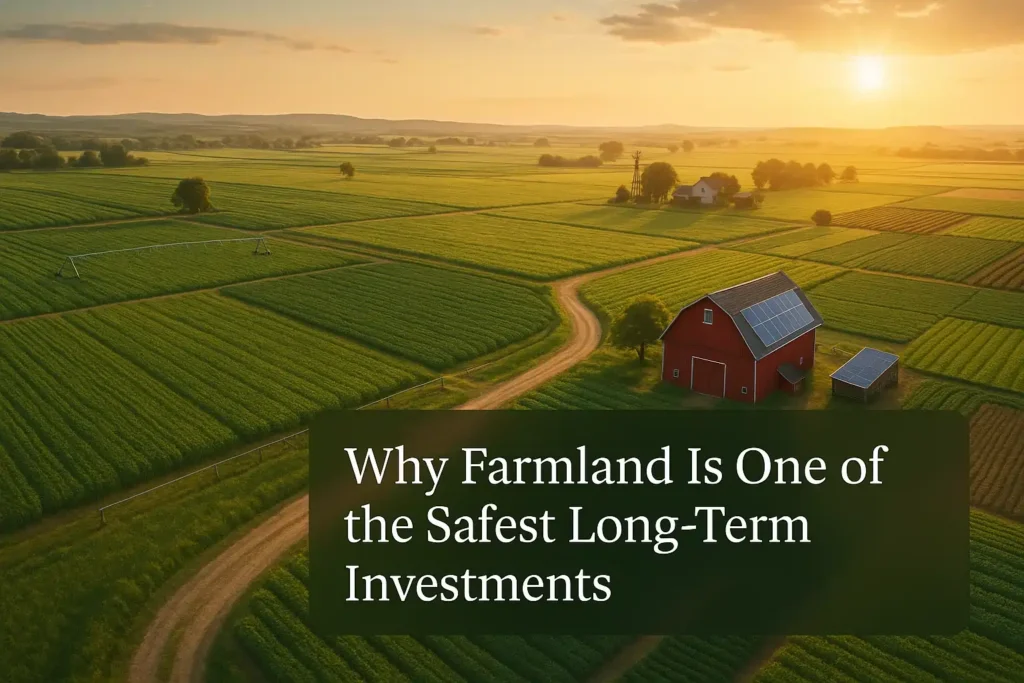
1. Farmland as a Tangible Asset
Unlike stocks or bonds, farmland is a real, physical asset. It cannot disappear overnight due to market crashes or corporate mismanagement. Land has intrinsic value, which gives investors confidence in long-term wealth preservation.
Historically, land ownership has been one of the oldest and most trusted forms of wealth building, ensuring stability for generations.
2. Consistent Appreciation Over Time
Farmland values tend to increase steadily due to:
- Limited supply – Arable land is finite and shrinking due to urbanization.
- High demand – Food production is a necessity, not a luxury.
- Inflation hedge – Land prices rise along with overall inflation, protecting purchasing power.
For example, many regions in India have seen farmland values multiply over the last two decades, especially near developing highways and industrial corridors.
3. Income Generation Potential
Owning farmland is not just about appreciation—it also generates steady income.
- Leasing farmland to farmers provides annual rental income.
- Engaging in agriculture, horticulture, or organic farming increases returns.
- Modern trends such as farm-to-table businesses and agro-tourism are adding further income streams.
This makes farmland a dual-benefit investment: wealth preservation plus recurring income.
4. Low Volatility Compared to Other Assets
While stock markets can swing daily and real estate markets may cool during economic slowdowns, farmland shows low volatility. Food demand remains stable regardless of economic conditions, making farmland a defensive investment during downturns.
Even during global recessions, agricultural land has historically retained or grown in value.
5. Hedge Against Inflation and Currency Risks
Agricultural products are tied directly to inflation. As food prices rise, so does the value of farmland. This makes it an effective inflation hedge.
Additionally, investors with diversified portfolios often prefer farmland to balance risks tied to currency fluctuations and other global uncertainties.
6. Growing Demand from Institutional Investors
Globally, farmland is no longer just an individual or family investment. Institutional investors, pension funds, and private equity firms are increasingly acquiring farmland for long-term returns.
This demand further strengthens farmland’s credibility as a stable, institutional-grade asset class.
7. Sustainability and Future Relevance
With climate change, food security concerns, and emphasis on sustainable farming practices, farmland is gaining even more importance. Governments worldwide are promoting organic farming, renewable energy (solar farms), and agro-based industries, adding long-term value to farmland ownership.
Key Considerations Before Investing in Farmland
While farmland is a safe investment, investors must consider:
- Legal due diligence – Verify land titles, ownership records, and zoning laws.
- Location advantage – Farmland near highways, industrial zones, or urban expansion areas offers higher appreciation.
- Water and soil quality – Essential for productivity and rental potential.
- Compliance – Ensure alignment with state-specific farmland purchase laws in India.
Farmland stands out as one of the safest long-term investments due to its tangible nature, consistent appreciation, income potential, low volatility, and inflation-hedging qualities. With rising global demand for food and shrinking arable land, farmland will remain a highly valuable asset for generations.
For investors seeking security, growth, and sustainability, farmland is not just a piece of land—it is a future-proof investment.
Frequently Asked Questions
Q1. Why is farmland considered safer than other investments?
Farmland is a tangible asset with limited supply and constant demand. Unlike stocks, it doesn’t face daily volatility and offers steady appreciation over time.
Q2. How does farmland generate income?
Farmland can be leased to farmers for rental income or used for agriculture, organic farming, and even agro-tourism.
Q3. Is farmland a good hedge against inflation?
Yes, as food prices rise with inflation, farmland value also increases, making it a natural inflation hedge.
Q4. What factors should I check before buying farmland?
You should verify legal titles, land ownership, soil quality, water availability, and state-specific land laws before purchasing.
Q5. Can NRIs invest in farmland in India?
Currently, NRIs (Non-Resident Indians) are not allowed to buy agricultural land in India, though they can inherit it.
Q6. Does farmland appreciate faster near cities?
Yes, farmland near highways, metro projects, and urbanizing areas tends to appreciate faster due to infrastructure development.