The practice of land banking is a low profile investment strategy which has remained one of the most basic and safest ways of creating wealth over a long period of time. Whether it is institutional investors or individual purchasers, the number of people looking to get exposure to this low maintenance yet high payoff asset class to diversify their portfolios and generate generational wealth is growing.
But what exactly is land banking? How does it work, and why do experienced investors swear by it?
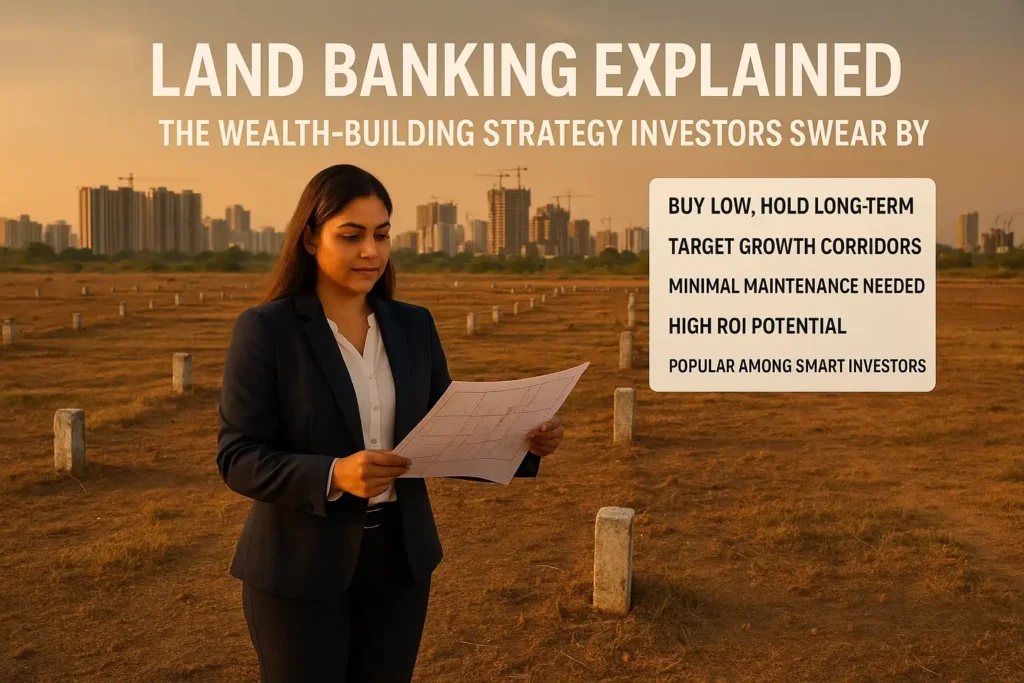
What Is Land Banking?
Land banking is defined as the act of buying under developed land in strategic locations and keeping it over a time period until the value of the land appreciates. This is not usually the case of the investor developing the land. Rather, they aim at selling it in future at a significantly higher rate or enjoying high demand in the region adjacent to the land that may be developed.
This plan has gained massive application in the urban planning and real estate investments. Land banking also helps municipalities to manage developments patterns in the effort to stop misuse of land.
How Land Banking Works
Land banking involves five key steps:
- Researching the Location
Investors identify areas with future development potential—near expanding cities, highways, or industrial corridors. - Due Diligence
Title verification, zoning laws, government development plans, land use restrictions, and encumbrances are examined. - Purchase and Holding
After verification, the land is purchased and held with minimal or no development. This phase can last several years. - Value Appreciation
As infrastructure like roads, schools, or metro lines emerge nearby, the land’s value increases. - Exit Strategy
Investors can sell the land for profit, lease it, or partner with developers once the location becomes prime.
Why Investors Swear By Land Banking
1. Low Entry Barrier
Purchasing undeveloped land is usually a cheaper option as compared to residential property or commercial property. It is a viable choice both to the novice and experienced investor.
2. High Appreciation Potential
Places around the urbanisation or expansion are areas that experience an exponential increase in prices as time goes by, especially with the help of government infrastructure projects.
3. No Depreciation
Unlike buildings, which depreciate and require maintenance, land does not lose value over time due to physical wear and tear.
4. Passive Wealth Accumulation
Land banking is a relatively hands-off strategy. There are no tenants, maintenance issues, or day-to-day operational concerns.
5. Strategic Leverage
Land can be used as collateral for loans, or you can enter joint ventures with developers when the location matures.
Real-World Example
Consider a case study such as Delhi-Mumbai Industrial Corridor (DMIC). The parcels that had been acquired in the early 2000s on this stretch of the corridor used to be underestimated. As a result of the huge infrastructure investments and expressways linkups, values of the land have since increased tenfold and this has generated vast wealth to the first-time investors.
Risks Involved in Land Banking
While lucrative, land banking isn’t risk-free. Investors should be aware of:
- Zoning and Land Use Restrictions: Some lands are non-convertible or classified as agricultural, limiting future use.
- Delayed Development: Infrastructure projects may face delays or cancellations, affecting appreciation timelines.
- Fraud and Title Disputes: In regions with poor land records, title fraud and ownership disputes are common.
- Liquidity Constraints: Land isn’t as liquid as stocks or mutual funds. Selling may take time depending on market demand.
Tips to Succeed with Land Banking
1. Choose Strategic Locations
Focus on urban expansion corridors, proposed highways, industrial zones, and areas marked in master development plans.
2. Verify All Documents
Get legal vetting done for the sale deed, encumbrance certificate, title, land use type, and any litigation history.
3. Understand Zoning Laws
Ensure the land can be converted or developed in future. Check with the local development authority.
4. Hold for the Long Term
Land banking requires patience. Don’t expect returns in 1–2 years—think in 5–10+ year terms.
5. Work with Reputed Land Consultants
Engage with professionals who have on-ground experience, verified land inventory, and insights into future development patterns.
Who Should Consider Land Banking?
- Long-term investors aiming to diversify their portfolio
- NRIs (Non-Resident Indians) looking for low-maintenance assets in India
- HNWIs wanting to park surplus capital in appreciating real estate
- First-time investors exploring affordable entry points into real estate
- Institutional buyers investing in strategic land parcels for future development
Government Policies That Support Land Banking
In India, the government’s push for infrastructure development, smart cities, and industrial corridors has made land banking more attractive. Key policy drivers include:
- PM Gati Shakti scheme
- State-specific industrial township models
- National Infrastructure Pipeline (NIP)
- Digitization of land records under Digital India Land Records Modernization Programme (DILRMP)
Land banking is not a get-rich-quick strategy- it is a well planned long-term strategy in wealth building. It could give you outstanding returns with the appropriate knowledge, professional advice, and patience leading to a good portfolio of real estate property.
As with any investment, due diligence is key. If you’re new to the concept, start small, consult legal and real estate experts, and focus on verified, strategically located land parcels.