One of the most crucial aspects of a safe investment versus a risky one is proper documentation for real estate investments. Investors will look at location, pricing, and future appreciation, but what is the legal basis of the property? Will that investment remain safe in the long run? A lack of documents or missing documents can result in legal action, delays in registration, financial losses, and ownership disputes. When it comes to buying property, whether it is a house, business, farm, or investment land, you MUST always double-check all paperwork before you enter into any agreement.
Documentation is not only a legal requirement for experienced investors, but it is also a risk management strategy. Each verified document enhances your rights to ownership, value and the security of your investments. That’s why it is always essential to take care of proper documentation for real estate investments before making any type of monetary commitment.
Why is documentation an important aspect of real estate investing?
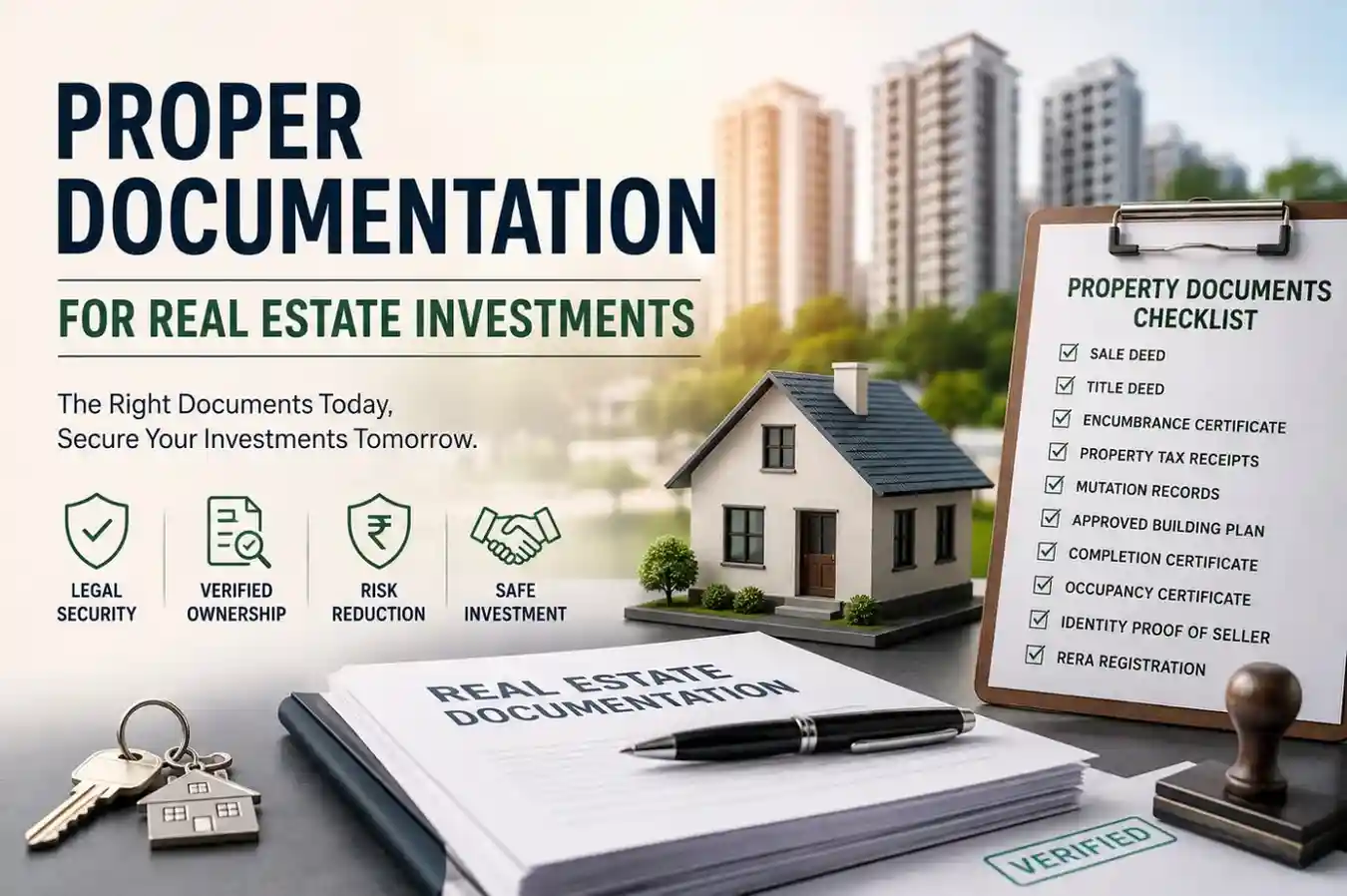
Documentation safeguards investors’ interests by ensuring the legal ownership of the property, confirming government approvals, and minimising the risk of property fraud or future disputes.
Real estate is an asset with a high value and unlike many investments in funds, the ownership of real estate is completely dependent on the legal records. Even if the investor pays the full purchase price, he or she could be faced with high legal costs if the ownership history is not known and/or approvals have not been completed.
Strong real estate documentation offers proof that the property has been sold and approved by the relevant authorities and is free of financial obligations. There is a higher chance of investors enjoying smooth registration, easy financing, and better returns in the long run when they verify documents before buying them.
Also Read.. Questions Every Buyer Should Ask Before Making the First Payment
How Does Proper Documentation Reduce Investment Risk?
Proper documentation for real estate investments decreases the risk involved in the purchase of real estate by making sure that all the legal elements of the real estate have been checked out.
There are numerous investment hazards due to the fact that purchasers trust that the marketing materials and verbal guarantees are accurate. Numerous investment risks occur as a result because buyers depend upon what they are told or the marketing materials. Professional investors understand that records have to be available for every claim.
Documentation can be used to verify with an investor:
- Ownership of the property, as defined by law.
- The originality of the records of title.
- Government approvals and permissions
- Loans or mortgages that are performing well. Excellent loans or mortgages.
- The status of the payment of property tax.
- Development permissions
- Transfer rights of the seller.
These are checks that should be completed before investment, as they greatly reduce the risk of losing money and avoid unnecessary legal issues.
What Is Due Diligence Before Buying Property?
Due diligence before buying property is a comprehensive process that involves probing into all the legal, financial and regulatory aspects of a property before closing on it.
It’s not just one document they need to review. It includes examining the legal history, ownership records, approvals and financial commitments of the property to make sure that it doesn’t have hidden risks.
The typical areas of due diligence that would be included in a thorough DD are:
- Ownership verification
- Title verification
- Review of land records
- The government has been approved by the government
- Checking pending litigation
- Checking what tax payments were made recently.
- Confirming physical possession
- Ensuring that the property is registered under RERA (as applicable),
A thorough investor due diligence allows them to seek out potential problems and be confident in negotiating with them.
What Documents Should Every Investor Verify Before Purchasing Property?
A full property documents checklist assists investors in ensuring the property is legally secure and transferable.
| Document | Why It Is Important |
|---|---|
| Sale Deed | Establishes the legal transfer of ownership. |
| Title Deed | Establishes ownership rights and verifies that the seller has the authority to sell. |
| Encumbrance Certificate | It indicates if there are any outstanding loans on the property or any legal obligations. |
| Property Tax Receipts | Shows that taxes are paid and there are no outstanding dues. |
| Mutation Records | The updates to ownership in local government records are handled by Mutation Records. |
| Approved Layout or Building Plan | Authorities have approved the layout. |
| Completion Certificate | Stamps that construction has been completed according to approved plans. |
| Occupancy Certificate | Certifies the building fit for occupation (where applicable). |
| Identity Proof of Seller | Confirms the identity of the seller as per the law. |
| RERA Registration | With RERA registration, projects under RERA are made transparent. |
The Property Documents Checklist enables investors to make informed business choices and mitigate unnecessary legal and financial risks.
How to verify property ownership for investors?
The first step in the legal verification of a property is to establish the seller’s legal right to sell.
Verbal acknowledgement and photocopies are not enough for ownership verification. Investors should look at information on several official records to create a clear chain of ownership.
Key steps include:
- A review of the title deed.
- The identification of the seller with the records of ownership.
- Visiting the land registers of the authorities.
- Checking on ownership history by going back to the sale deeds.
- Updating mutation records.
- Making sure that there are no conflicting ownership claims.
When it comes to legal verification of property, professional investors frequently turn to legal help as they do not wish to involve themselves in a dispute later on for a minor error in the process.
Can Proper Documentation Help Prevent Property Fraud?
Yes. One of the best ways to protect against property fraud is to ensure proper documentation of real estate investments.
Unfortunately, investors are still losing out from property fraud because they do not check the legal documents before buying a property. They may try to sell and dispute land, forge documents to make it look like the land is theirs, or mask existing commitments or misrepresent approvals.
Investors can find indicators early on with the verification of the official documents before they sign any agreement, including:
- Forged title documents
- Duplicate property sales
- Fake ownership claims
- Pending legal disputes
- Illegal land subdivisions
- Unauthorised construction
- Any current mortgages or financial obligations
Warren Buffett’s investors who value proper documentation for real estate investments are better equipped to overcome these risks because each significant claim is backed by verifiable legal documentation and not assumptions.
Frequently Asked Questions
Documentation is essential for real estate investing, establishing legal ownership, verifying approvals and safeguarding investors against fraud, conflicts, and monetary risks. Also, it facilitates a seamless transaction and enhances the security of the investment.
Before buying a property, make sure you check the Sale Deed, Title Deed, Encumbrance Certificate, Property Tax Receipts, Mutation Records, Approved Building Plan, Completion Certificate, Occupancy Certificate (if applicable) and RERA registration (if required).
When someone is thinking about buying a property, the process of conducting an inquiry into the legal ownership of the property, the legal title, government approvals, tax history and any outstanding reportable liabilities is known as “due diligence”.
Yes. Having proper documents in place will help to prevent property fraud by verifying ownership, confirming that the seller is legal, checking for outstanding loans or legal disputes, and ensuring that the property meets the applicable regulations before the transaction.
Completely documented properties are easier to finance, register and resell. They help to generate more confidence in buyers, minimize legal risks, and enhance the long-term value and marketability of the investment.