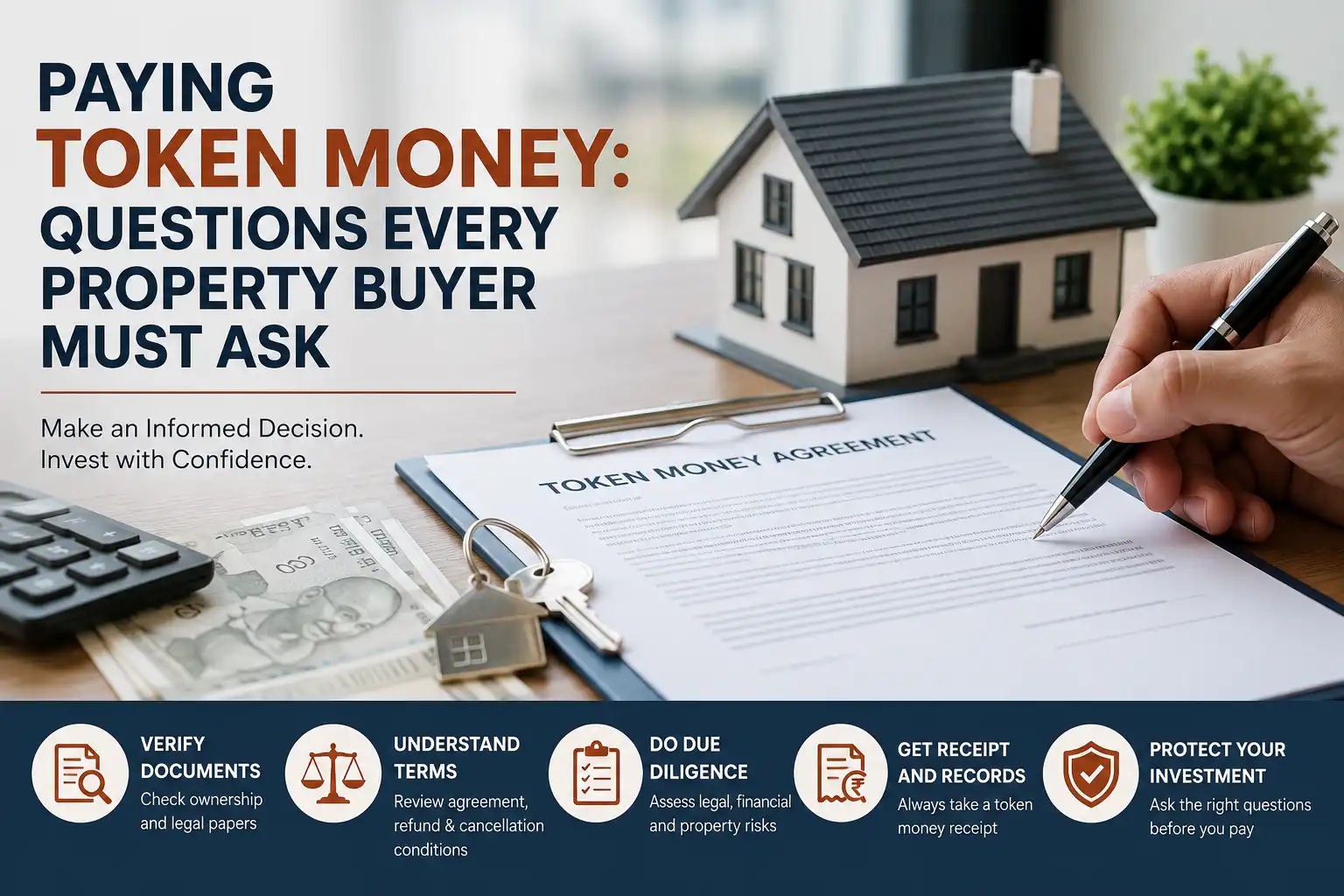
They are usually the initial financial obligation paying token money when buying a home, but never the initial step. When buying any type of property, residential, apartment, villa, farmhouse, or commercial, you must ask the correct questions before payment to protect your investment and to minimise the legal and/or financial risks. Taking a calculated approach and conducting up-to-date due diligence before purchasing property can aid in making informed decisions and protect your hard-earned capital.
A lot of purchasers fall in love with a home and rush to make a purchase by paying the property token price. Although it might appear to be the typical reservation price, it can lead to issues if it is not confirmed at the outset in terms of ownership, legal clearance, or reimbursement. Hence, it is always important for experienced investors to ask pertinent questions before paying any token money and to have proper documents as evidence of their commitment.
This guide will explore the key questions you should ask before paying token money, along with some helpful tips for making an informed investment.
What Is Paying Token Money in a Property Transaction?
The first sum paid by a buyer to demonstrate an interest in buying a property is known as “token money”. It signals both parties’ willingness to carry on with the transaction but should be paid only after the basic legal and financial due diligence process is done.
The amount is typically deducted from the total cost of purchase but is subject to different terms in each purchase. Buyers should fully realise that any token money paid is refundable, how it will be adjusted and the conditions for its forfeiture before transferring any token money for the purchase of property. All of this information should be documented in a written token money agreement or a document that is legally binding.
Also Read.. How to Choose Top Real Estate Consultant in Goa
Why Is It Important to Ask Questions Before Paying Token Money?
It is important to ask the right questions before the token money is paid to make sure buyers are aware of potential issues before they turn into costly issues. The simple time invested today may prevent future months of legal wrangling or loss of financial assets.
Property deals are based on legal rights, approvals, budgetary requirements and documentation. Buyers may find themselves subject to lengthy delays, unforeseen expenses or disputes that are challenging to resolve, if any of these factors are neglected. For first-time buyers or seasoned investors, the practice of paying token money is part of your property buying checklist to ensure that all your decisions are made based on verified facts and not assumptions.
1. Is the Seller the Legal Owner of the Property?
Always verify the seller’s legal rights to the property. Don’t take any word before paying a token sum from any marketing brochure.
Request ownership documents from the seller, and confirm that the name on the documents is the same as the seller’s government identification. If there is more than one owner, make sure all co-owners agree to sell it. Where a person is acting on behalf of the owner, check the validity of the power of attorney and confirm that the transaction is valid under the power of attorney.
Investors should also make sure that there is no inheritance dispute or family claims or any ownership issues that can impact the sale after the property token amount has been paid.
Expert Tip: If there is no clarity of ownership or supporting documentation is unavailable, delay the payment of token money until there is clarity on the ownership.
Also Read.. Before You Invest in Naugaon: The Question Big Names Hope You Never Ask
2. Are All Property Documents Available for Verification?
Do not pay token money; review property documents first. If they are in fact a seller or a developer, they shouldn’t hesitate to share the documents they need to verify.
Documents that are important might be ownership documents, title documents, approved layout plans, old sale deeds (if applicable), tax receipts, and other approvals that are appropriate for the type of property. If it is a regulatory property, ensure that all required registrations/permissions are in place.
This is an important step in the due diligence process when purchasing property. Purchasing on the word of the seller or promotional literature is never a good idea.
Ask for copies of the documents before and read them thoroughly. Consult your attorney if you need to make any financial commitment.
3. Is the Property Free from Legal Disputes or Financial Liabilities?
Paying “token” money on a property is not a wise idea until the property is legally and financially clear. There may be hidden liabilities that impact ownership rights and slow down future sales.
Query the seller if there are any pending court cases, disputes over ownership, government notices of acquisition, unpaid loans, mortgage, or financial claims. Check to see if there are any outstanding maintenance fees, property taxes, utility dues, or society payments that might be due later on to the buyer.
Numerous investors only consider the property’s location and price and neglect to consider the liabilities. But if you can pinpoint these problems before you pay the token price, it minimises the problems that will arise later on in your negotiations and reduces the risk of issues.
A good selling company will openly explain these things and give evidence, if needed.
4. What Exactly Does the Token Money Cover?
Before the payment of token money, each buyer should be very clear about what the payment is for. A lot of miscommunication can arise later in the transaction because of assumptions.
Inquire if the amount of the property token will hold the property for a specific time, if it will be deducted from the amount of the purchase price, and if any deductions will be taken if either party backs out of the deal.
The other important thing is to get the proper token money receipt right after the payment is made. The receipt should clearly mention:
- Property details
- Buyer’s and seller’s names
- Amount received
- Date of payment
- Mode of payment
- Purpose of the payment
- A certificate of signatures is required.
An accurate record of the receipt of token money creates transparency and it serves as proof of the payment in case of a future disagreement.
The most important thing is that the payment terms are put in writing in a token money agreement in which the obligations of the buyer and seller are laid out. This document should outline the refund procedures, the time limits for the transaction to be completed and when either party can back out of the transaction.
If no written terms, it may be a bit more difficult to get money back or to settle an argument.
We’ll discuss other important questions, such as how to confirm approvals, project timelines, hidden costs, refunds, and more, in the next part.
5. Is There a Clear Refund Policy for the Token Money?
Before paying token money, always know the terms on which the refunds will be made. Unsure about whether the deal will go through? A refund policy can help shield the buyer and seller.
One of the most important things that people don’t realise is that token money is refundable. In fact, there are different conditions for refunds, depending on the agreement reached between the parties. Question whether the token money for property is going to be returned if legal matters are uncovered, if your home loan is declined, or if the seller chooses not to go through with the transaction.
This should never be an oral agreement. Rather, they should be explicitly stated in the token money agreement with clear time-bound and responsibilities. Writing refund clauses will minimize confusion and ensure clarity should a conflict occur.
Business Tip: Do not take it on faith that a refund will be made. Record all conditions before payment of token money.
6. Are There Any Hidden Charges Beyond the Property Price?
The quoted property price does not necessarily reflect the cost of ownership. Before making any payments, buyers need to be aware of all the financial obligations involved.
Ask the seller or developer for a complete cost breakdown. Other costs may apply based on the property, including maintenance fees, club membership fees, infrastructure development fees, parking fees, utility connection fees, registration fees, stamp duty or taxes.
Total acquisition cost is more significant to investors than just the advertised price. An honest seller will be able to hand you a complete payment timetable right away.
This is one of the most important things to include in your property buying checklist so you don’t have any financial shocks later on.
7. Is the Property Approved by the Relevant Authorities?
The property has been approved by the regulators for legal and planning purposes. To ensure these approvals, buyers should check before paying token money.
The required approvals vary depending on the type of property and its location. Residential projects, plotted developments, villas and commercial properties might need various permissions. Buyers should also check if the project is registered with the regulatory body, where applicable.
Rather than rely on verbal approval, ask for any documentation. This basic due diligence will help minimize the risk of purchasing a project with legal or regulatory issues and is a key step in the acquisition process.
Wait to pay token money until all approvals are in or finalised, if there are any pending or uncertain.
8. What Is the Timeline for Completing the Transaction?
Before paying any token money, each property transaction should be well defined with clear timelines. There is often unnecessary delay and uncertainty due to unclear schedules.
Enquire about the date of the Agreement to Sell to be executed, the date of the remaining payment, and the expected registration/possession date (as applicable to the property). If construction is a factor, ask when and what the penalties are for delays.
A real estate expert or land developer should be able to give a clear and practical explanation of the various stages of the process, with realistic timelines. It is helpful for the buyers to understand these milestones and prepare their finances accordingly – and avoid misunderstanding upon payment of token money.
9. Have You Conducted Proper Due Diligence Before Buying Property?
One of the most critical obligations of every investor is to do their due diligence before property acquisition. The rush to pay should never be a substitute for careful verification.
When buying a property, many buyers only look at the appearance and neglect legal, financial and technical issues. Check ownership history, property paperwork, financial obligations, clearances, tax status, neighbouring infrastructure, accessibility and market value prior to paying token money.
If you need to, have a competent legal expert or experienced property consultant look through the papers on their own. You might find that professional verification will pick up things that you may not notice when you have a routine inspection.
Keep in mind that it should never be a substitute for due diligence, as it should only follow after doing it.
10. Are You Receiving Proper Written Documentation for Every Payment?
All payments need to be documented correctly before paying token money. Written documentation serves as protection to both parties during the transaction.
Always have a valid token money receipt for transferring funds. The receipt should include all the information, including the amount of payment made, property information, payment date, payment method, and the signature of the buyer and seller.
Additionally, ask for a written agreement on the amount of money required as a deposit, and include the following information:
- The sale price agreed to.
- Amount received as token money
- Balance payment schedule
- Refund conditions
- Shared responsibilities of the two parties.
- Expected completion timeline
When everything is documented, there is more transparency and the chances of future disagreements are minimised.
Common Mistakes Buyers Make While Paying Token Money
You can avoid the hassle and cost of the purchase and the risk of errors by preventing them. There are several reasons why there are conflicts, as buyers don’t take some basic steps before paying the first dollar.
The most common errors are:
- Making nominal payment for something without checking the identity.
- Lacking written agreements; only relying on verbal contracts.
- Failure to adhere to any terms of refunds under a token money agreement. Failure to comply with any condition of refunds as per the token money agreement.
- Failure to do due diligence before the purchase of real estate.
- Accepting incomplete documentation.
- Not receiving a proper token money receipt.
- Failure to monitor the quality of outstanding loans, taxes and legal problems.
- Making payments in haste due to sales pressure.
When buying a property, there is a lot of money involved. It is always better to take time to check all the details before paying token money than to have to deal with avoidable issues later.
Property Buying Checklist Before Paying Token Money
To give yourself peace of mind before paying the first installment, be sure to check off the following items on your property buying checklist:
- Check the ownership papers of the seller.
- Establish that there are no legal disputes or financial obligations.
- Check all the necessary approvals and registrations.
- Comprehend expenses, such as extra fees.
- Explicitly state the conditions for refunding token money in the token money agreement.
- After payment, get a suitable receipt for the payment of token money.
- Confirm payment deadlines and registration dates.
- Use proper comprehensive due diligence when purchasing real estate.
- Seek the advice of a legal or property expert whenever needed.
- If a satisfactory answer has not been given to every important question, do not go ahead and pay the token money.
Buyers can use this checklist to minimize risk, enhance decision-making, and progress with greater confidence when investing in real estate.
Frequently Asked Questions
No, it is not advisable to make a token payment until the owner and basic legal requirements have been established. To mitigate legal and financial risks for buyers, it is crucial to verify and confirm the seller’s ownership, review the property title documents and ensure that they understand the terms of the token money agreement.
Buyers should obtain title documents, title records, seller identification, previous sale documents (if applicable), approved plans, tax receipts, and any other approvals that apply to the property before paying any token money. It is important to read through these documents to make sure that the property can be transferred legally and to minimise the likelihood of any issues in the future.
The refund of token money depends on the terms mentioned in the token money agreement. Buyers should never take verbal assurances and should ensure that refunds are clearly specified, cancellation provisions are clearly documented and payment timing is clearly stated before entering into any transaction regarding the transfer of property token money.
When purchasing a property, it is beneficial to conduct due diligence before you pay, as this will help you identify whether there are any ownership issues, legal disputes, financial liabilities, or missing approvals. These checks can give investors the information they need to make informed decisions and avoid potential financial losses when paying token money.
Yes, it is important that every buyer should get a proper token money receipt at the time of the payment. The receipt should contain the property information, names of the buyer and seller, the amount received, the date received, the method of payment and signatures of the buyer and seller. This record is important to keep track of to ensure transparency and provide proof of the transaction.