
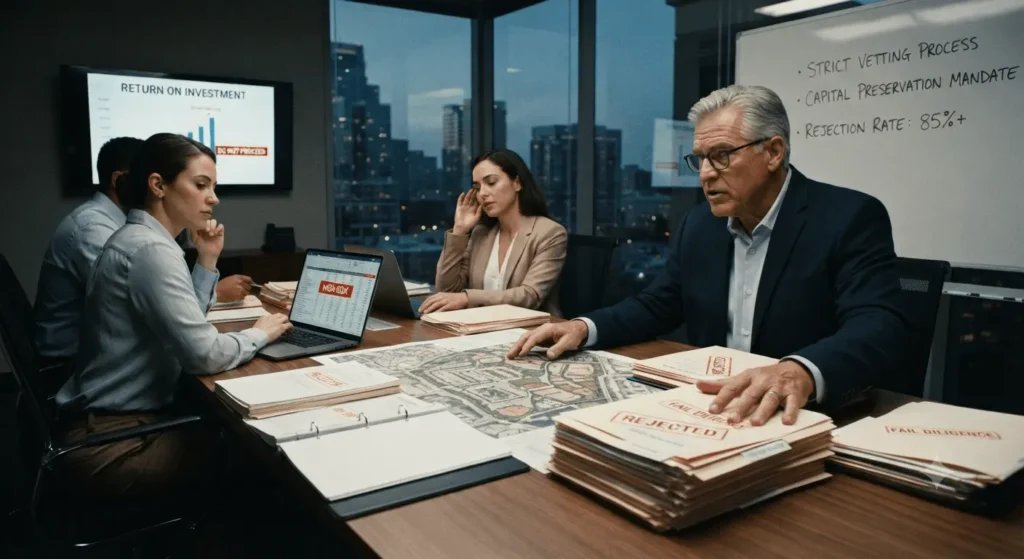
In the real estate industry, many people believe that every property shown by an advisor is worth buying. Unfortunately, that isn’t always true. At our firm, we follow a different approach—we reject more property deals than we recommend. While this may seem unusual, it is one of the key reasons our clients trust us with their investments.
Real estate is not about selling the maximum number of properties. It is about helping buyers make informed decisions that protect their money and create long-term value. Every project may look attractive in advertisements, but only a few meet the standards required for a safe and rewarding investment.
Quality Matters More Than Quantity
There are hundreds of residential plots, farmhouses, apartments, and land parcels available in the market. However, not every property deserves your investment.
Before recommending any project, we carefully evaluate factors such as:
- Legal ownership
- Clear property title
- Government approvals
- Location and connectivity
- Infrastructure development
- Pricing compared to the market
- Developer credibility
- Future appreciation potential
If a property fails to meet our evaluation criteria, we simply do not recommend it.
A Low Price Doesn’t Always Mean a Good Deal
Many buyers are attracted to properties that are priced significantly below the market rate. While some discounted opportunities are genuine, many come with hidden risks.
A cheap property could have issues such as:
- Incomplete documentation
- Ownership disputes
- Restricted land use
- Lack of road access
- Pending legal cases
- Delayed development
Saving money at the time of purchase can result in much larger losses later. That’s why we reject many low-priced deals that fail our verification process.
Documentation Comes Before Marketing
Beautiful brochures, social media advertisements, and sales presentations can create excitement, but paperwork tells the real story.
Before suggesting any investment, we verify documents such as:
- Sale deed
- Title records
- Registry details
- Mutation records
- Land use classification
- Government approvals
- Encumbrance status
If documentation is incomplete or raises concerns, we advise our clients to stay away, regardless of how attractive the project appears.
We Don’t Recommend Projects Based on Hype
Real estate trends change quickly. A location may become popular because of a new highway, expressway, industrial corridor, or commercial development.
While infrastructure can increase property values, hype alone should never be the reason to invest.
We recommend projects only after evaluating:
- Actual development on the ground
- Accessibility
- Demand from buyers
- Long-term growth prospects
- Sustainability of price appreciation
Our goal is to help clients invest based on facts, not market excitement.
Developer Reputation Is a Key Factor
Even an excellent location can become a poor investment if the developer has a weak track record.
We assess developers based on:
- Previous project delivery
- Transparency
- Legal compliance
- Customer satisfaction
- Financial stability
- Commitment to promised amenities
If we have doubts about the developer’s credibility, we reject the project.
We Protect Buyers from Hidden Risks
Many property issues are not visible during a site visit.
Hidden risks may include:
- Future legal disputes
- Land acquisition notices
- Environmental restrictions
- Zoning complications
- Boundary conflicts
- Missing approvals
- Financing challenges
Identifying these risks before purchase helps buyers avoid costly mistakes.
Long-Term Value Is More Important Than Quick Profits
Some projects promise unrealistic returns within a short period. While these claims may sound attractive, successful property investments usually grow steadily over time.
We recommend projects that offer:
- Strong long-term appreciation
- Good resale potential
- Quality infrastructure
- Reliable legal documentation
- Sustainable demand
Our focus is on protecting your investment rather than chasing unrealistic promises.
Why Rejecting Deals Builds Trust
Many people assume that a property advisor should recommend every available opportunity. We believe the opposite.
Rejecting unsuitable properties demonstrates that we prioritize our clients’ interests over closing quick transactions.
Every rejected deal reflects our commitment to:
- Transparency
- Honest advice
- Thorough research
- Legal safety
- Responsible investing
This approach has helped us build long-term relationships with buyers who value trust over sales pressure.
Questions We Ask Before Recommending Any Property
Before suggesting an investment, we ask important questions such as:
- Is the ownership completely clear?
- Are all legal approvals available?
- Does the pricing match the market?
- Is future infrastructure likely to support appreciation?
- Is the developer reliable?
- Are there hidden risks?
- Would we personally invest in this property?
If the answer to any of these questions is unsatisfactory, the deal is rejected.
The Cost of Choosing the Wrong Property
Buying the wrong property can lead to:
- Financial losses
- Legal complications
- Delayed development
- Poor resale value
- Difficulty obtaining loans
- Stress and uncertainty
These risks often outweigh any short-term savings or promotional offers.
Final Thoughts
The best property advisors are not the ones who recommend the most projects—they are the ones who recommend the right projects. That is why we reject more deals than we recommend.
Every property we suggest has gone through careful evaluation, legal verification, and market analysis. By saying “no” to risky opportunities, we help our clients make safer and smarter investment decisions.
When investing in real estate, remember that a missed opportunity is far less costly than a bad investment. Choosing quality over quantity is the foundation of successful property investing, and that is the principle we follow every day.
Frequently Asked Questions
Click each question below to discover our stringent property filtering and advisory philosophy
We reject the vast majority of properties because true wealth creation relies on protecting capital first. The market is flooded with overpriced inventory, poor locations, and overhyped projects. By maintaining ultra-strict vetting criteria, we filter out mediocre assets to protect our clients from long-term stagnation or loss.
Common red flags that immediately disqualify a project include:
- Inflated Entry Pricing: Properties priced significantly above fair market value with zero room for appreciation.
- Weak Developer Track Record: Builders with a history of delayed possessions, poor construction quality, or legal disputes.
- Oversupplied Micro-Markets: Sectors facing an excess inventory glut that will suppress rental yields and resale values.
Opportunity cost is the silent killer of portfolios. Capital locked into a stagnant or depreciating asset cannot be deployed into high-performing opportunities. Saying “no” to bad deals ensures your capital works efficiently, generating compounding returns and safeguarding your net worth.
Yes, because traditional sellers and commissioned agents focus on volume and closing sales regardless of asset quality. Because we operate independently and put our clients’ interests first, we refuse to compromise our standards, filtering out assets that fail to meet institutional-grade criteria.
To earn our recommendation, a property must pass a rigorous multi-point checklist covering:
- Clear and transparent legal titles with complete regulatory compliance.
- Strong fundamental growth drivers, such as upcoming infrastructure or high organic demand.
- Attractive risk-to-reward entry pricing backed by historical market data.
Absolutely. High commission payouts from developers are often a symptom of desperate marketing for slow-moving or overpriced stock. Our advisory model is strictly aligned with client success, meaning high commissions can never override our fundamental quality standards.
We analyze localized supply-and-demand metrics, historical absorption rates, infrastructure development timelines, and competing inventory in the vicinity. If the supply vastly outpaces projected organic demand over the next 3 to 5 years, the deal is automatically rejected.
Heavy marketing usually indicates high developer spending designed to create manufactured urgency or FOMO (Fear Of Missing Out). Many heavily advertised projects substitute heavy gloss for weak fundamentals, leading to compressed rental yields and difficult exits later on.
Many available properties feature ambiguous land titles, delayed approvals, or loopholes in regulatory compliance. Our strict vetting process uncovers these risks upfront, ensuring that our clients never get entangled in long-term litigation or asset freezing.
An advisor who says “yes” to everything is usually a salesperson in disguise. Partnering with a disciplined strategist who is willing to walk away from dozens of substandard deals ensures that the rare opportunities you *do* invest in are truly exceptional, high-conviction assets built for long-term growth.