The rapid rise of e-commerce in India has reshaped consumer habits and, in turn, transformed the country’s real estate sector. With platforms like Amazon, Flipkart, and Meesho driving online shopping demand, the warehouse and logistics real estate market has emerged as one of the fastest-growing asset classes. Today, investors, developers, and businesses are paying close attention to this booming sector, as it plays a critical role in supporting India’s digital economy.
This article explores the drivers of growth, the current market trends, and the investment potential of warehouse and logistics real estate in India, while highlighting why this sector is likely to remain resilient in the coming years.
The e-Commerce Surge and Its Impact
India’s e-commerce market is expected to cross $150 billion by 2027 (as per IBEF). This exponential growth has placed significant pressure on supply chains to ensure faster deliveries, efficient storage, and smooth last-mile connectivity.
Key changes driving warehouse demand include:
- Consumer expectations of same-day or next-day deliveries.
- Expansion of Tier-II and Tier-III cities as new consumption hubs.
- Shift from traditional kirana stores to online retail adoption.
- Rising organized retail is creating demand for larger and modern warehouses.
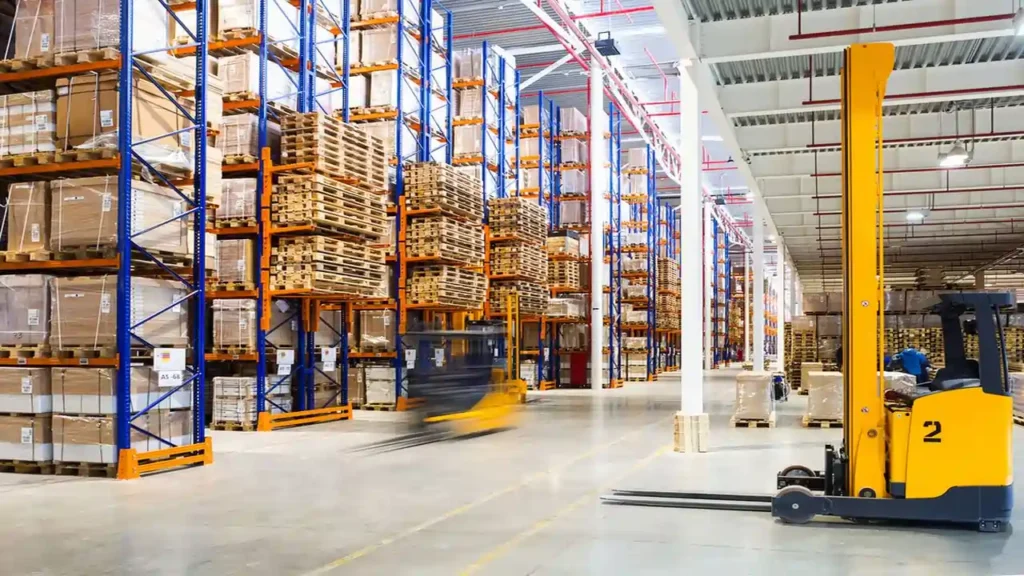
As a result, Grade A warehouse facilities with advanced features like automation, IoT integration, and better connectivity have become the new standard.
Why Warehouse & Logistics Real Estate is Booming
1. Strategic Location Demand
Industrial corridors such as the Delhi-Mumbai Industrial Corridor (DMIC), Western Dedicated Freight Corridor, and Eastern Peripheral Expressway are boosting demand for logistics hubs. Proximity to airports, highways, and metro cities makes these areas prime targets for developers and investors.
2. Government Policies & Infrastructure Push
Policies like National Logistics Policy (NLP 2022) and the PM GatiShakti Master Plan aim to reduce logistics costs (currently around 13–14% of GDP) to global benchmarks of 8%. This infrastructure push is directly encouraging private investments in warehouse clusters.
3. Rise of 3PL & Cold Chain Logistics
The growth of third-party logistics (3PL) companies and demand for cold storage facilities (especially in food, pharma, and FMCG) is further fueling warehouse development.
4. Institutional & REIT Investments
Global investors like Blackstone, ESR, and Logos have already made significant investments in India’s warehousing sector. With the possibility of logistics REITs in the near future, retail investors may also gain access to this high-growth asset class.
Market Size & Growth Potential
- India’s warehouse stock has grown at a CAGR of 20% in the last five years.
- Top eight Indian cities (Delhi-NCR, Mumbai, Pune, Bangalore, Chennai, Hyderabad, Kolkata, Ahmedabad) account for nearly 75% of Grade A warehouse demand.
- Tier-II cities like Lucknow, Jaipur, Coimbatore, and Guwahati are emerging as the next wave of logistics hubs.
With $5–7 billion of institutional investment expected in the next three years, the sector is positioned for sustained growth.
Opportunities for Investors
- High ROI Potential: Warehousing offers 8–12% rental yields, higher than traditional residential assets.
- Long-Term Leases: Logistics tenants often sign 5–10 year contracts, providing stable cash flows.
- Diversification: Exposure to an essential service sector less impacted by economic cycles.
- REITs & Fractional Ownership: New models allow smaller investors to participate in warehousing growth.
Challenges to Consider
While the sector is booming, investors and businesses must be mindful of:
- Land acquisition hurdles in urban and semi-urban areas.
- High initial development costs for Grade A warehouses.
- Regulatory bottlenecks related to zoning and environmental clearances.
- Competition with global players entering the market.
The Future of Warehouse & Logistics Real Estate in India
Looking ahead, this sector is expected to evolve into a more technology-driven, green, and investor-friendly asset class. Trends like automated warehouses, AI-driven supply chains, drone deliveries, and ESG-compliant infrastructure will shape the next phase of growth.
As India’s e-commerce, manufacturing, and retail sectors expand, logistics real estate will remain the backbone of the country’s consumption economy.
The e-commerce boom has triggered a structural shift in India’s real estate market, with warehousing and logistics emerging as one of the most resilient and profitable segments. Backed by strong government support, global investments, and rising consumer demand, this sector is poised for exponential growth in the next decade.
For investors, developers, and businesses, now is the right time to explore opportunities in logistics real estate—a sector that is no longer just about storage, but about powering the future of commerce in India.